The only time Mitesh Rajani, now a celebrity makeup artist, would be allowed to wear frocks as a child was during Navratri. It was freeing the way freedom means to a child when he gets what he wants. “It was the only time for me as a queer child to have that queer expression,” he said. So, it follows that for someone like Rajani, stepping out into the surfeit of Navratri lights meant meeting cute boys, looking his best, playing with his cousins and wearing those frocks bought from Puleshwar covered with Kutchi mirror work.
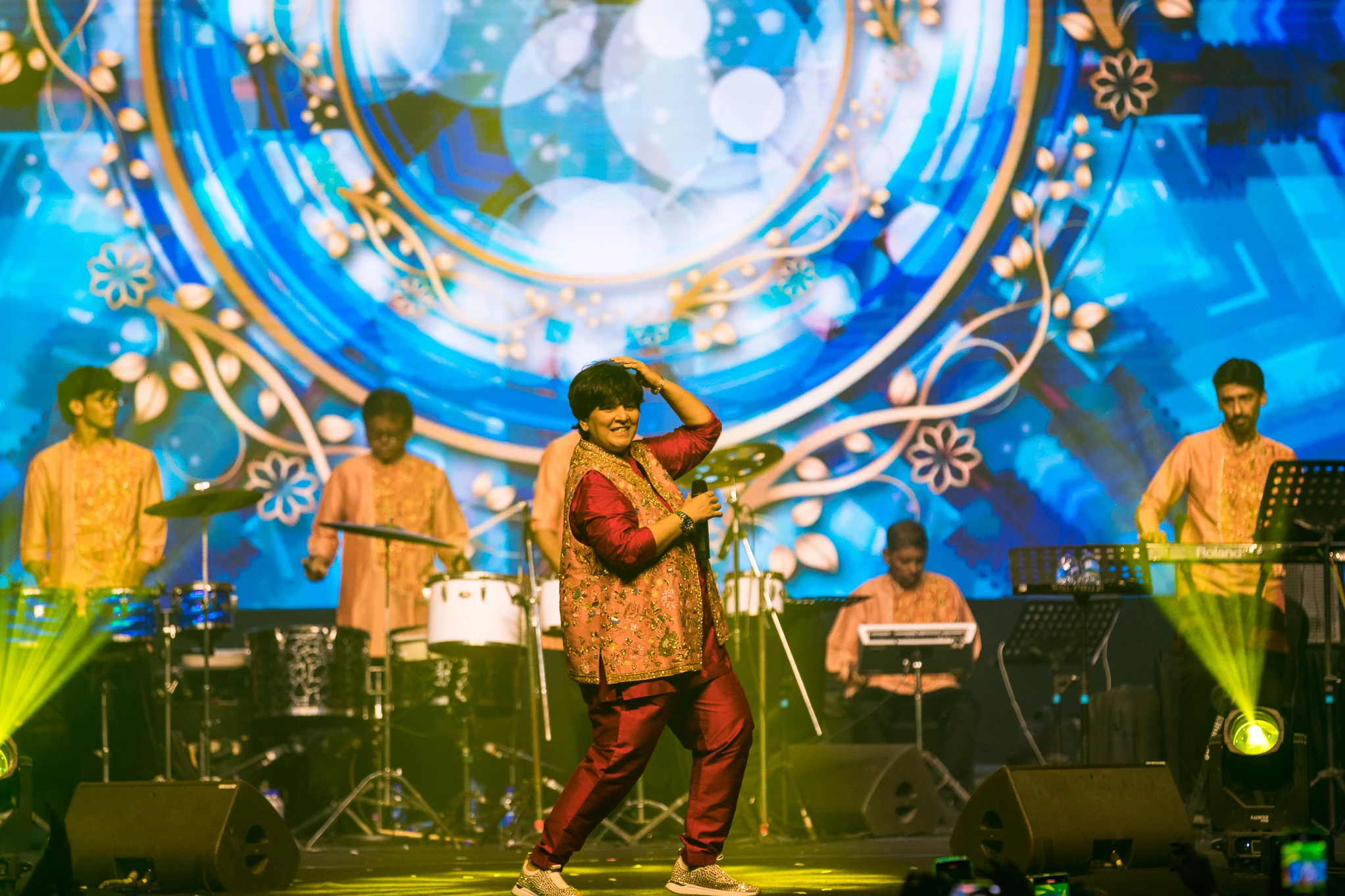
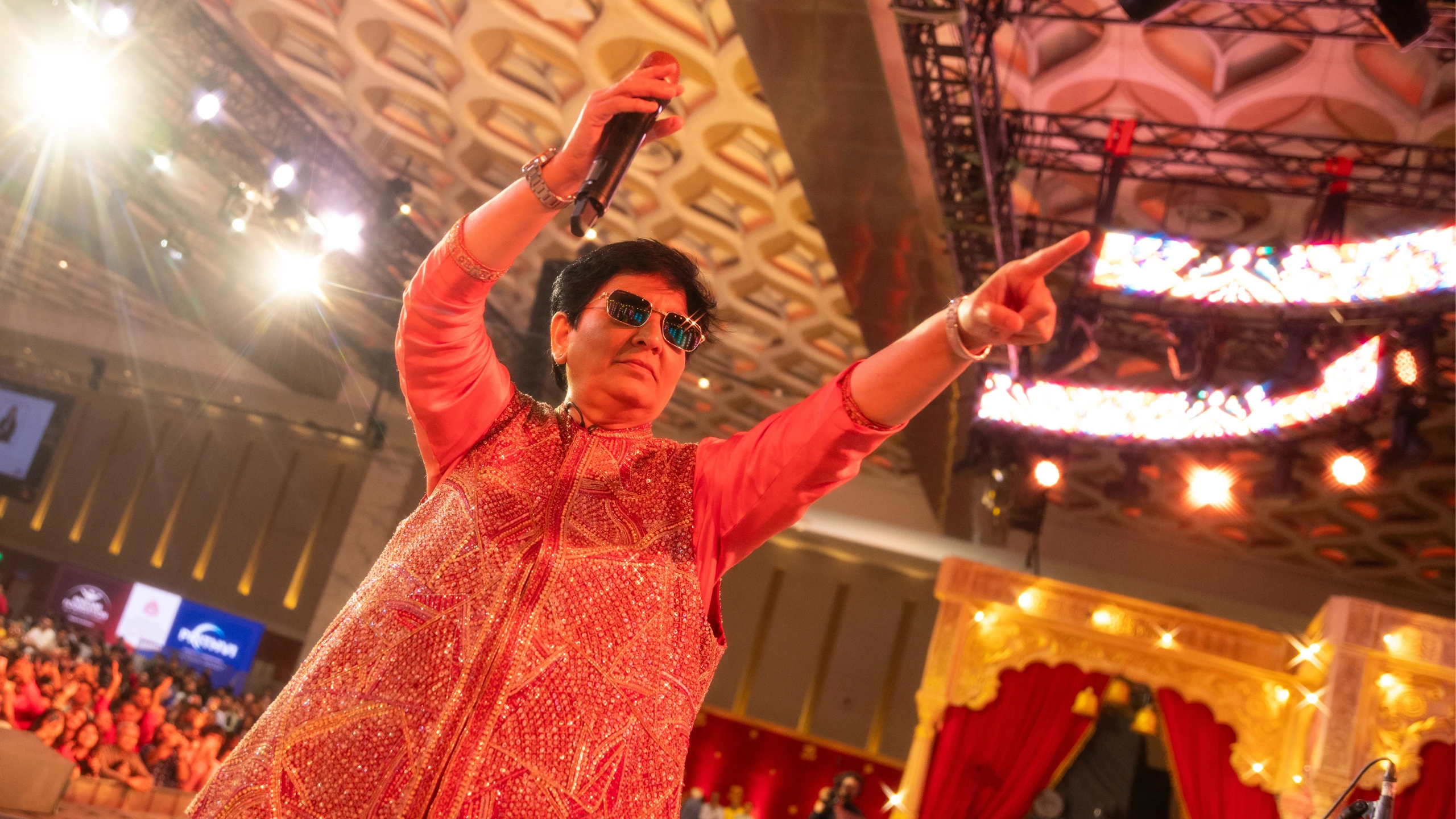
But Falguni Pathak was an elusive figure — a near-mythical Sphinx jutting out among the unending expanse of bodies in song and dance. Her concert passes were expensive for someone like Rajani, a child then, who had to naturally save for it. But once she was on stage, all anxieties dissolved. With her butch persona, short hair and all, Falguni means different things to her audience. While she is a queer icon to Rajani and even the drag queen Sushant Divgikr, she is “a refreshing picture of everything the word expects a woman not to be” for the content producer Navneet Arora.
For the 19-year-old Kasak Gandhi, a student of fashion design, witnessing Falguni on stage for the first time as a child was an experience that led her to ask over a dozen questions of her mother: “Why is she dressed like a boy? Are girls supposed to have short hair?” Her mother’s answer had helped: “She dresses that way because she wants to. There is nothing more to it.”
It is easy to intellectualise all things Falguni Pathak, to parse open the threads holding it all together. One way to look at her is that she is simply a performer, surfacing for less than two weeks, on an average, in a year. But why does a 19-year-old student look up to her as evidence of alternative ways of being a woman while Divgikr remembers, at the age of four, being taken aback when they first saw Falguni enter the stadium on a bike? It could be because that journey of entering an arena on a bike was a long one.
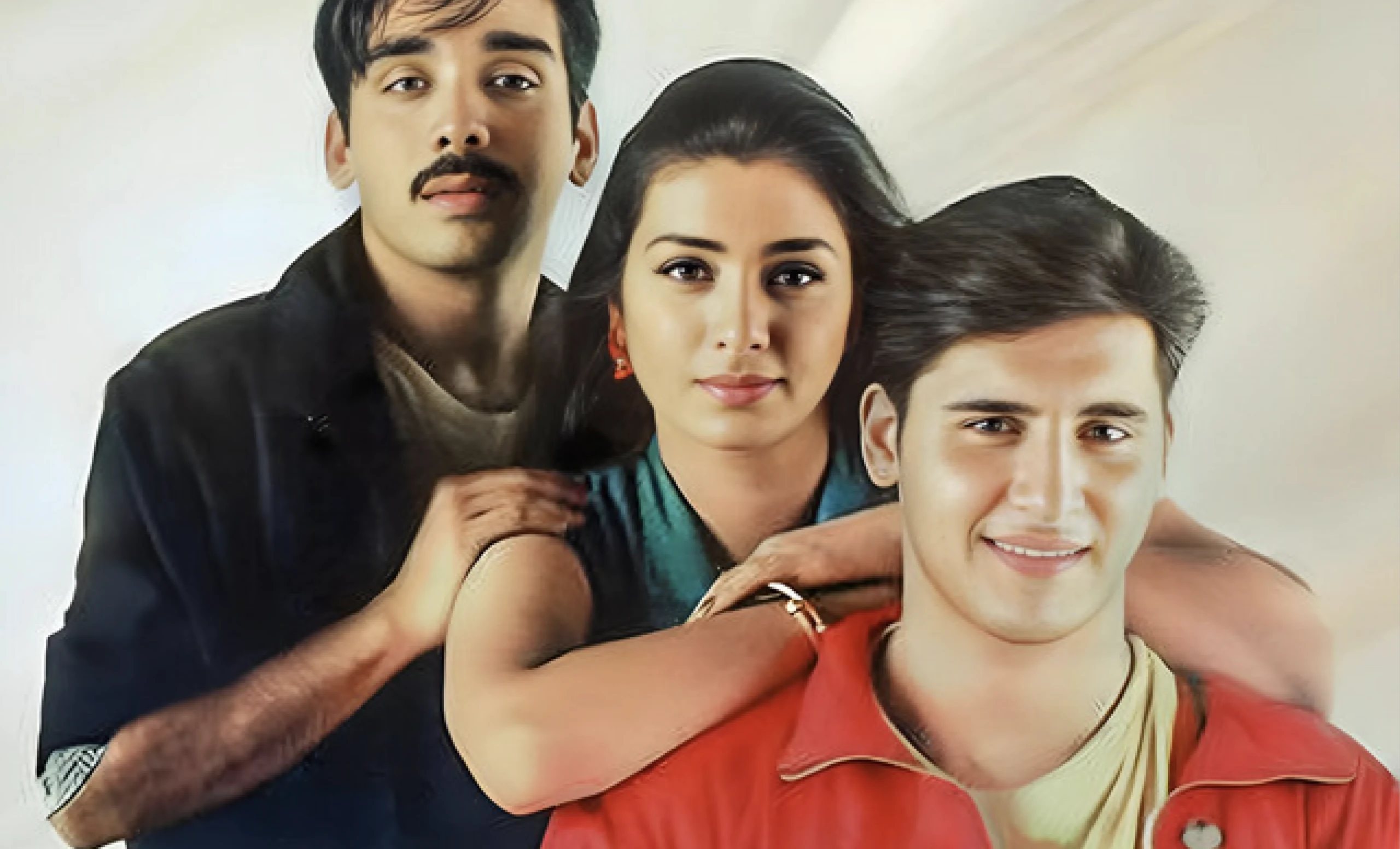
At just 9 years old, Falguni earned 25 rupees when she performed a patriotic song on the stage. When her father found out, he was aghast that his daughter could perform on the stage for strangers. He hit her. Falguni remained undettered. This was perhaps the first time she would learn that if she had to sing and dance her heart out, regardless of what the many fathers in the world thought of it, she would have to start letting things go and create her own world. Eventually, Falguni would go on to create her own band, Ta Thaiya, in 1994. Her career has run in two tracks: a short, intense Indipop peak from 1998 to about 2004, and a much longer run as the headline act of Mumbai’s commercial Navratri circuit, which began in the mid-1990s and is still going. Her Indipop music videos were structured as little love stories and became the origin point for the careers of Ayesha Takia who featured in “Meri Chunar Udd Udd Jaye” and Riya Sen in “Yaad Piya Ki Aane Lagi”.
Island of Hope
You don’t have to necessarily attend a Falguni Pathak concert to understand its appeal. For the designer Nimish Shah, who previously served as the creative director of Bhaane and has now revived his brand, Shift, Falguni’s concerts were too crowded and overwhelming. It was hard to keep up. The bodies moved too swiftly, they swerved with surgical precision on an axis that remained invisible to little Nimish’s eyes. “It was borrowed aspiration for me because everyone around me clearly seemed to enjoy it,” he says. The people around him were excited for reasons different than him — dancing, having a good time. Shah’s focus was on Falguni herself. “I’d wonder: How is she this cool? How is everyone so madly in love with her even though she sings in such a femme voice and looks anything but? She was channeling Bappi Lahiri while others danced daintily in their ghagras and even kanjeevarams.”
It is this dichotomy that defines the Falguni Pathak experience. In an interview quoted by Sonal Giani, Falguni has said she has never worn a salwar kameez, let alone a ghagra choli, and that this is simply her costume. Shubhika Sharma, the founder and creative director of Papa Don’t Preach, has designed quite a few looks for Falguni over the past couple of years and every single time that Falguni has worked into the store, Sharma noted her quiet demeanour, almost making herself scarce. “She is very polite but knows exactly what she wants. She knows the cut of the outfit, the angle at which she wants the silhouette. She prioritises comfort because she has to be on the stage for long hours and she wants the clothes to have mirror work, to have some personality so that they shine in the garba lights,” Sharma tells me.
To dress Falguni was a singular experience for the designer. Much like others in this story, Sharma has danced to Falguni’s songs too as a child. A family of girls, Sharma and her cousins would dance and sing for hours, pretending to be Riya Sen here, Ayesha Takia there. “We have to understand that Falguni stands for joy, for being comfortable with who you are. She unites people on the left and right of the political spectrum.”
I postulate if Falguni might just be our very own Dolly Parton, who similarly united Republicans and Democrats in the States. It is a question that the drag queen Sushant Divgikr grapples with too. After all, as a child, Divgikr, who amazed at Falguni’s androgynous style, has drawn from Falguni’s duality of a femme voice emerging from an androgynous body in their own performance where they move between male and female registers while performing. Even the model Sanjeev Ranwa, who recently became one of the first Indian models to walk for Versace, draws from the sheer confidence that Falguni exudes on the stage so much so that he says he’d do anything to be cast on the stage alongside her — which, to him, would be a far bigger achievement than walking for any fashion brand.
Perhaps this is how she endures: she asks nothing of the people who come to her except that they dance, and then, once the nine nights are over, she slips quietly back out of view until the lights come on again.