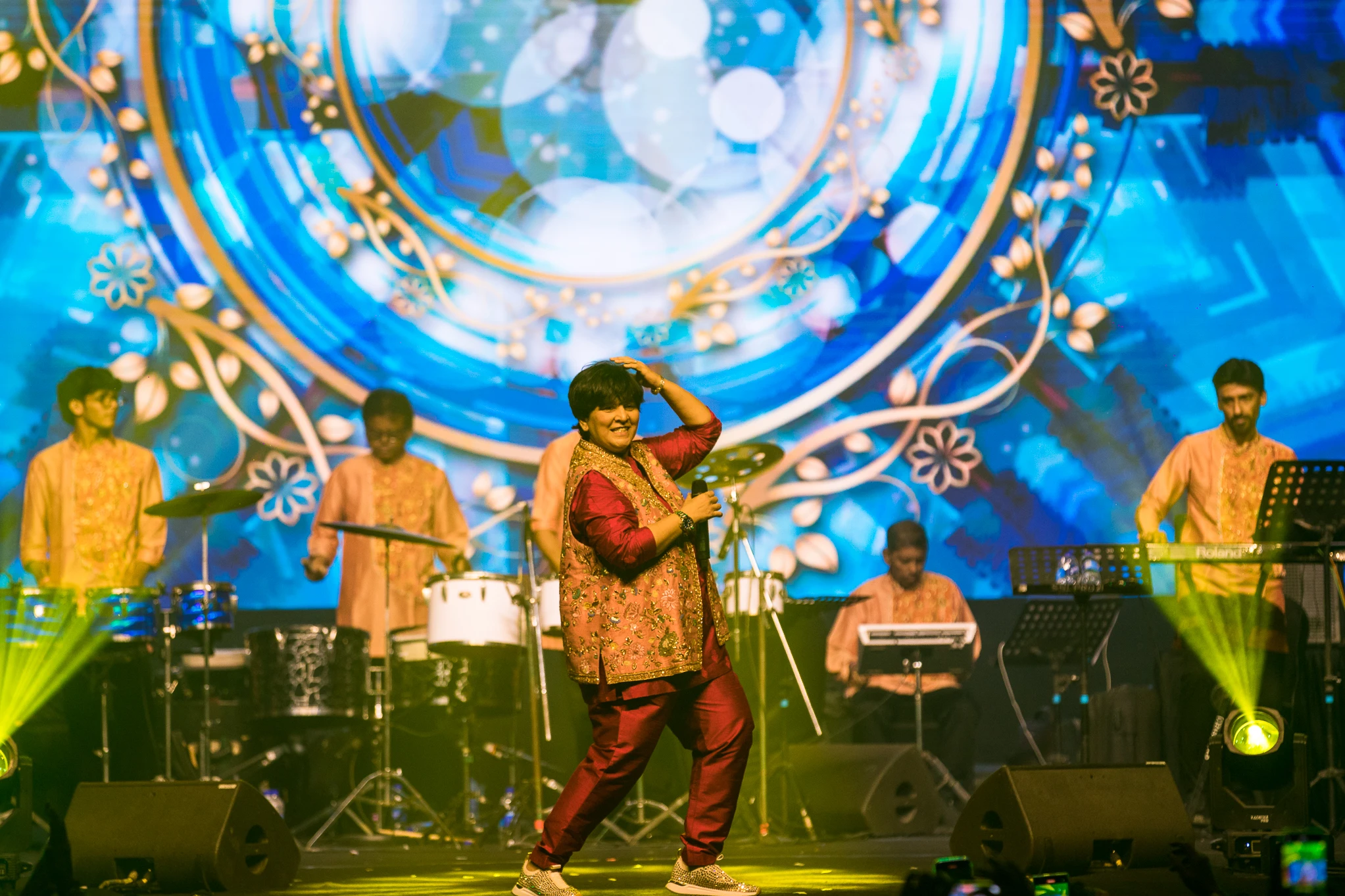
In earlier eras, if you wanted to celebrate Navratri with a spot of dandiya or garba, you would have to assemble all your friends and all their friends. And if you somehow managed to gather enough people on your own, you could plausibly hire a community centre for your evening of Navratri revelry. Today, however, you can log onto the BookMyShow app and get yourself tickets to a variety of large-arena Navratri events, ranging anywhere from Rs 500 to Rs 3,000 per ticket. If you’re part of the well-heeled Bandra populace, you can probably shell out the Rs 2,400 required to attend the Falguni Pathak-led “Navratri Utsav” at the Jio World Convention Centre. If you’re near Borivali, you can pick the “Kora Kendra Navratri 2026” featuring Kinjal Dave. In Worli, you can choose the “Dome Dandiya Nites 2026” at SVP Stadium, featuring Parth Gandhi, Jayesh Desai and Anushka Pandit.
For the companies organising these events, Navratri season (Oct-Nov) is a major money-spinner. This is the time of the year when they make up to a third of their annual revenue or more. “We have been organising Dome Dandiya Nites for 10-12 years now,” says Mazhar Nadiadwala, founder and managing director of Dome India. “In fact, the demand has been rising so much these last few years that we have to be careful. We can’t dilute the experience we deliver to our customers by over-booking the venue.”
Nadiadwala’s words are confirmation of the palpable boom in live Navratri musical events — this is most readily observed in Maharashtra and Gujarat. “Garba events, dandiya events, these are no longer confined to the Gujarati people, and everybody wants to be a part of this colourful, vibrant cultural experience, which is why this space has expanded significantly,” says Nadiadwala. Air-conditioned venues, reserved seating for senior citizens, scheduled aartis running like clockwork — this is the promise of a ‘professionalised’ Navratri experience.
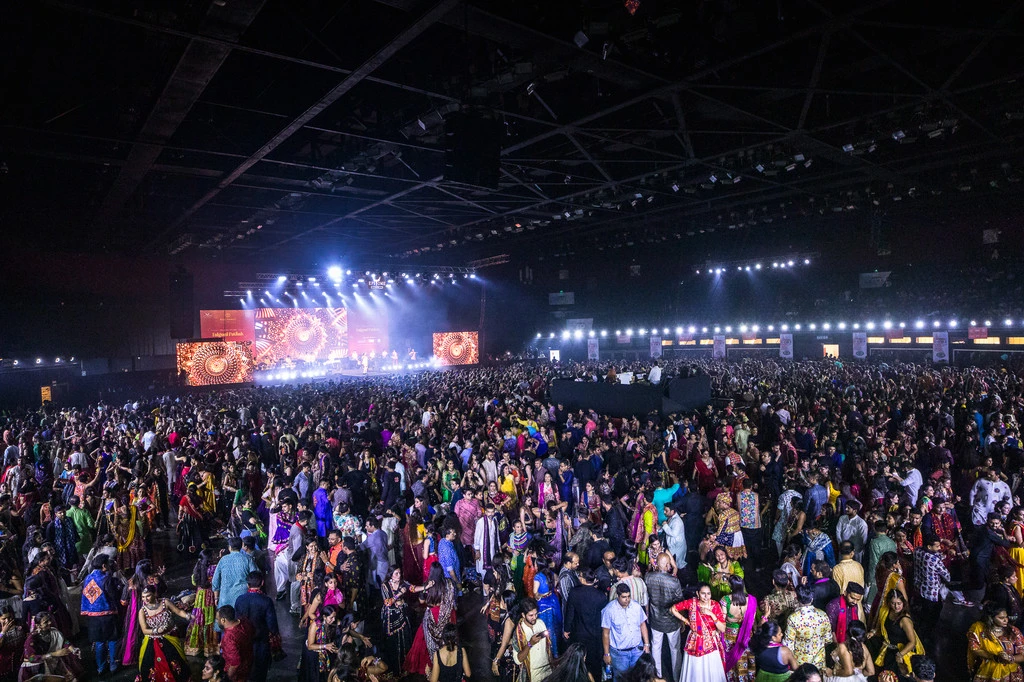
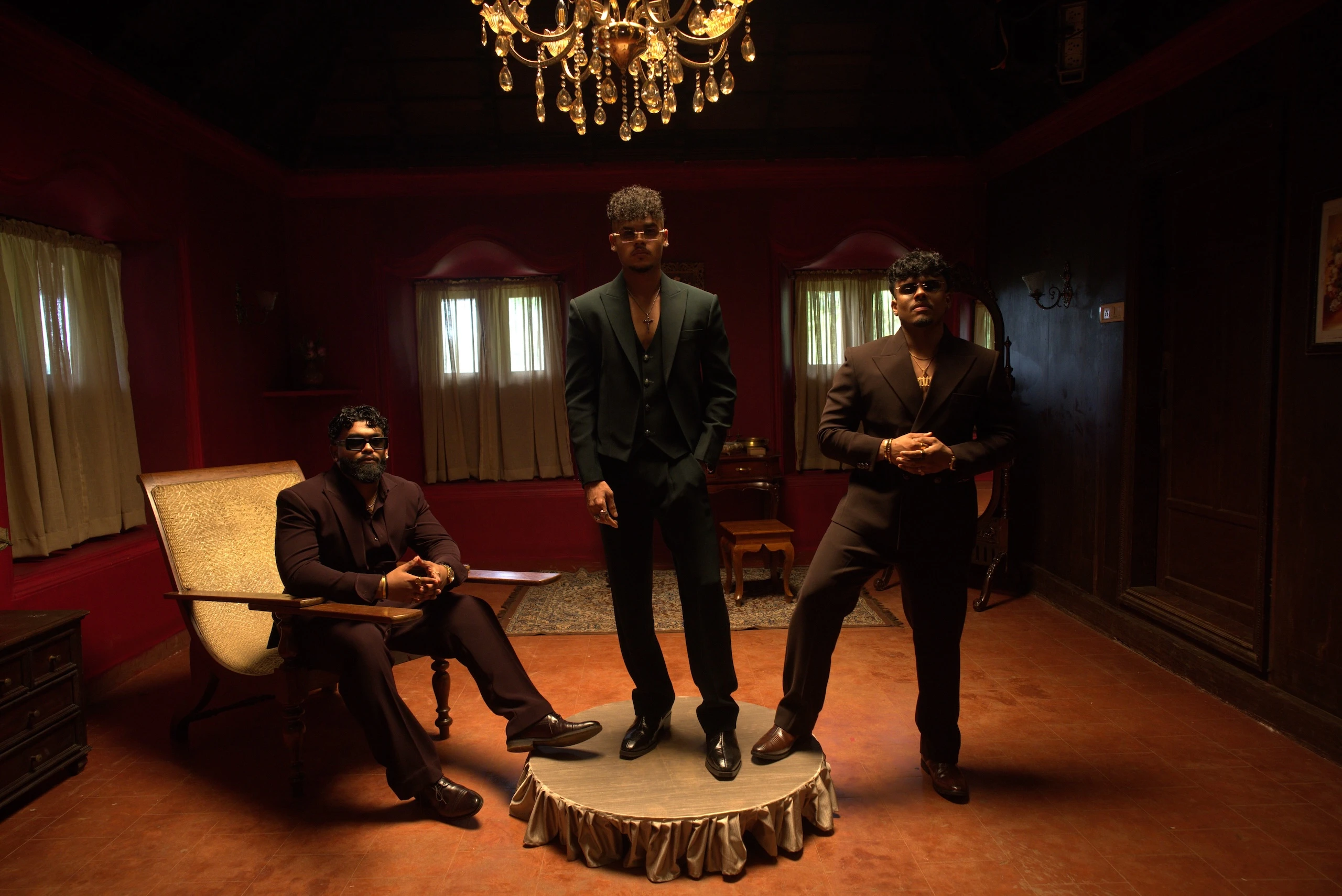
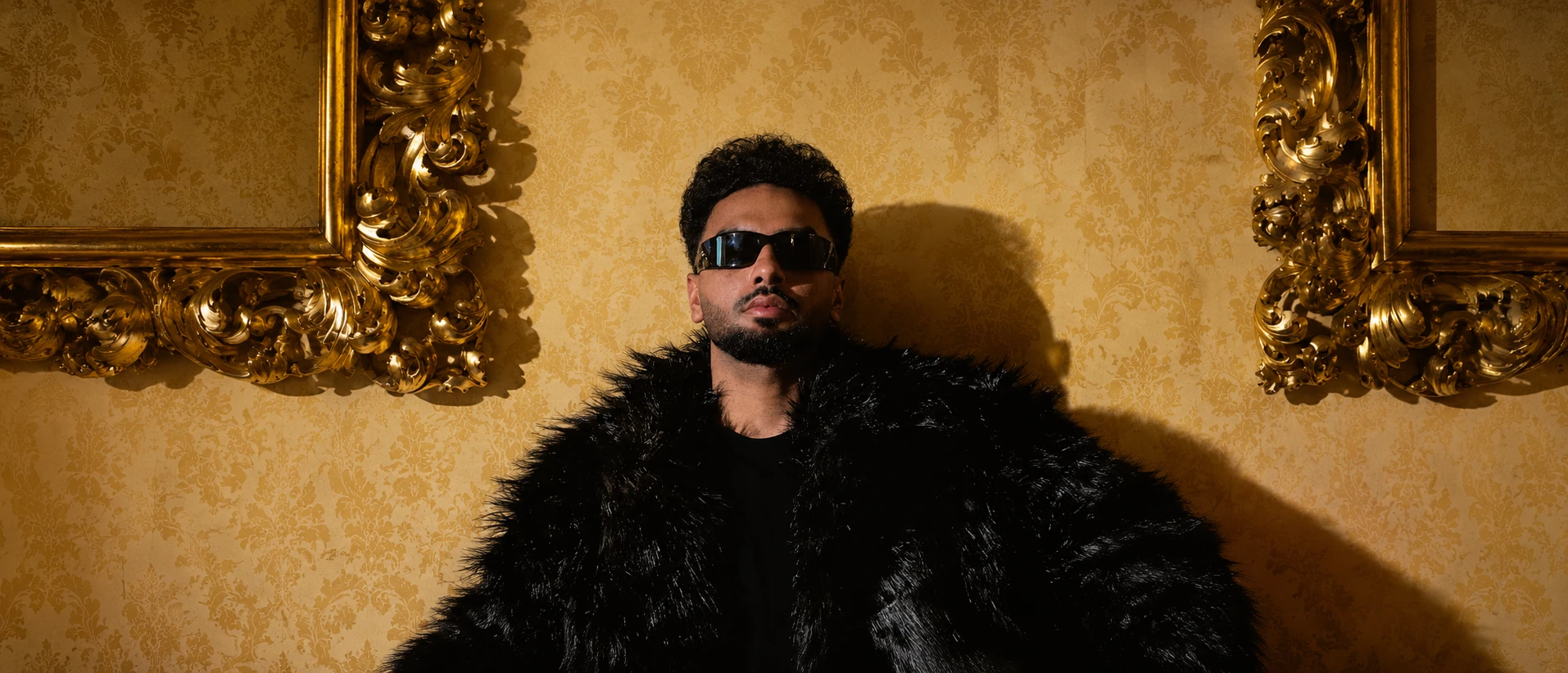
“Popular Navratri music can be broadly divided into two categories — dandiya/garba songs, which the young people can dance to, and bhajan/devotional songs for the older family members,” says Rushabh Vasa of Instinct Media, which partners with Showglitz Events annually to conduct Navratri concerts across Mumbai and elsewhere. “In most cases we are approached by large housing societies, mohalla committees and so on,” he adds. “We then figure out the budget and the artist line-up is decided accordingly.” Where A-listers like Falguni Pathak can charge between Rs 1-5 crore for a week’s worth of Navratri concerts, smaller, relatively anonymous artists performing in these neighbourhood-level concerts can charge anywhere between Rs 1 and 10 lakh, according to Vasa. In the dandiya/garba category, the likes of Falguni Pathak, Aditya Gadhvi, Kinjal Dave et al are mainstays. In the bhajan/devotional music category, especially over the last couple of years, bands like Backstage Siblings and Keshavam have garnered headlines and sold out major arenas across the country.
“I have been getting phone-calls about Keshavam from people all around the country. They’re travelling to Vadodara, to Mumbai, to Hyderabad,” says Aditya Singh, head of Artist Management at Alive Experiences. Keshavam started in 2024 by branding themselves as a “devotional rock band” but soon, they cottoned onto the “bhajan clubbing / bhajan jamming”. Prime Minister Narendra Modi, in the January 25 episode of his radio/YouTube programme Mann Ki Baat, shared a clip of a Keshavam performance, which led to a fresh demand for the band’s services.
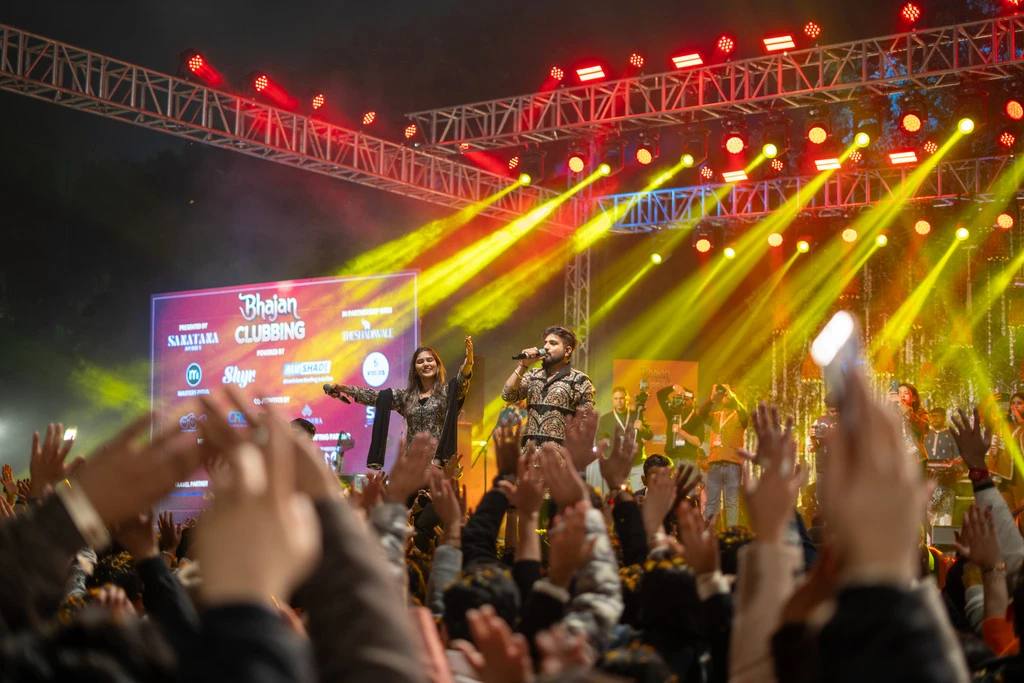
Watching Keshavam’s lead singers (Lovish Sheetal and Prakriti Sharma) live in action is instructive. Modest attire, swaying like rockstars, singing sentimental favorites like “Woh Kisna Hai” (a Lord Krishna-bhajan from the Subhash Ghai film Kisna). According to Sharma, “Authenticity matters. I think that young audiences can sense if a singer genuinely feels the emotion behind the bhajan that they are singing. For us, it’s not just a live performance but a spiritual experience, one that we are creating along with the audience. So we are all connected in our devotion.”
Sharma’s point about authenticity can also be observed in the ‘upscaling’ of these Navratri events. Falguni Pathak performed her nine-day concert series at Borivali’s Kora Kendra ground for six years, between 2019-2024, before moving the show to Jio World Convention Centre, a larger, more posh and therefore more expensive venue. Longtime fans, especially those from working-class backgrounds, felt short-changed and disappointed, and poured some of that frustration out on Reddit threads.
After their Covid-related dip in fortunes in 2020-21, the live entertainment sector in India has hit back with a vengeance, and this boom in Navratri concerts is just the latest proof. Recently, the Ministry of Information and Broadcasting put out a statement that claimed a 44 per cent growth in live events, with over 34,000 live events in total and over 1 crore jobs being sustained by the sector as a whole. “People everywhere, especially young people, are now prioritising ‘experiences’ over commodities,” says Vasa. “They may think twice before buying an expensive phone, but if it is an event that can create happy memories for a lifetime, that is something they will pay for and our Navratri concerts are exactly that.”