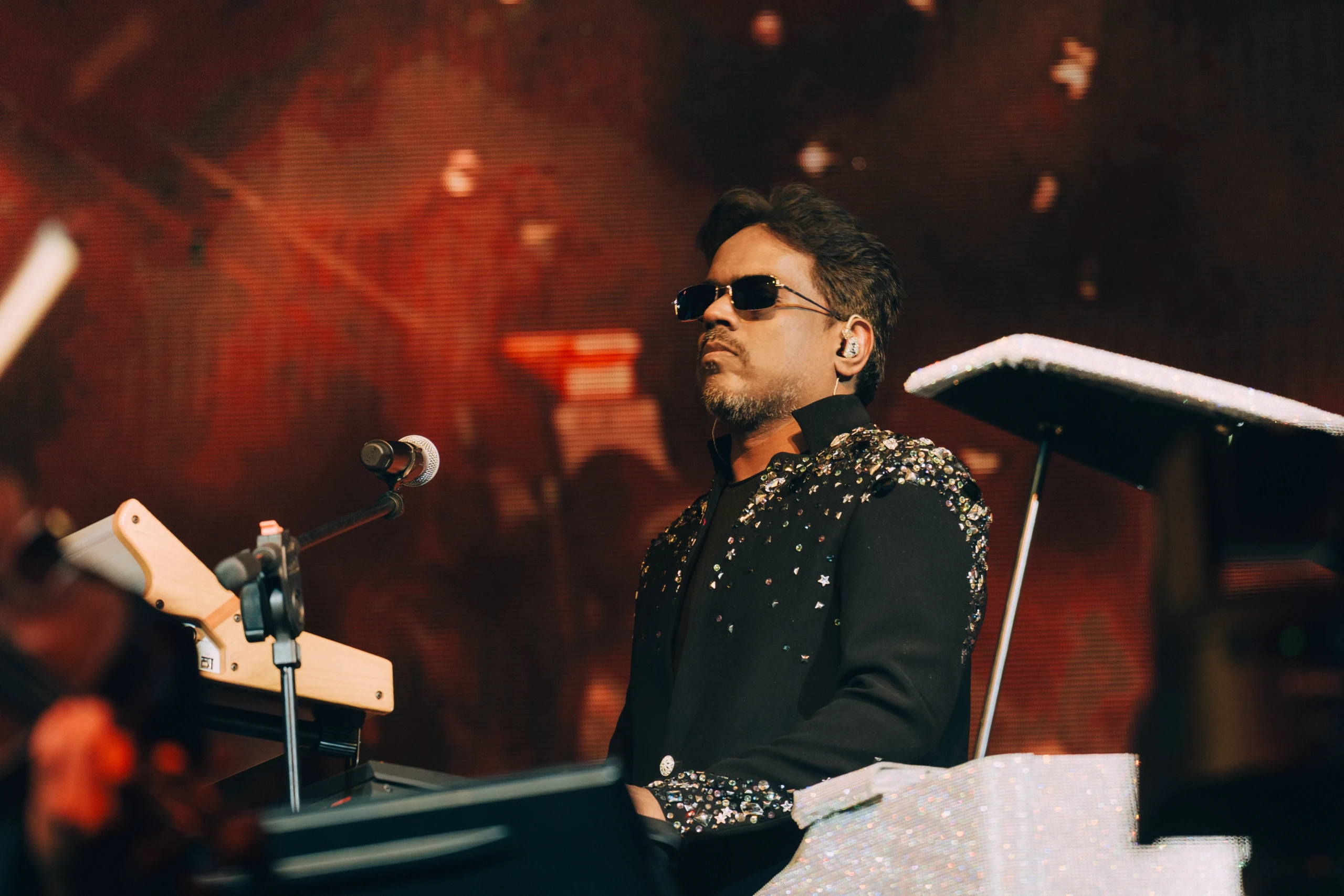


A.R. Rahman has taken on a new job, and it involves sitting through a lot of auditions. He is the ‘Super Judge’ of Tamil Idol, the Tamil cousin of Indian Idol, made by Fremantle India for Sony’s new channel, Sony Vizha. The show, which has singers Andrea Jeremiah, Karthik and Benny Dayal making up the rest of the panel, premiered on October 24. Why does Rahman, who is busy with the music for Nitesh Tiwari’s Ramayana and his Wonderment Tour, which returns to Mumbai on November 1 and goes to Delhi on November 21, sign up for a singing reality show? Through a conversation via voice notes, the Oscar and Grammy winner shares his thoughts on AI, why emotion matters in singing and what he looks for in a new voice.
Edited excerpts:
As a boy, you played keyboards on Wonder Balloon, a children’s programme on Doordarshan, which gave you your first platform. What does it mean to you now to be the one giving talented young singers their first stage?
I think at every stage of our life, we play a different role. There were times where I had so many mentors. [They were] lovely people. Even from Doordarshan, there was Mr. Rajan and so many people who encouraged me at that time. It was very important to have someone who could recognise my talent and help me portray what I could do, so that I gain confidence.
And I feel like this is a circle when you come in as that person, as a mentor… recognising talent and also giving. If I find a song or a voice, and end up working with them for the right purpose or bigger projects, it changes lives. And it has changed lives before. In my humble opinion, I think it is not just me giving, it’s also me taking what God-given personalities of hard work these kids have, and that complements the new music I do. So, it’s a win-win situation.
You’re answering these questions through voice notes because you are extremely busy. Yet you have found time for Tamil Idol. What do you get out of such shows?
I think it’s very important to stay away from the limelight most of the time, but it’s important to also be connected. I feel like these shows have a great connection when people watch how we react, how we comment and, for even other aspiring singers sitting there, who could take a few cents of what we tell.
Your launch statement called Tamil Idol a first for Tamil Nadu, yet Vijay TV’s Super Singer has run for nearly 20 years and its contestants now sing in films regularly. What can Tamil Idol give a young singer that those shows haven’t?
I think it’s important to reinvent things. When something good also stays for a long time, people don’t realise the value. When a new player comes in, they bring something new, some freshness. They have to bring something new. In this, they are concentrating on the whole 360 level of how people lose their inhibitions and how they present themselves. Also the buses going to every village is such a cool idea where nobody gets left out. Everybody gets an equal opportunity whether people can travel or not and there are still more surprises coming.
Two of your fellow judges, singers Karthik and Benny Dayal, started out in your chorus because your ear picked them. What would you do if the audience’s favourite on Tamil Idol doesn’t appeal to your ear?
I am never precious about what I select. I always look at everything mostly. Even the classic example of Naresh Iyer, who didn’t win, but I thought he had something wonderful and worked with him. So, if you come to the show and you display yourself and you sing well, you are already a winner. Showing up itself is winning in this.
You gave Harini and Chinmayi their first big film songs when they were teenagers. What do you listen for in the first few seconds of an unknown voice, and what have you learnt to ignore?
I think music is an emotional experience. I don’t look for pitching or anything. If the voice appeals, the way they say the words creates an emotion in my mind or my heart, I feel like there is something. Sometimes you have such great singers who sing impeccably, but it doesn’t touch you. It makes you feel like, ‘oh, it’s trying too hard’. I think singing and singing a song and appealing to audiences is a very soulful experience. It’s mainly, I feel like, either you have it or not. The ones who are in the limelight, it’s because they have some soul and they’re sharing that internal energy to the audience.
Years ago, you judged a competition in which a young Anirudh Ravichander won an award for his instrumental skills. When you look back, do you think you spotted something extraordinary even then?
When somebody young is sharp and they do well, I think he’s already on the road to success unless he has bad vices. If they dedicate themselves, he or she is going to conquer. So, it is important for parents also to recognise and lead them to what they love. Most of the cases are: you’re good in music, but why don’t you become a doctor or an engineer or a lawyer, which is not bad. So, they waste five years of their life trying to be somebody else than what they are not and they lose time. So, I would advise that if somebody shows interest, have faith. Life is short. Give them the opportunity and happiness and let them give that happiness back to you. Recognise it and encourage it.
Many contestants will sing your own songs back to you, like “Kannalane” from Bombay or “Muththa Mazhai” from Thug Life. Do you hear the singer or the song you made when they perform?
That’s a very difficult one. Because mostly, I get disappointed and sometimes I get surprised by how they interpret it. So, it’s a wild chance.
Reality shows often turn a contestant’s hard life into a sob story, with sad music and everything. Will you push back if Tamil Idol goes down that path?
I think a show is a combination of many things. It’s storytelling, you know. Human beings love stories. And if it’s true and if it’s important to cause empathy, why not? Because singing is different, but what the person is behind is very, very important for people to support that person. I think it’s a good thing.
Who gets to be a Tamil Idol? Is there room for someone like Sid Sriram, who grew up in California before you gave him his first Tamil film song, or for a Ghana singer from North Chennai’s streets who has never had a lesson?
For me, because I do film music, I need everybody. I need a Sid Sriram. I need a Jayesh Das. I need a Shreya Ghoshal. I need an Arijit Singh. I need also the Ghana singer or a folk singer from Rajasthan and the colours make the sound tapestry more exciting and more fulfilling.
Arijit Singh was voted out of Fame Gurukul, a Sony singing show, in 2005 and still became India’s biggest playback singer. What does Tamil Idol owe its winner after the finale?
I think, as the saying goes: you can only take the horse to the water. If they get an extraordinary exposure in a show like this, they also get to know the judges, the co-contestants, and how the entertainment industry works. It is like a masterclass. It is like an experience which doesn’t come if you’re sitting at home singing for your friends at school. So, the take-home is always the personal smartness, what they learn. It’s not only about music; it’s also about how street-smart you are and how your instinct in your heart says something. Sometimes restraint is the best.
For much of the past decade, Arijit Singh seemed to be singing almost every other big Hindi film song. The Tamil industry, too, has its favourites. How difficult is it to persuade filmmakers and producers to take a chance on an unknown singer?
I think we tend to get bored of things quite easily. Whether it’s voices or musical compositions, no matter how beautiful they are, the human mind is always looking for variety. Someone who has grown up learning music in a different environment, whether in the US, the Middle East or elsewhere, may bring slightly different nuances to the way they sing compared to someone trained elsewhere. These differences bring a new flavour to the music, and I think that variety is essential to keeping it fresh.
Film songs bring young singers fame but probably not enough money. Where does a Tamil singer actually earn a living today, and is this show preparing them for that?
I think everything evolves over time, and the past decade or two have been particularly good for singers. Composers are often identified with their own songs, whereas singers lend their voices to some of the best compositions across different composers. This gives them greater reach and makes them more sought after. There are so many opportunities today because music and live performances are such an important part of entertainment. While film songs give singers visibility, a significant part of their earnings often comes from gigs and live shows. If they are smart enough, they can do many things with the identity which they get.
For the 2024 film Lal Salaam, you used AI, with their families’ consent, to recreate the voices of two singers who had died, Bamba Bakya and Shahul Hameed. Now you’re looking for new human voices. What will a young singer have five years from now that a machine won’t?
I think AI is becoming quite chaotic, especially when it comes to consent and the way music is being used. Sometimes, even before a song is officially released, AI-generated versions appear online using just the first couple of words of the lyrics, under the same name, which can confuse people and disrespect the hard work that composers and filmmakers put into presenting their music. I go on YouTube, or social media, and you see the song, which has not been released. I think it’s a lot of clutter, a lot of noise. What gives me hope is people recognise this noise, and there’s so much reception for live music now. You can see it in the number of shows selling out and the response artists are receiving.
I feel that even my own concerts, like the recent Wonderment Tour, are seeing around 30% higher attendance, and tickets are selling out faster than before. The reason is that people value the experience of live music and the opportunity to see their favourite artists perform in person.
Some time this season you’ll have to tell a nervous teenager from a small town like Kovilpatti that she’s going home. How will you say it, and what would you want her to take away from you that day?
During the launch, I said, when you come to music, or when you come to a show like this, you have already won. Because of the exposure, your talent, and your personality gets exposed, and people have seen you, people have voted for you. You may not win. But coming to the show, singing from your heart, and showing up there itself is almost 90% success. If you’re good enough, and if you’re lucky enough, you get voted. It’s a cherry on the cake. So, there’s nothing to be ashamed of, this is not an examination or a job interview where you don’t get a job.