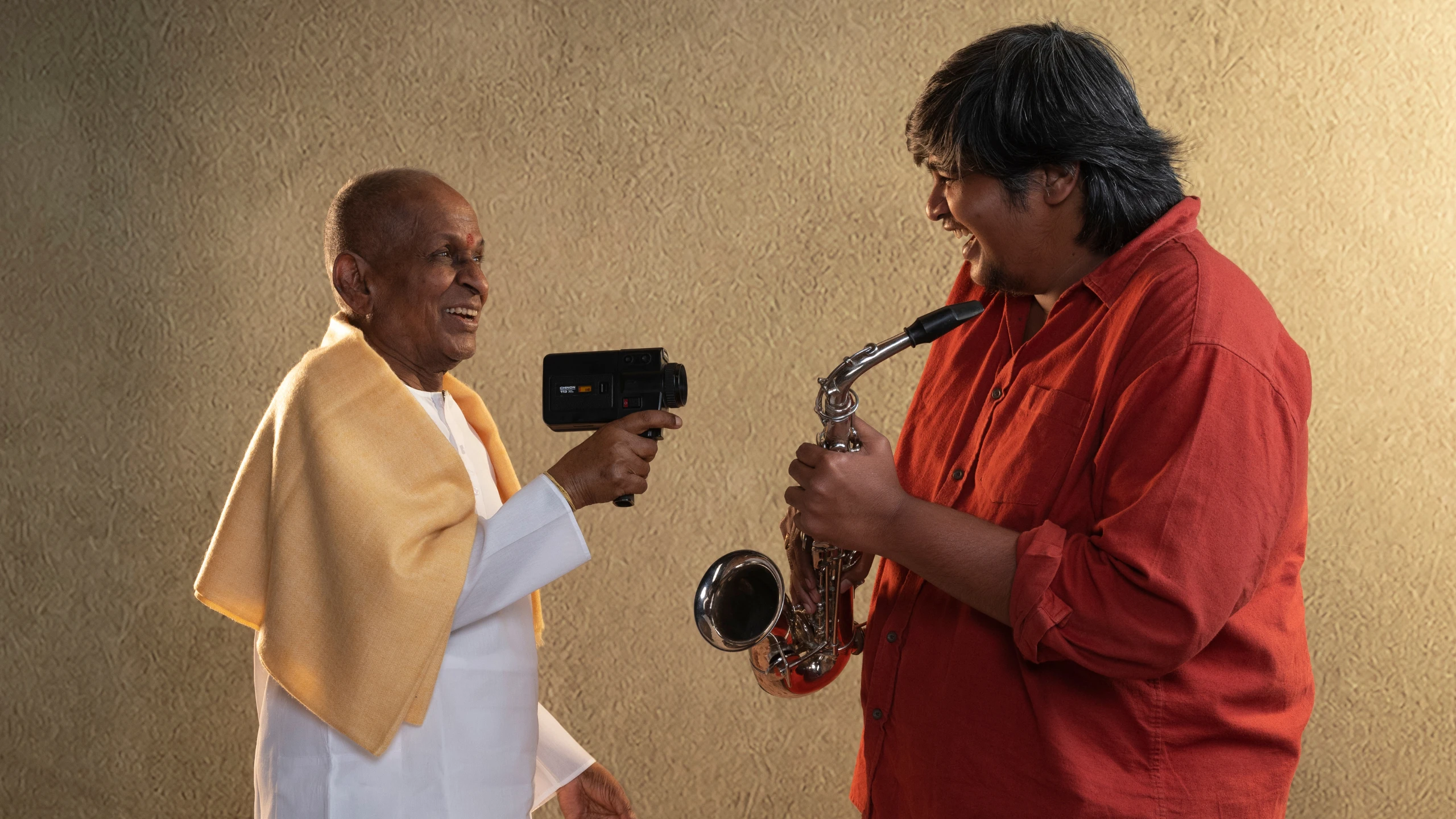

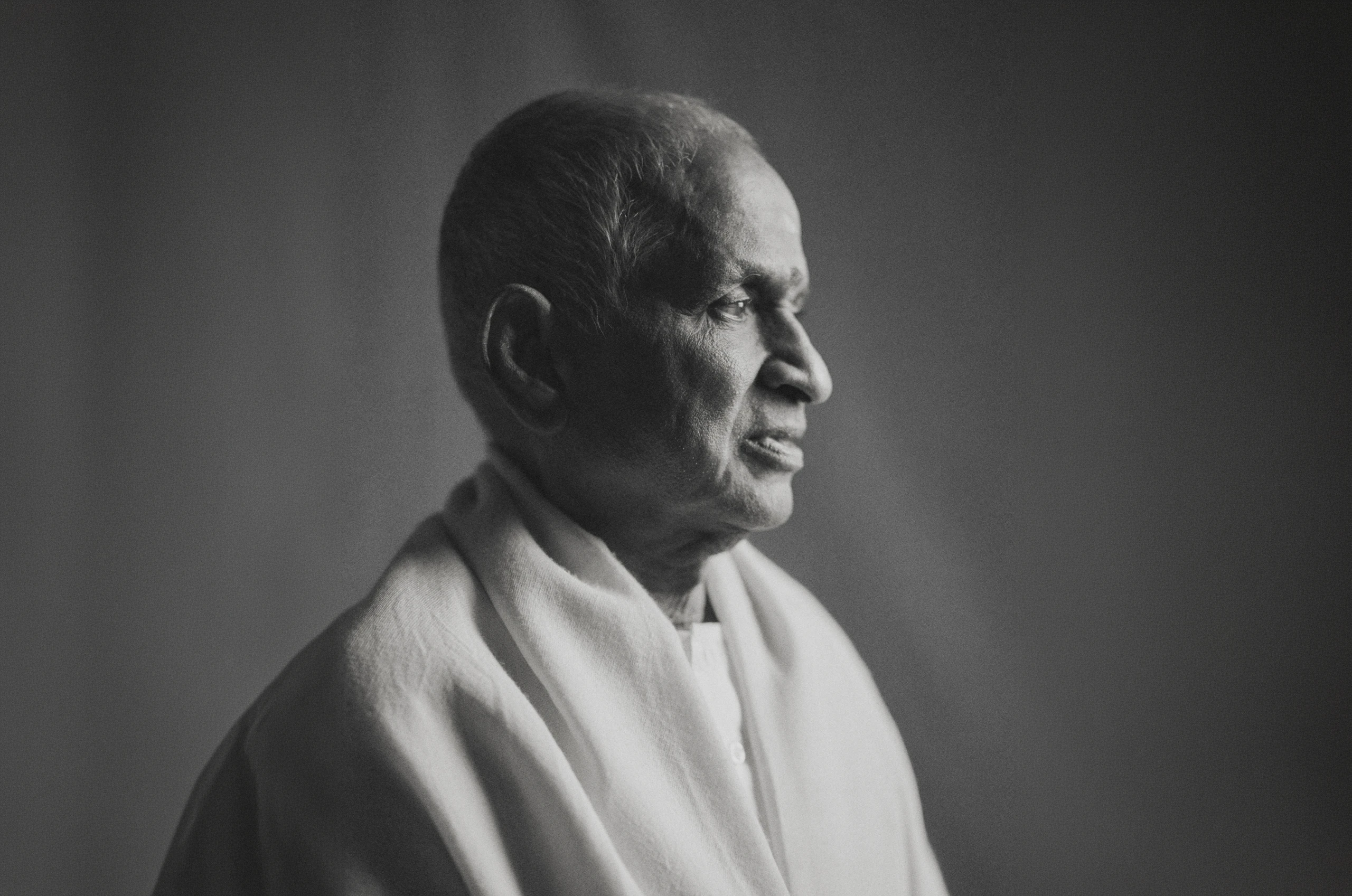
As the maestro Ilaiyaraaja celebrates his 50th year in the movies, filmmaker R. Balki gives Billboard India an insight into his genius. Balki has had a long-standing working relationship with Ilaiyaraaja on films like ‘Cheeni Kum’, ‘Shamitabh’, ‘Paa’, and an upcoming Tamil project. However, the filmmaker maintains that their primary relationship will always be that of a superstar and his biggest fan.
I had no interest in films as a child. I was around ten (years old) when my neighbour, who was like an aunt to me, took me to the movies in Bangalore. I anticipated that I’d get bored and fall asleep in the theatre. The film was Puthiya Vaarpugal – one of Tamil director Bharathiraja’s earliest films. As soon as the movie opened with Ilaiyaraaja’s score, I felt my eyes open to a kind of beauty I had never experienced before. We always mistake ‘aesthetic’ for a thing you can only see. But things you hear are sometimes more powerful aesthetic-building tools. That’s what Raaja sir’s music did for me. He has added more aesthetic to my mind than anybody else has. I always say he’s like agarbatti – there is fragrance in his music.
‘I wanted the other half of the country to listen to Ilaiyaraaja’
Everytime I listen to a Raaja song, images conjured in my imagination begin to run in my head. When I started working in advertising, a lot of the campaigns I worked on were inspired by his work. Till today, if I have to brief someone, an Ilaiyaraaja song is always the reference. For the ‘What an Idea, sirji’ campaign for IDEA Cellular, we used a re-arranged version of his song. I recall telling him after, “Sir, I flicked this track.” At that time we paid the music label and he wasn’t involved. Next time around, I requested him to compose 12 new versions of the tune and then take royalty on those.
I did something similar when I made my first Hindi film Cheeni Kum. That was also when I finally got to meet him in person at Prasad Studios in Chennai. It was a hilarious first meeting. I told him I wanted him to work on my movie but I already had the music for the film – a mix of all his older songs in Southern languages like “Mandram Vantha Thendralukku” from Mouna Ragam and “Jotheyali” from Geetha. He looked up at me and asked, “Why do you want me to copy myself?” I explained to him that it bothered me that only half the country had listened to his music. This was my humble attempt to take his work to the other half. He smiled and didn’t argue. He nodded and said, “I understand what you’re trying to do.” My greatest ambition is to create a device through which I can take his music to places it hasn’t yet reached.
I’m finally working with Raaja sir on my first Tamil film. This time, he’s composing eight original tracks. We’re calling it an ‘Ilaiyaraaja Blast!’ But I think I understand why he didn’t consider working in Bollywood. There was never any time. He was composing and doing the background score for multiple South movies at a time – distributors would only touch films that had an Ilaiyaraaja soundtrack.
He once told me an amazing story. We were at Prasad Studios and he pointed to a row of trees outside. He said before a Diwali release, each tree was assigned to a filmmaker to stand under while they waited their turn to meet him. That said, too many people have borrowed his melodies in Hindi cinema, and I’m sure he hasn’t even realised. There are multiple examples that include hits from films like Dil, Virasat and Beta.
‘Being around him is like watching a magic show’
I have had the privilege of working with the man I consider my biggest inspiration. I know that that makes me the luckiest man in the world. At this point, I find excuses to meet and spend more time with him. I’ve stretched what could have been a two-day affair into two months, because he barely takes more than seven minutes to compose a song.
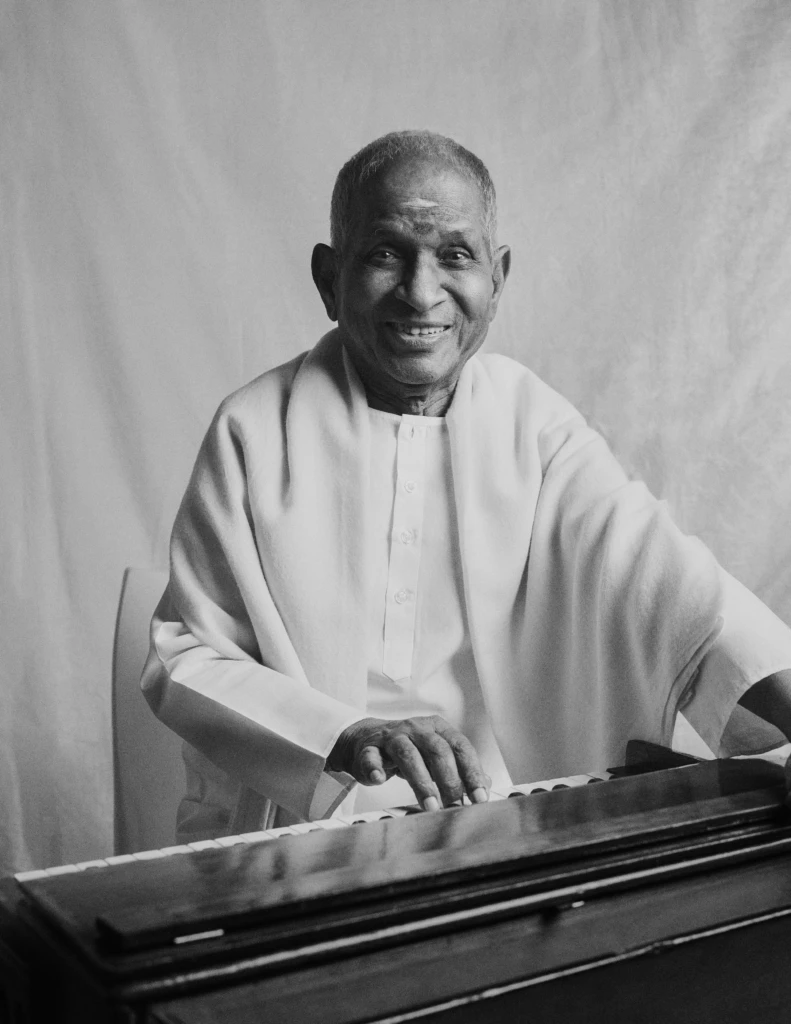
Watching him work is like witnessing a magic show every day. He comes into work at 7 AM. I explain the situation for a song to him. He plays something, either on his piano or harmonium, and then in a few minutes we’re done. Even for composing background score, he watches barely 22-minutes of a film once – and by the evening he can play the whole score for you. Everything will be perfectly in sync with beautiful interludes.
I don’t consider myself a culturally literate person but I enjoy talking to him about so many things beyond work and music. He often tells me about all the books he’s reading on Tamil culture and the classes he’s taking. He’s currently studying the origin of words from the 15th century. He has someone who tutors him on ancient literature and texts for two hours every morning. He’s also working on retraining his voice after a cold. The depth of his knowledge and discipline is unbelievable. One of the best philosophies that he’s shared with me is: if something is unpleasant, just go away from it, and life will be okay.
‘We didn’t speak for over a year’
Just before the pandemic hit, I had this idea to make a film on him. I called him and told him about my plan. He said he too had been thinking about me. It felt like divine intervention. I said, “Sir, I also have the correct person to play you.” I hung up and called Dhanush, who said “fantastic, super” and immediately agreed.
Over the next few months, I spent hours on the phone with Raaja sir, listening to stories of his life. I spoke to people who have worked with him, and had long chats with Mani (Ratnam) and Raaja sir’s sons. But when it came down to writing the film, I just couldn’t do it. By then I had spent a year on this and Raaja sir had been patient. Since I had already put the thought in his head, he was waiting for me. It was time to tell him that I couldn’t make the film.
“Sir, I don’t have an idea,” I said. “Your life is not your life. Your life is music. There is no story here. If I make a three-hour film with all your millions of songs, it will become a hit on its own. But that’s not how I want to do it. Till I get an idea, I won’t make this.” I also told him that I was somewhat of an atheist so I can’t make a film on someone who is like God!
He got a little upset with me. I could feel the disappointment. He said, “I don’t get it. What are you talking about? I told you so many stories about my life.” I didn’t meet him for a year-and-a-half after that. I regret doing that. But I was shy and also felt guilty about not doing the film.
Last year, when I read about his symphony premiering in London – the first-ever Western Classical symphony debut in the city by an Asian – I decided to give him a call and inform him that I would like to attend. We picked up exactly where we had left off. He answered my call with, “Yes, Balki, where are you? Are you alive?” He has a wicked sense of humour and loves to pull my leg.
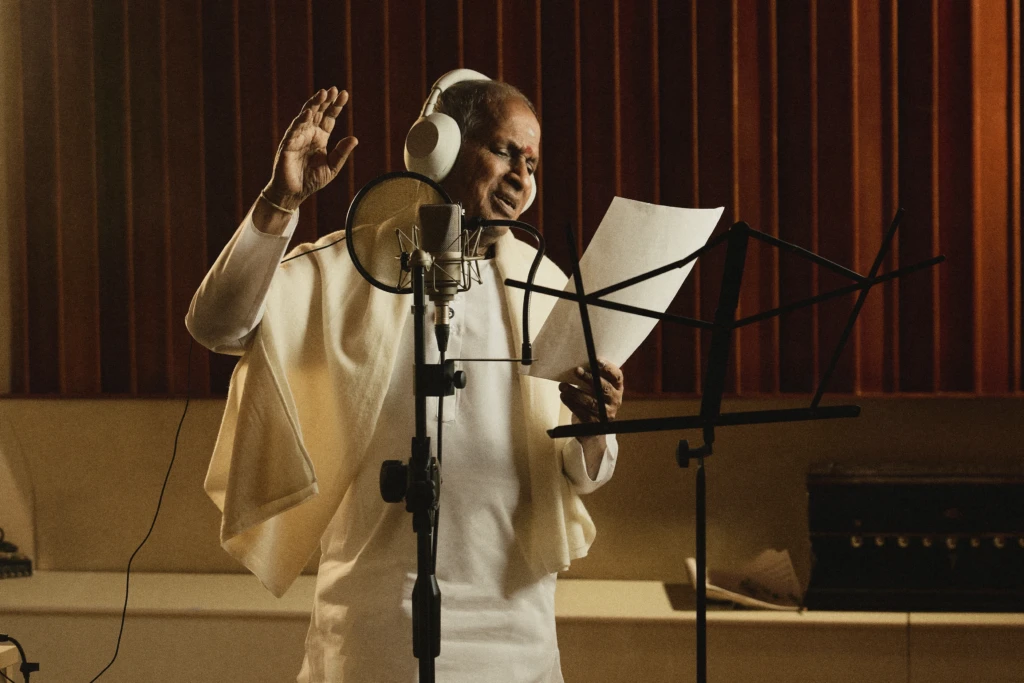
Watching him rehearse with the orchestra at the BBC Studios in London was another surreal experience. I have attended other performances of his – he is a rockstar on stage. If he tells the audience to shut up, they shut up. If he says stand up, they do that. That’s the sort of power he commands on stage – he needs no fancy visuals or gimmicks.
Ilaiyaraaja The Incredible Indian
Before he left for the show I casually told him that we talk a lot about ‘Incredible India’ but the only thing incredible about India are Indians – most importantly, him. Imagine, he wrote the first Western Classical symphony by an Indian at 81 years of age. I said maybe he should tie up with the tourism ministry and start an ‘Incredible Indian’ campaign.
He took my suggestion seriously. In all his childlike innocence, he reached the airport and spontaneously announced to the press that had arrived to see him off – “Ilaiyaraaja is an Incredible Indian!” – and walked off. I laughed and told him to always say whatever he feels, however it may sound, because it’s the only thing that reminds us every now and then that he is human.
Watch 50 Notes with Ilaiyaraaja below: