
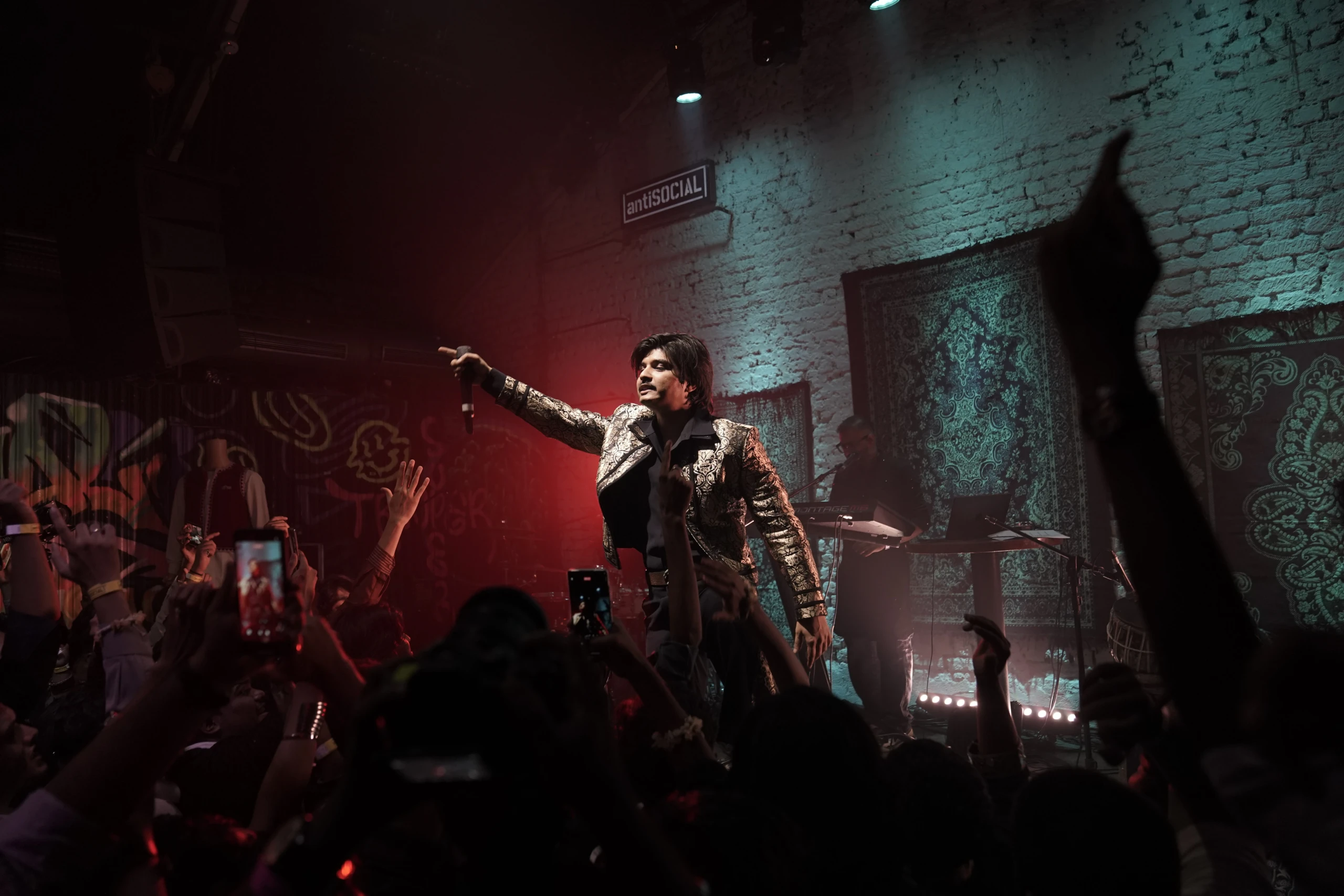
Farhan Khan did not have an average childhood. “My Walid Sahab (a term in Urdu to respectfully refer to one’s father) was very fond of writing poetry. Every weekend, all his poet friends would gather at our house in Fatehabad for a mehfil. I’d be walking around serving breakfast or passing plates, and in between I’d catch bits of what they were saying – philosophy, poetry, shayari. At five or six, I had no idea that one day I’d bring that same culture with me to Mumbai.”
Today, the 25-year-old lives in Mumbai, with his popular tracks “Ajnabi” and “Mujhe Rok Lo” straddling the polar realms of qawwali and rap. “If you really listen to qawwali, the writing pattern is exactly like rap. It’s full of metaphors. You’re praising God the way someone might speak to a lover. Sometimes the poet makes himself small before God, sometimes he playfully challenges Him, because he’s completely immersed in love.”
Main Character dressing
Khan grew up amid fabric scraps at his father’s tailoring workshop. His father didn’t want him to follow in his footsteps. “He’d say, ‘Learn it because it’s an art form, but don’t spend your life doing this. Do something bigger’,” says Khan. The first thing he remembers making was the naada (drawstring) for kurta-pyjamas. Later, he learned fabrics, cuts, and how clothes fall on different bodies.
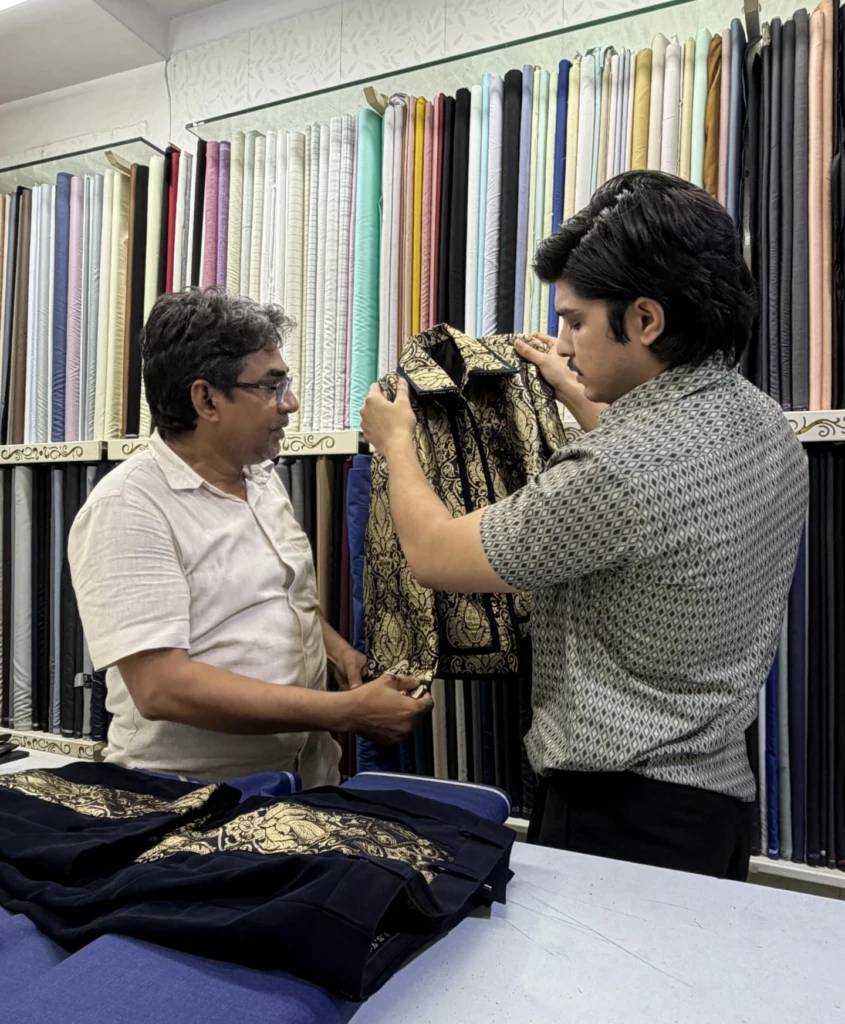
Khan would arrive at college wearing one-of-a-kind shirts tailored by his father, their curved yokes fashioned from leftover cloth that possess an old-Bollywood-meets-equestrian-aesthetic. These have now become his signature look, sporting them with structured high-waisted trousers, medallion belts and a prominent moustache.
“People think clothes are just clothes. But what you’re wearing tells people who you are. And when you make your own clothes – from choosing the colour and fabric to explaining every detail to your tailor – that tells people something even deeper. It tells them you understand yourself.”
Against the template
As he found his footing in the industry, there was a brief moment when Khan considered dressing like his hip-hop contemporaries – caps, chains and oversized T-shirts. But the aesthetic felt inauthentic. “Hip-hop has always been about being real. If I’m wearing clothes that don’t belong to me then I’ve betrayed hip-hop itself. If jazz can merge with hip-hop, if country music can merge with hip-hop, then why can’t I introduce the music I collected through my childhood?”
Khan has always been drawn to the trappings of a superstar. His icons are Bruno Mars, Elvis Presley and Amitabh Bachchan of the ‘70s. For gigs, he favours svelte brocade jackets, shirts with dramatically exaggerated retro collars, or heavily embroidered co-ord sets, each piece custom-made by his close network of tailors and embroiderers.
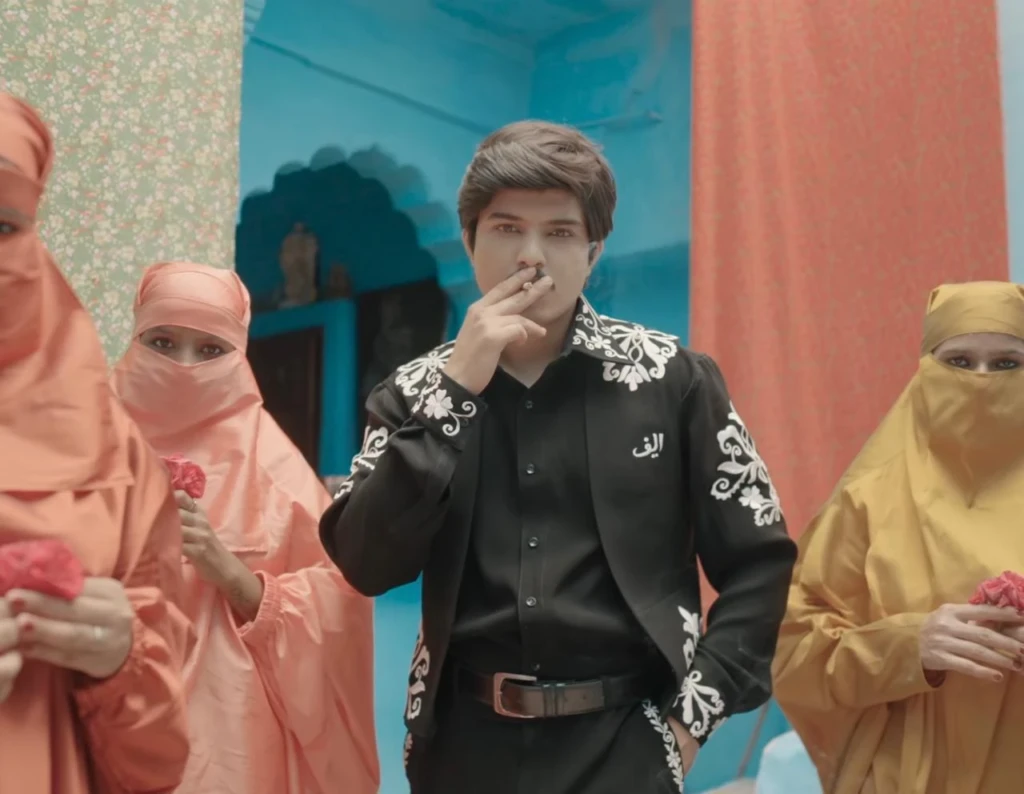
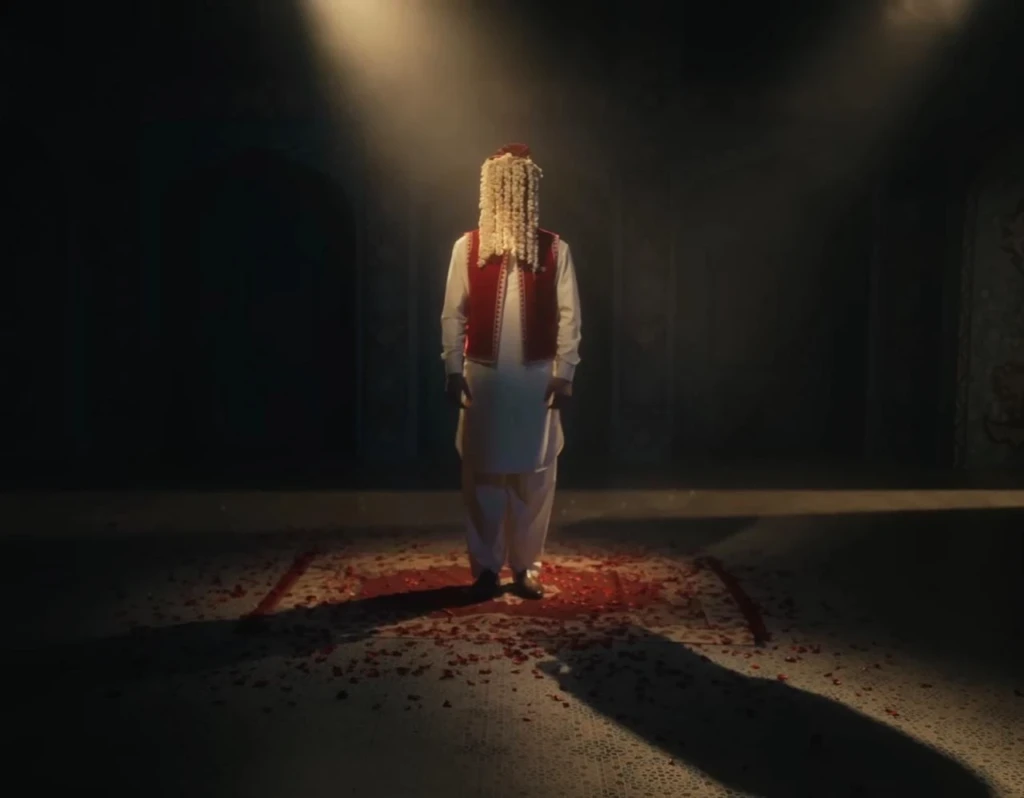
The same philosophy extends to the characters he inhabits in his music videos. In the video for “Mujhe Rok Lo,” an old-school suit was chosen because audiences would instinctively associate it with gentleness and reliability, making the character’s heartbreak feel more devastating. For “Cigarette” he chose to wear a black and red checkered shirt, the costume reflecting the narrative of mourning and pain before the lyrics are heard. “One of my favourite looks is that of the character Alif in “Ghar”, dressed in a cream kurta embroidered with his own name beneath a muted red waistcoat. In the song, the audience knows Laila has moved on. But Alif is still living in the illusion that she’ll marry him. That’s why we gave him the red waistcoat. I didn’t want him to look completely like a groom because it’s still a sad song. He’s trapped between hope and acceptance.”
Reimagining the Mehfil
At a time when most artists are chasing bigger stages, louder productions and festival-sized audiences, Khan is moving in the opposite direction. His baithaks – intimate gatherings rooted in the tradition of the mehfil – are carefully choreographed cultural experiences.
For the Mumbai edition of Alif Laila, Khan transformed the grungy interiors of Lower Parel’s antiSOCIAL into a world of his own. Guests, many dressed in elaborate kurtas and anarkalis, were welcomed with spritzes of attar, gajras tied around their wrists and intricate mehendi, before entering a space filled with the sounds of Nusrat Fateh Ali Khan.
Audiences linger for hours after the performance ends, reluctant to leave. With plans to extend his universe into a line of bespoke shirts, Khan’s ambitions now stretch well beyond music.