

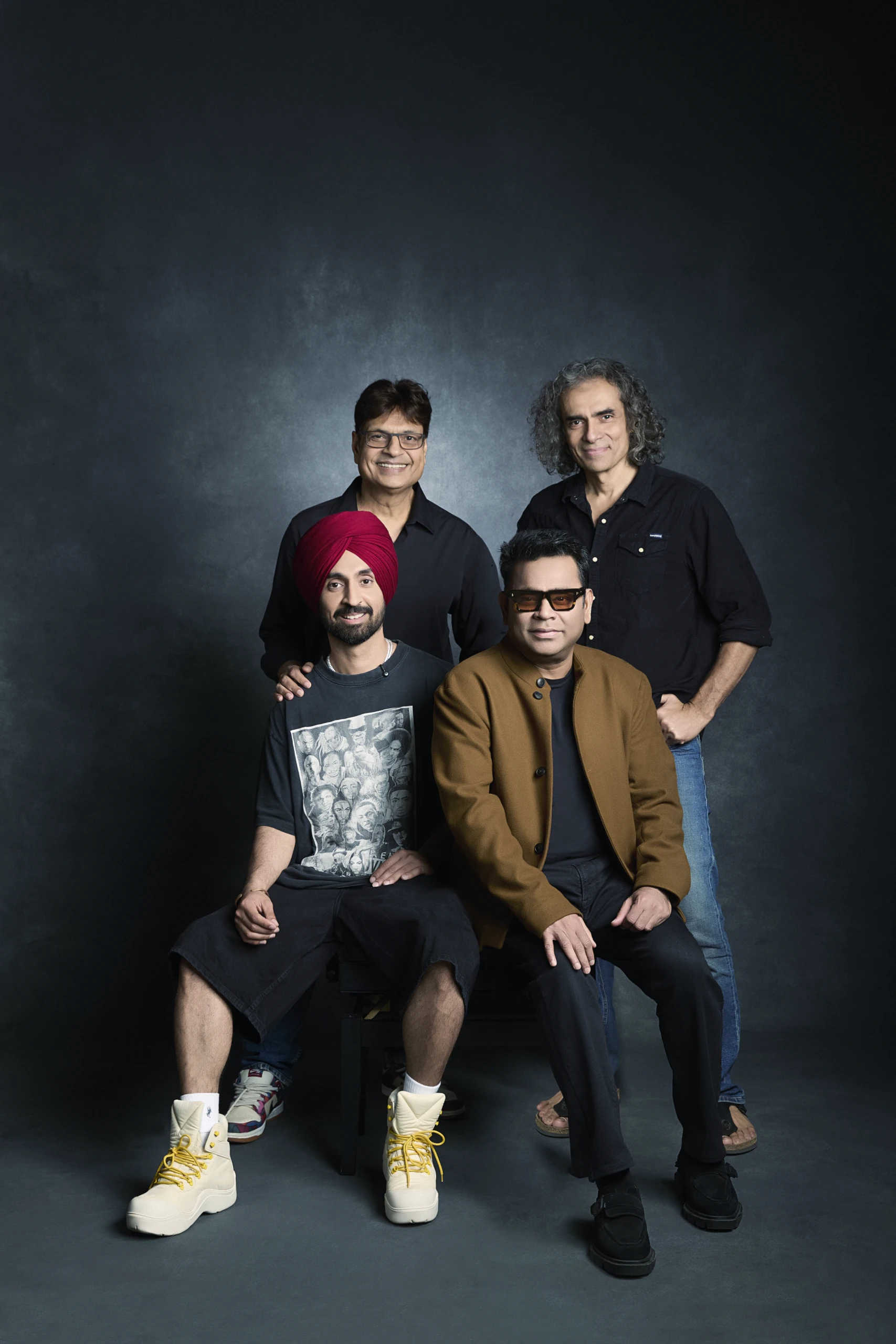
Barely a few seconds into the Main Vaapas Aaunga album opener “Kya Kamaal Hai” — composed by A.R. Rahman with lyrics by Irshad Kamil — something extraordinary happens. In a touch that’s almost Gulzaresque in its simplicity, playfulness and sheer unexpectedness, Kamil rhymes ‘Yeh… chehre mehke hai’ — delivered in staccato fashion by Diljit Dosanjh on vocals — with ’Oh yeah’.
Oh yeah. That’s the genius.
In a verse in which words like ‘dilfareb’ and ‘raunaq-e-jahaan’ are to follow, the casual, everyday English expression injects a levity that lends the song its peculiar equilibrium: it’s a utopian song about a burning world. At the end of the film, directed by Imtiaz Ali, it plays over images of displaced people across continents, all searching for some version of home.
How would Kamil have come up with it, you wonder. The lyricist’s wide-ranging sensibility has shown his knack for nonsense rhyming and wordplay, like how he threw in a ‘Loo mein jaana mushkil hai’ in the cheeky “Heer Toh Badi Sad Hai” from Tamasha (2015). Or his self-reflexive articulation of the limits of language when he wrote ‘Jo bhi main kehna chahoon, Barbaad kare alfaaz mere’ (‘Whatever I want to say, the words fail me’) in “Jo Bhi Main” from Rockstar (2011). It makes perfect sense that the same man, when faced with a Rahman tune with a tricky metre, reacted with a ‘Oh yeah’.
It is tempting to imagine the phrase as a moment of improvisation, a lyricist’s instinctive response to a melodic challenge. But it’s also the product of a longer conversation, one that Kamil has been having with Rahman and director Imtiaz Ali for the better part of two decades. If Main Vaapas Aaunga feels instantly familiar despite its new setting, it is because it reunites one of the last great director-composer-lyricist partnerships in Hindi cinema.
This is the creative triangle that has given us some of the defining songs of the century: “Kun Faya Kun” from Rockstar, “Patakha Guddi” from Highway (2014), “Agar Tum Saath Ho” from Tamasha, and more recently, “Vida Karo” from Amar Singh Chamkila (2024). Great songs, certainly. But also songs that belong to albums whose artistic value seems to grow with every passing year.
Look back at the history of Hindi cinema and you will find that behind many of its greatest albums lies a great director-composer-lyricist partnership: Guru Dutt, S.D. Burman and Sahir Ludhianvi; Raj Kapoor, Shankar-Jaikishan and Shailendra; Mani Ratnam, A.R. Rahman and Gulzar. The 2000s, too, produced a remarkable run of director-composer-lyricist partnerships, of which I remain particularly fond of Shaad Ali, Shankar-Ehsaan-Loy and Gulzar. Such collaborations create an aesthetic that transcends any one film. The director brings a sensibility, the composer a sonic world, the lyricist a vocabulary; together they produce something that often feels larger than the project that gave birth to it. Sometimes the songs contain clues to the secrets of the film. Sometimes they capture its spirit more fully than the film itself. The soundtrack becomes greater than the sum of its parts.
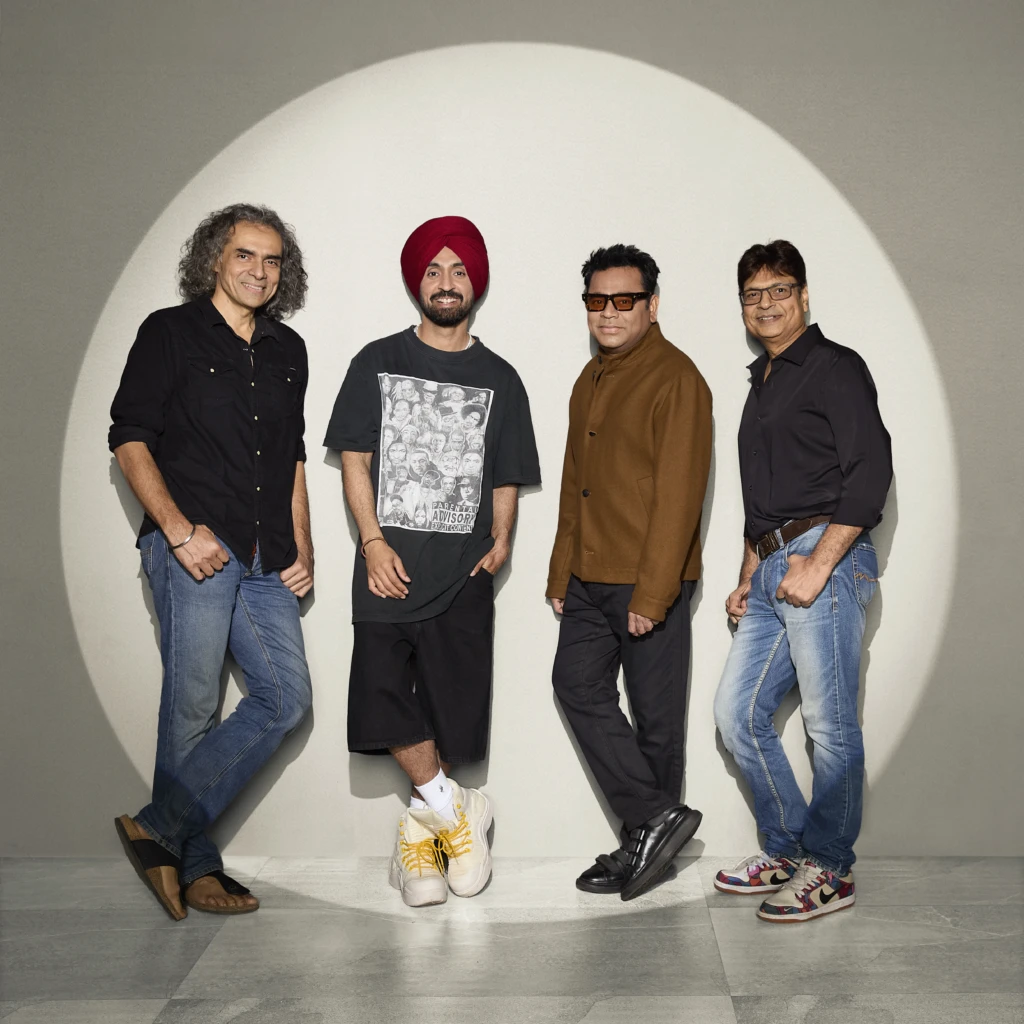
That tradition has become increasingly rare. Today’s soundtracks are often assembled from multiple composers, lyricists and producers, with songs functioning as standalone units rather than chapters in a larger narrative. Which is why every new Ali-Rahman-Kamil collaboration — or even a variation of it through their frequent work with Aanand L Rai — feels worth cherishing. It belongs to a vanishing tradition.
Where exactly Main Vaapas Aaunga will ultimately rank within the trio’s body of work is impossible to say. The album has been out just over a week, and Rahman’s music has always demanded patience. But what struck me immediately was the feeling I associate with their best work: that of entering a rich, expansive world. With eight songs clocking 34 minutes, the album is hardly long, yet it unfolds with the density of a novel.
Part of that richness comes from the care with which the trio has chosen its voices. Ali recently recalled that Rahman once wanted Ranbir Kapoor to sing all the songs in Rockstar, if only he could sing. He couldn’t, and the result was one of the great singer-character marriages in Hindi cinema, with Mohit Chauhan becoming Kapoor’s voice. But the anecdote also points to an enduring fascination of Ali’s. “Someday I want my actor to sing all the songs in the film,” he said recently. From Alia Bhatt in “Sooha Saha” from Highway to Diljit Dosanjh and Parineeti Chopra in Chamkila, and now Dosanjh and Vedang Raina in Main Vaapas Aaunga, the trio has repeatedly pursued that ideal, seeking the authenticity that comes when an actor’s emotional and singing voices become one.
The casting elsewhere is equally inspired. Perhaps the album’s most exciting discovery is Neelanjana Ghosh Dastidar, a bassist in Rahman’s live ensemble, whose rendition of “Maskara” brings freshness, mischief and remarkable rhythmic agility. The song recalls the playful gibberish of “Masakali” and the folk energy of “Katiya Karoon”, yet Dastidar makes it entirely her own. In interviews, she has spoken about Rahman’s instruction to channel the flirtatious spirit of Asha Bhosle. The result is one of the album’s most delightful surprises.
“Ishq Mastana”, meanwhile, is the album’s boldest experiment. Drawing on Punjabi folk traditions while incorporating the big-band and dance-hall influences that circulated through North India in the 1930s and 1940s, it evokes a world that feels simultaneously local and cosmopolitan. Once you’ve seen the film, the choices make perfect sense. The Sikh family at the centre of the narrative is portrayed as modern and outward-looking, and the music reflects that hybridity. Chauhan, returning to the earthy Punjabi register he discovered in “Baaja” from Chamkila, emerges as a vessel through which Rahman, Kamil and Ali channel a robust Punjabi energy. Most fascinating are the transitions, moments where seemingly incompatible musical ideas collide and somehow cohere. Rahman has always been a master of transitions; here they become part of the storytelling itself, mirroring a mind hallucinating his days in the Punjab of his youth.
Elsewhere, as in “Vo Nahin”, Kamil is at his most economical, working with the simplest of building blocks: “Sheher hai, log hai, bheer hai, kaam hai”. The succession of these clipped, almost reportorial phrases create a kind of urban folk poetry, grounded in the rhythms of ordinary life. The song keeps changing shape, eventually arriving at a devotional register where love begins to resemble spiritual surrender (another recurring preoccupation in the trio’s work together). Ali stages the sequence with characteristic imagination — having returned to his village, the protagonist moves through a railway station strewn with the bodies of those killed in the riots — aided by the musical instincts of editor Aarti Bajaj, whose sense of rhythm has long been integral to the way songs function in his cinema.
The album also feels notable for what it doesn’t do. We may slowly be entering a post-Arijit Singh era, or at least an era in which major soundtracks no longer feel compelled to revolve around a single dominant voice. Here, Faheem Abdullah, whose profile has risen sharply in recent times, is entrusted with the lovely “Dheere Dheere”. Yet unlike many contemporary composers, Rahman seems interested not in using Abdullah for familiarity but in discovering new shades within his voice, drawing out a kind of sweetness here.
There is a similar gentleness to “Tere Paas Main”, a melody steeped in the nostalgia of undivided India. Sung by newcomer Deepali Sahay, it possesses the innocence and emotional directness of an old recording rediscovered after decades. The period setting of the film lingers in every note.
And then comes “Dariya”, which brings the album to a close beautifully. A song about rivers, it also becomes a song about connections: between Punjab and Bengal, between memory and history, between people separated by borders and violence. Moving between Punjabi and Bengali, it imagines culture as something that continues to flow long after political maps have changed.
Main Vaapas Aaunga is, among other things, a reminder of the value of artistic continuity. Fifteen years after Rockstar, Ali, Rahman and Kamil are still engaged in the same conversation — about longing, wandering, faith, memory, homecoming — only from a different vantage point. The questions remain the same; the answers keep changing. And sometimes, all it takes to make them feel new again is two ordinary words: Oh yeah.