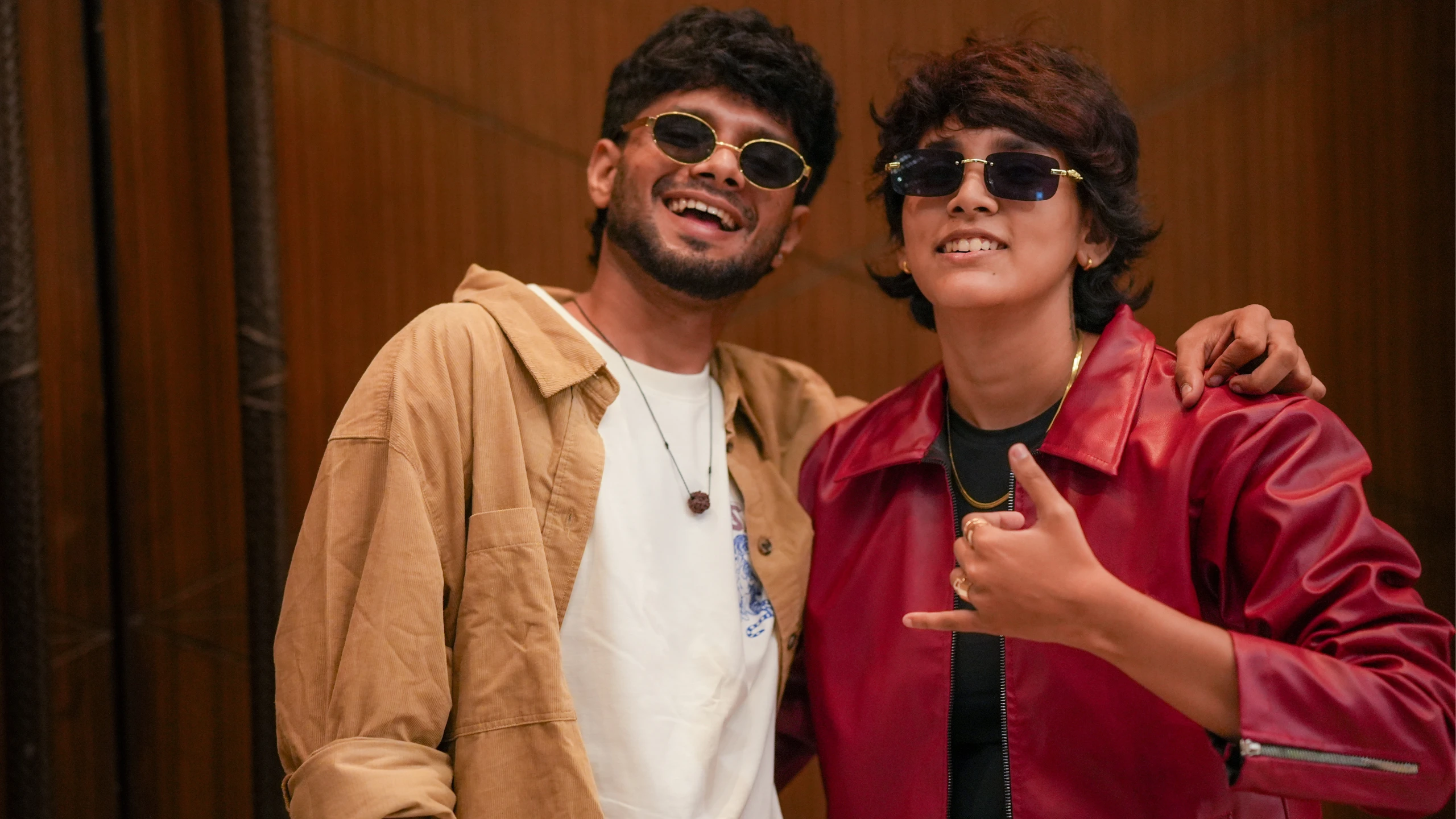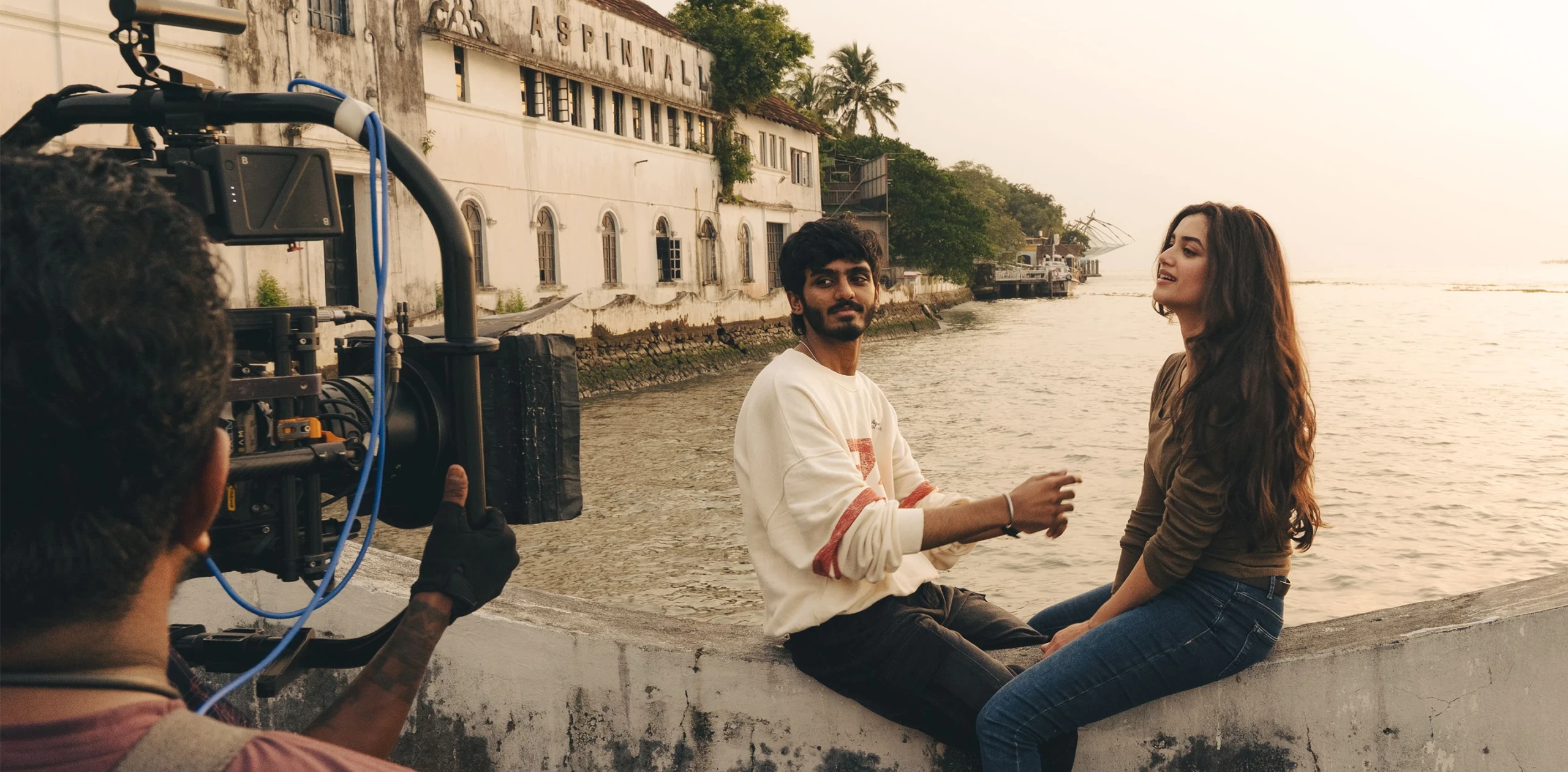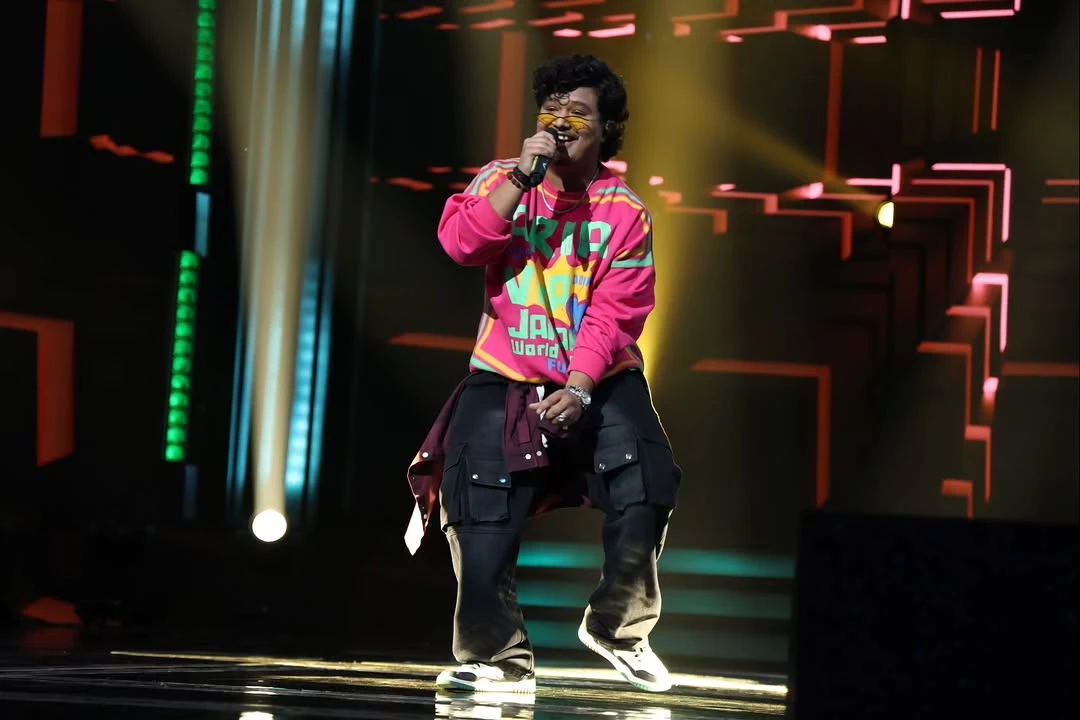
For 26-year-old Chennai rapper, singer and director Paal Dabba, a song can conjure an entire world. Known for his ecstatic, irreverent rap style, Anish aka Paal Dabba has also built a reputation as a maverick behind the camera, bringing the same restless energy to his music videos that he brings to his music.
Right from his early DIY videos, including his 2022 debut “3SHA,” to the meticulously constructed visuals of “170CM,” “OCB,” “Kaathu Mela” and “Psilovibin,” he has steadily developed a unique visual language. His highly-stylised music video for fellow Chennai rapper Vengayo’s “Settai” recently made waves for its use of extreme graphic violence.
Billboard India speaks to Paal Dabba about the visual language behind his music, the influence of his years as a dancer and choreographer, and why he prefers to keep creative control over his videos.
You’ve spoken about being a huge fan of old MTV and Channel V — MJ, Backstreet Boys, Deftones, The Corrs. What did you love about those videos, and what are you trying to bring back from that era into Tamil music videos today?
At that time, I never had an idea that I’d be doing music videos like them. But I used to find those videos very cool. “Crazy Frog” was the video that connected me to the music and visuals a lot, I cannot imagine any other visuals being used for that song. Be it music videos in MTV or Sun Music, they were an inspiration to me. I would imagine my songs would be telecasted in those channels. I’m not sure if MTV plays Tamil songs, but I wanted my music videos to be played in those channels someday.
All your songs and videos look like fun on the surface, but they have a deeper meaning. Does that message come first and the visuals get built around it, or does it sneak in after the fun stuff is already planned?
Mostly, since I go into a writing process, I only fix it that way for some songs. For others, I just play the music beat and go with the flow. As I write and get rhyming words for every sentence, the lyrics just keep falling in place. The process changes for every song. For some songs, I get the ideas for these messages while I write the lyrics itself and stick to it. For some, I purposefully add the messages to the songs.
When an idea for a video hits you, what comes first — a move, a picture in your head, or the story? Which one pulls the rest together?
I usually visualise picture-first. When I listen to a song for the first time, I get a lot of different ideas because of my background in dance choreography. I have been a part of reality shows as a choreographer and for every episode, we’re supposed to come up with a concept in a short time, probably about three days for seven people in a crew. We have to choreograph a concept and a routine… say we do a tech rehearsal on Wednesday and shoot the show on Friday, every week. So, our work was primarily to only come up with different concepts. For example, if there is a love song, we usually think we’ll show a girl and a guy on a beach together but over there we think in an opposite way. Like, a conversation between a brain and heart where the brain is a man and the heart is a woman and they’re in love. Similarly, now when I listen to songs, I try to think out of the box and brainstorm. This is how we come up with concepts for music videos.
In videos like “Psilovibin” you’re credited as director. How did you pick that skill up?
I was never really related to art in college. I studied Commerce. Even for this, I’ll go back to my dancer days because back then, the only survival thing for dancers was to put out videos online. I would create a routine and choreography for a song, shoot it on my phone with a good background and put it on Instagram and YouTube. When I uploaded these videos, a lot of dancers who watched them would want to learn the routine, so I used to travel and conduct workshops for them. At that time, to shoot the videos, I could not really hire anyone to do it. So I shot them myself and through them I gained some knowledge about the shots. If there is a movement from head to body, I need to frame a wide shot. For facial expressions, I need to frame a close shot. I knew only the basics and used to practice how to shoot in an innovative way. I use the same skills here today, wherein I frame shots according to the movement. This is how I improvised my skill.
Some directors plan the shots first and slot the dance in after. For you, does the choreography sometimes come first, so the camera has to chase the movement instead of the other way round?
I never think that dance is compulsory for any song, if I think it is needed, I have it. Off late, in a lot of music videos that are released, it seems like dance is necessary for it to go viral in the Reels culture, more than it merely being a music video. My videos do not have it intentionally, but only when the song needs it. If we feel like a song needs a dance section, we listen to the song completely and decide which hook section will have a dance number and add it. After that, we fix the shots for the other durations. We consume a lot of content on Instagram and YouTube, so we take ideas from them about camera movements, etc., and do practice tests on the phone. Through that we get some crazy shots and we set it for the song.
In “170CM” you’ve got dancers in lungis doing tight choreography right next to a lot of VFX visuals. How do you decide when a moment needs real movement versus when it needs VFX?
In “170CM”, the building in the song is where we shot the entire video. It’s my friend’s house. He took me there one day and when I entered the building itself, I found it very fascinating and knew that any frame I set here would look great.
So the music video was based on the location. In the building, there is a spiral staircase. When I saw it, I knew what shot I could compose here. We set the choreography based on rooms in the location and divided them section by section to place it in the song according to the duration. In the beginning of the song there are a lot of fast cuts, when it came to the second half, the lungi section, we thought we’ll go for a single shot.
How important is styling to an artist? You also style yourself rather than working with a stylist. Is that a trust thing?
Styling myself also comes from my experience in reality shows, where we think about a concept and we ourselves brainstorm the kind of costume to wear. Through that, whenever I listen to a song, I’ll know what colour to go for, what kind of costumes would match, what body movements can be choreographed for an instrument. In music videos, like for the “Ai Ai Ai” song, it is pink and green… colours like this suit me and the songs I make. So I fix those and let my team know which to go for. “170CM” is orange and teal, “OCB” is a different palette. I listen to a song and I get an idea as to which colour to go for, I think I’m good and have a knowledge of the colours, so I go with my instinct.
Pick one or two videos where you think the styling really worked?
My favourite from all my videos is the “Ai Ai Ai” costume styling, the pink, green, red insides, the goggles, the shoe, everything from head-to-toe was properly set. Another favourite is “Sab”.
Did doing everything yourself — dance, styling, direction — come from wanting full creative control, or did it start more out of necessity?
These things kept changing according to the times. I really like doing creative work and to be involved in everything, I’ll shoot really good videos if you give me a camera. I really like editing as well. I have a lot of friends who are directors as well. But I didn’t really think of all of this in the beginning. If I get an idea, I discuss it with my people and shoot casually. It started this way and once people started watching it and appreciating me for the uniqueness of the videos, I wanted to do something better and did “170CM”. That was the initial zone. Later on, I tried outsourcing the creative work but I did not get the same feeling that I usually get from my songs. So post that, I wanted to have creative control with me for my music videos.
Are there other artists out there whose “does everything himself” approach you look up to?
Yeah, there are two people. One is a Delhi guy, Chaar Diwaari. He produces his own music, sings his own songs, directs himself. His directorial videos are interesting and fresh. Another person is the artist from the song “Amsham” [Aksomaniac]. He also directs his own songs. Off late, a lot of people direct their own videos, but these two are my favourites.
You’re not tied down by the usual film-song machinery. What’s the biggest thing that freedom lets you do that you probably couldn’t if you were making a song for someone else’s movie?
One thing I have is the creative freedom to do what I want from my personal experiences. But in movies, I have to think from a hero’s mindset and their perspective, the wordings which can be used, how to show them in an impressive way. This is a stressful process compared to the indie way because I write what I feel, what I want to rhyme. I cannot do that in movies, wherein I need to be in control, which might feel like pressure.
This interview was conducted in Tamil and has been translated by the author for the purposes of this article.