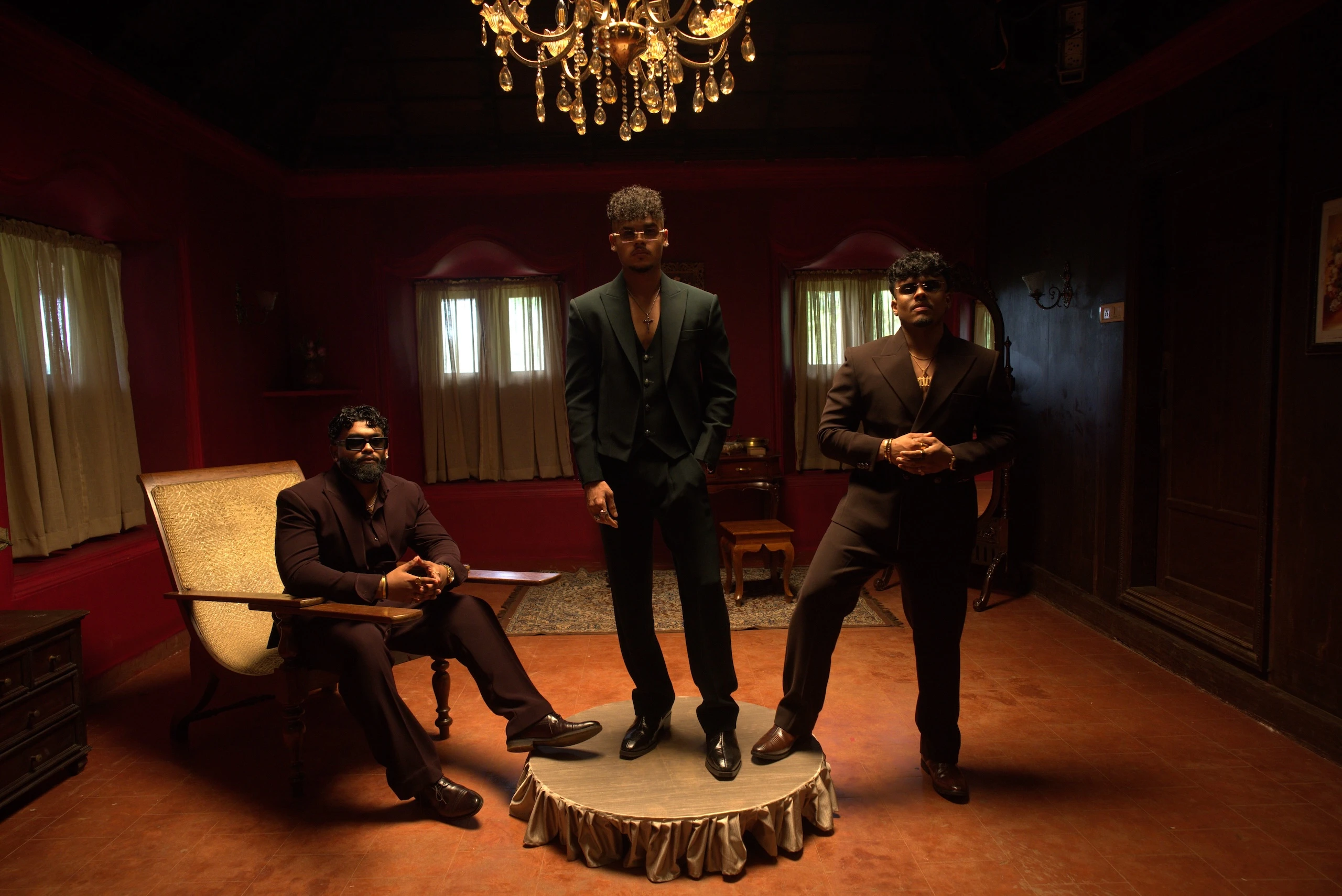

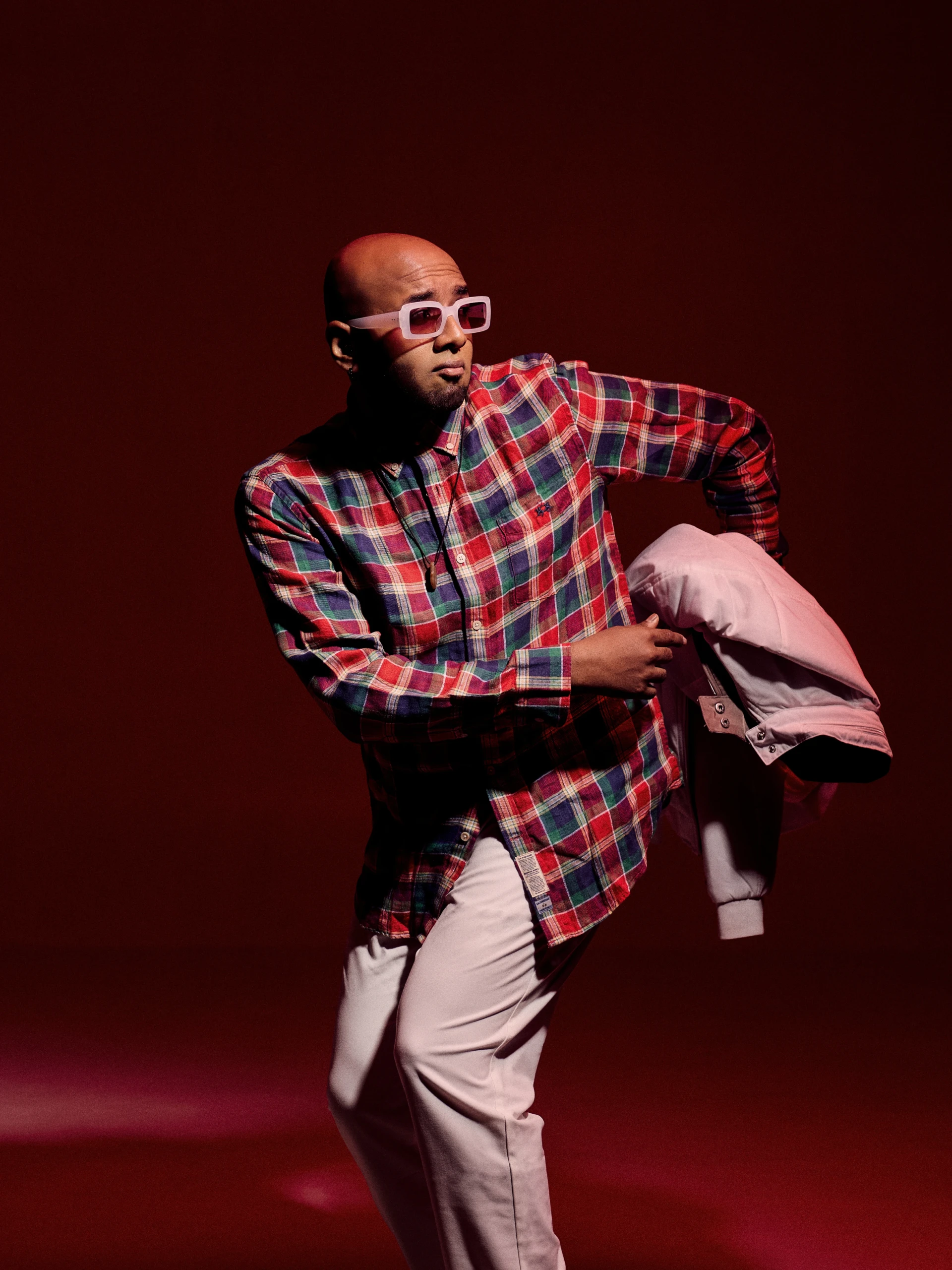
“Gratitude is the secret of my energy!” Benny Dayal exclaims, alluding to the old Boost (an energy drink mix) ad, as he continues explaining his professional philosophy. He often uses the line as a boilerplate answer to “Why?”. He is often asked that question because his 22-year-long career, rife with experiments and oddball choices, warrants it.
Dayal made his debut as a part of a pop-band put together by A.R. Rahaman, and would soon sing with S.P. Balasubrahmanyam, for Rajinikanth, on a Rahman soundtrack. He recalls the session as another day at the office. “I wasn’t told who I was singing for or with. I just knew there’s a song and this was the part to be sung. I didn’t ask many questions either because I was just grateful for the opportunity,” he explains.
Despite being catapulted into playback stardom, Dayal has gone on to be the vocalist on rock band Rainbow Bridge, form his own live funk band: Funktuation, and release a couple dozen indie songs (including “Yaaro Neeyo”, a staff pick on Billboard India’s No Skip). He speaks to Billboard India about his multilingual playback career, advocating for live music, and his perennial search for a new sound.
One of your early playback credits was “Balleilakka” for Sivaji, alongside S.P. Balasubrahmanyam, for Rajinikanth. You were a relatively young singer then — what was that session like?
I had no clue that I was singing with him, to be honest. I was around 22 at that time, and I wasn’t being told, “You’re singing for this movie. You’re singing alongside somebody.” You’re just told, “Hey man, just sing the track. It’s for someone to sing.” So I’m just not asking questions; I’m just doing my thing.
I never expected anything. I just sang because I liked it and I was really passionate about it.
Twenty years in, how have your playback choices evolved?
I’m trying to be choosy, but not for some lame reason. I’m only being choosy because I don’t want to repeat the kind of songs I have done. Of course, if the song is amazing and the composer thinks, “Okay, I think only you can nail this,” I would immediately hop on it.
I think I’m allowed to have that opinion now (laughs). So yeah, I have to be very watchful of my singing. I don’t think my audience wants to hear another “Lat Lag Gayee” or “Badtameez Dil”.
You have spent significant time in bands, particularly Rainbow Bridge and Funktuation. What did being in a band teach you that playback couldn’t?
You learn to gauge how much value you add to a collective, what’s your role in a given situation. If there is anything extra to be learnt, you can learn how you can share it with the band. Rather than just focusing on your own growth, you make sure you’re growing with everybody else. So for me, that was the main thing about Rainbow Bridge. When I started Funktuation, I could actually apply all of my learning, work with my musicians, and just write music and be together.
We’re currently finishing our second album, which is going to be a “no-compromise” band album. We’ve been working on it for about three years, and it’s going to be a festival-worthy album.
You often have two versions of a film song — the studio version and the live one. Why is it important to change something people already know?
A live performance set has to be performative. It has to be entertaining. It has to be engaging. It can be boring to hear the same old thing live. I mean, you can just sit back with your headphones on and listen to the same song at home (laughs). But when you come for my show, I’m performing; I’m going to send you floating on a cloud.
You’ve been making independent music for a long time, despite a booming playback career. What keeps bringing you back to it?
I started as a person who writes and plays original music. I made a promise to myself: That process should never die. I want to keep writing new music. If not that, at least support new music or newer artists. Just say, “Hey, you guys are awesome.” That actually just feeds the soul.
Did you ever feel pressure to stick to the thing that was working?
I feel like listening habits have completely changed, and media houses need to realize that people want something fresh. The kids who grew up listening to me now have an opinion: “We heard this in school days. Let’s listen to something new.” And those people have come to positions of authority in media houses like yours. So I feel there’s more reason to keep reinventing and less to stick to the same old stuff.
You started when film music was still overwhelmingly at the centre of the Indian music business. 20 years later, what has become easier for artists — and what has become harder?
It’s still a struggle. If your intent is to become big, don’t make music. You have a thousand friends telling you – this song can go into a movie. Don’t worry about that, just make the song sound nice. I did a song called “Oora Paaru” with my band, Funktuation. At that time, the songwriter told me, “Bro, you should get it put in a movie.” I said, “No, man. The point is to keep it in the album.”
What’s next for Benny Dayal?
I don’t know. I just want to make music that can help me cross over to the world. I’m only looking at that now. I just want to make music. I want to represent the country, but also take the language and some of the culture abroad through my music. And just have fun, never forget fun!