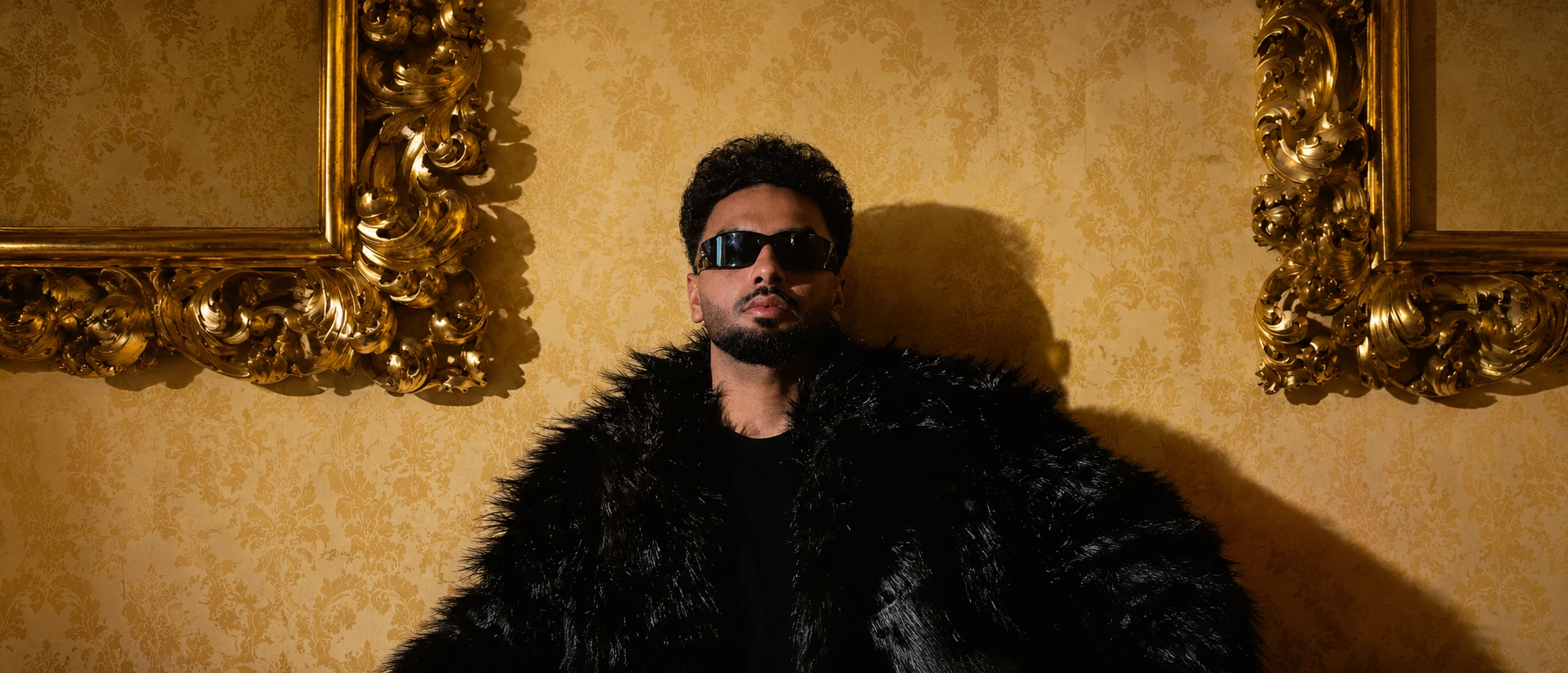
When Bihar-based Sanket Shikriwal dropped “Real Baat” in 2023, it quickly spread through r/HipHopHeads (the biggest Indian hip-hop subreddit) and other nerd corners of the internet. He had been releasing music since 2020, but this was the first track to make a splash. The intrigue was evident: “Real Baat’s” video featured a Bhojpuri rapper playing the saxophone, rapping about his personal angst over soft jazz. It was a sound never associated with Bhojpuri music. “I like music that breathes, hence the jazz. Mujhe stiff music pasand nahi (I don’t like stiff music),” he mentions in his interview with Billboard India.
Three years later, Shikriwal is headed to Rolling Loud 2026 as the only Bhojpuri language artist in the festival’s two Indian editions. He also features alongside veteran Bhojpuri playback singer Kalpana Patowary on “Khus Raha” (2026) released under Warner Music India’s folk label. He talks to Billboard India about making a new kind of Bhojpuri music and his belief in Bhojpuri hip-hop – a scene he says is on the cusp of breaking out.
What do you think Bhojpuri music is missing right now, and what kind of listener is being underserved?
Bhojpuri music has its own audience. Older people listen to folk music, people in smaller villages still vibe to popular songs, young people dance to them in weddings, but there’s nothing for the younger people to really enjoy. You’d have to really dig to find a couple sounds, albums that you can listen to on a long drive. I think that’s a big gap.
Popular music has its own money and virality and I’m fine with that. I just feel there is a market for a mature, parallel sound that isn’t being served right now.
Are Bhojpuri rappers beginning to build a connected ecosystem, or are most artists still working independently?
It’s a new scene, we are trying to figure it out as much as the audience. I don’t see mechanisms that can help us connect better – labels, collectives, more cyphers. That being said, a few of us are finally getting a good platform. Raaj Babu is on (MTV’s) Hustle 5, I’m being interviewed by Billboard, and I’m hoping this will open a lot of doors for all of us. Somewhere down the road, I see the scene truly blowing up and I want to be here for it.
What infrastructure is the scene missing?
Boots on the ground. As a bhojpuri rapper, I get more chances to perform in Mumbai and Delhi than I do back in Patna or Jharkhand. Promoters, venues, labels in these cities aren’t willing to take that risk and I understand that. We’re all trying to get to a level where the ecosystem sees the value in us, because the audience is there. All we need is support to perform, have more cyphers, just be live. It’s the only way a culture grows, in-person.
You were making music in Hindi before focusing more deliberately on Bhojpuri. What made you double down on your mother tongue?
The lack of material in the language. I still like making Hindi tracks and I’ll continue doing that, but Bhojpuri hip-hop is an untamed expanse. It’s more interesting to try and set the tone for a new genre altogether. I want to hold myself personally accountable for setting a high benchmark for Bhojpuri music as a whole. I’d love for it to change the perception people have about the region, its people, its music, everything.
Did you take any notes from Sneha Khanwalkar while working on the title track for reality show Bhojpuri Bawal?
I was just in awe of her, but yes I managed to learn a thing or two. Starting out, Sneha ma’am was the selling point for me, she was why I said yes to the project. I was in high school when her “Electric Piya” came out and it completely blew me away. I learnt how to make songs culturally fun from her. She just catches these cultural sounds and nuances and chops them up so beautifully, I think it’s a great bridge between folk and mainstream music.
You usually deny label-backed projects. What drew you to Maati and “Khus Raha”?
It seemed like a genuine cultural IP that cares about the art. It was also the idea of working with Kalpana (Patowary) ma’am. I have heard most of her music growing up and being on a track with her just seemed very promising. When I heard her vocals on this track, I was convinced this is going to be a great song. It pushed me to really focus on writing something beautiful, almost like a love letter to the culture. I think the song would surprise a lot of people.
You’ve talked about wanting to make hits but not necessarily viral tracks. What distinguishes a cultural hit from a viral one?
I think “viral” tracks are engineered for the medium. They are built to blow up via reels or YouTube or something else. I don’t want to do that. I want my music to strike a nerve and help the listener sit with their emotions. If it makes it big on the back of its quality, I’ll be super happy. No other way I’d want to blow up. I do have similar hopes from “Khus Raha.” It’s a singular sound, nothing like it is currently being done in Bhojpuri music.