
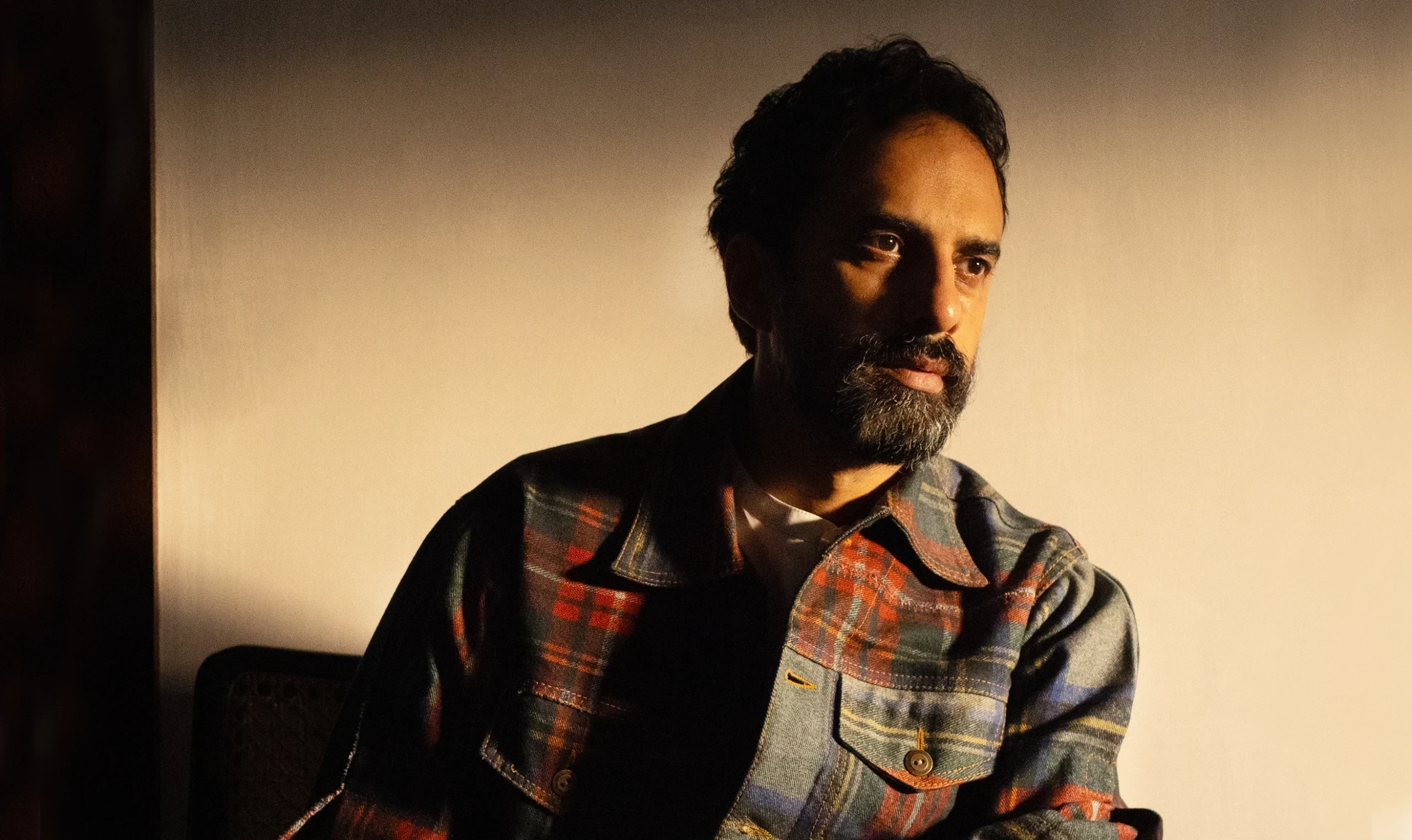
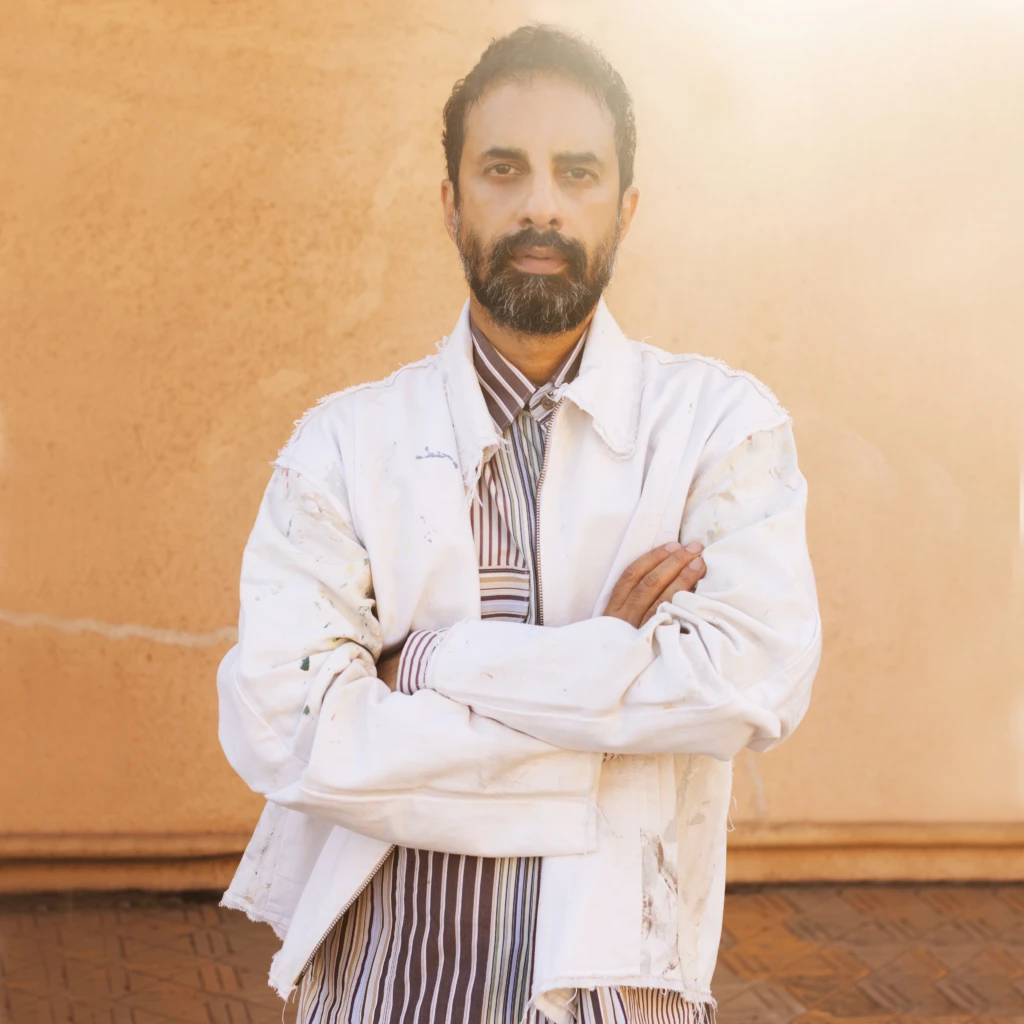
Ankur Tewari’s upcoming album Mr. Faarigh, out August 20, features nine Hindustani language tracks. Across musings on late nights, anger, unsaid things, sukoon and unfinished ideas, Tewari writes about the strange pressure of living in a time where even rest has to explain itself. Faarigh – in Urdu or Hindustani – means free, idle, or at leisure. The singer-songwriter and music supervisor has spent the last few years moving between film and OTT projects (Gully Boy, Kho Gaye Hum Kahaan, The Archies, Gehraiyaan, Made in Heaven), consulting on Coke Studio Bharat and founding Tiger Baby Records alongside filmmakers Zoya Akhtar and Reema Kagti. The first single off Mr. Faarigh – “1:15 AM (After Hours)” – namechecks bars in Bandra, scene folks and iconic Mumbai roads.
His first full-length album since 2023’s Akela, it seems to see Tewari return to form. In conversation with Billboard India, Tewari lets us in on the upcoming LP, thoughts on younger artists and why the indie scene still belongs to the streets.
Tell us why the word ‘faarigh’
It was the opposite of what I’m experiencing right now that made me go back to this word. Even when I’m at leisure, I’m not entirely at leisure. In the cities we live in and the jobs we end up doing, it feels like you are chasing time and deadlines. You are running on a treadmill. It reminded me of when I was younger, when things were calmer and you were truly at leisure and you were idle without guilt. Like when we were kids and someone would say, “Meet me when you’re free.” Right now, nobody is free. Everyone is putting you in their calendar, including me.
There is a recurring ache in the album of wanting two peaceful moments, just two moments of sukoon. At this point in your life, what does sukoon look like?
The one time I find peace is when I write songs, because that is when I lose the concept of time and space. Otherwise, I have a weird relationship with time. I run my calendar very tightly. It keeps the discipline up, but I have lost the feeling of going somewhere for half an hour and ending up spending four or five hours there without realising it. When I was younger, I grew up in Roorkee. It was like a world from an Enid Blyton book. There were parks, canals, blue skies, and all the time in the world to waste. We would swim in the canal, go horse riding, lie in the park, stare at the sky and make faces from the clouds.
The album keeps returning to the feeling of things left unsaid – in love, work, life, and the self – what are the things that usually take the longest for you to say?
I think saying yes takes me a very long time. I really think and overthink about it. My investigation through the album has been that I take long for everything. I am very slow in everything. My mind tells me I should take less time but my heart tells me to do whatever I feel like doing. I take time in releasing songs and writing material. I wait for the time when the song comes to me rather than me chasing a song.
This album looks at procrastination with a lot of tenderness. What has procrastination taught you about yourself?
I purposely used the word. I call it (the album) my investigation into procrastination. It is perceived as a negative word, but especially in the field of art and creativity, the more you mull over something, the more time you spend on it, the more you churn it, the more layers you discover. Whether you are writing a song, writing a story, or making a film, the time you spend with it gives you something. Earlier, I saw procrastination as a positive word. Now it is also linked to anxiety. You ask yourself, “Why are you not finishing this?”
In “1:15 AM,” there is a very specific after-hours setting. What do late nights reveal about people that daytime manages to hide?
Because we live in a capitalist, structured world, people consider the time after sunset as the time when work stops. You are done with the office, you come back, and you expose your personal side more. You feel you can be freer.
When people go to work, they assume a personality. I have seen this in offices and freelance spaces. People assume personalities to perform well, to be perceived in a certain way. Those things fly out of the window when you are in your safe space, especially after hours. You tap into a real side. Both sides are real, but this is a forgotten side that wants to step out of your personality.
Track 3 – “Aazma Lo” – has a fun, almost cheeky groove for a song that addresses frustration and angst. How did that mood come together?
Each of my songs is associated with a feeling. I remember very clearly that while writing “Aazma Lo,” I was very upset and angry. I wanted to teach the world a lesson. I was being challenged with a project I was doing, and I wanted to say so many things. As I said, in a work scenario, you assume a calmer side. I had to channel my anger somewhere and I channelled it in this way of saying, “test me, try me”. The mood came from that rage.
What was the creative process for this album?
The process started with me trying to figure out why I should put a bunch of songs together. I was doing a few massive projects with high pressure and tight deadlines and it was taking me away from my own music. I was not able to find the space in my head, or the physical space, to write an actual song.
I decided to question that, which led to the theme of procrastinating on your own ideas and not letting them go, which led me to understanding what anxiety is to me. I felt I needed to create something that could be an antidote to the darker feelings I was getting.
One of the first thoughts that came to me was about whether you need pain to write. People say that if you are heartbroken, you write better songs. So the first lines on “Aazma Lo” came from that thought: ‘Kehte hai likhne ko kaagaz kalam hi nahi kuch gham chahiye, itna hai likhne ko shayad mujhe gham kuch kam chahiye’ Do I need to collect a lot of pain to write? And if there is so much pain, how am I going to write?
That snowballed over the next seven or eight days. A lot came out of me in different notes and I started seeing a pattern. “1:15 AM” also came like that. It was about not listening to the voices in your head. Some days you do not want to write, you just want to lose yourself to the night.
What do you make of the way younger songwriters are using Urdu in I-pop and indie music?
I did not know that it had become a big part of I-pop. It is a beautiful language. I usually write in Hindustani, which is a mixture of Hindi, Urdu and some slang from how we speak these days. My vocabulary in writing is my spoken language. It is not assumed to be poetic language. I have heard an amazing amalgamation of how Hindustani is blending into spoken language, whether it is hip-hop or pop. I like how language is no longer a barrier in expressing yourself which is very exciting for me.
You’ve been around Indian independent music for a long time. What do you think people get wrong about where the scene is today?
People think the scene is on screens. For me, the scene is on the streets. The best music I have discovered is either at a gig, a street corner, or somebody’s house, live, when you are not looking at someone through a device. You are looking at somebody straight in the eye, and they are singing at you.
With Tiger Baby Records, you are also sitting on the other side of the table with younger artists. What do you notice first when a new artist plays their music?
The first thing I notice is their personality, and whether they mean what they are singing. How has it affected their life? How are they expressing themselves? How close is the song to their personality and their vibe?
Sometimes they are assuming a personality. Then I want to see how closely they understand that personality. It is not just the song. It is also what they are saying, how they are saying it, and then, of course, the music.
You also supervise and compose music for films and OTT. What do you look forward to in that process, and what has been a favourite project so far?
When I am working on movies or any project, I see music in movies as a design tool. You find a design language for the movie, and you enhance the narrative. You construct a sound universe, and then you find people who can help that universe find life. Projects like Coke Studio Bharat, Gully Boy and Gehraiyaan have been fun. It is always a great learning process because you meet very exciting musicians and artists. You learn from the way they approach music.
If someone followed you for one completely ordinary day, what would surprise them most about where your best ideas come from?
They won’t come to know. I am very sneaky about it. They won’t know when the idea is being compartmentalised in my head. It could be with my morning coffee, when I am sitting on my own. It could be during my evening tennis game. It could be in the middle of a conversation. You probably would not notice that I have zoned out, made some notes, and jumped back into the conversation. I am always on the hunt for great ideas, even if I do not know whether something will become anything.