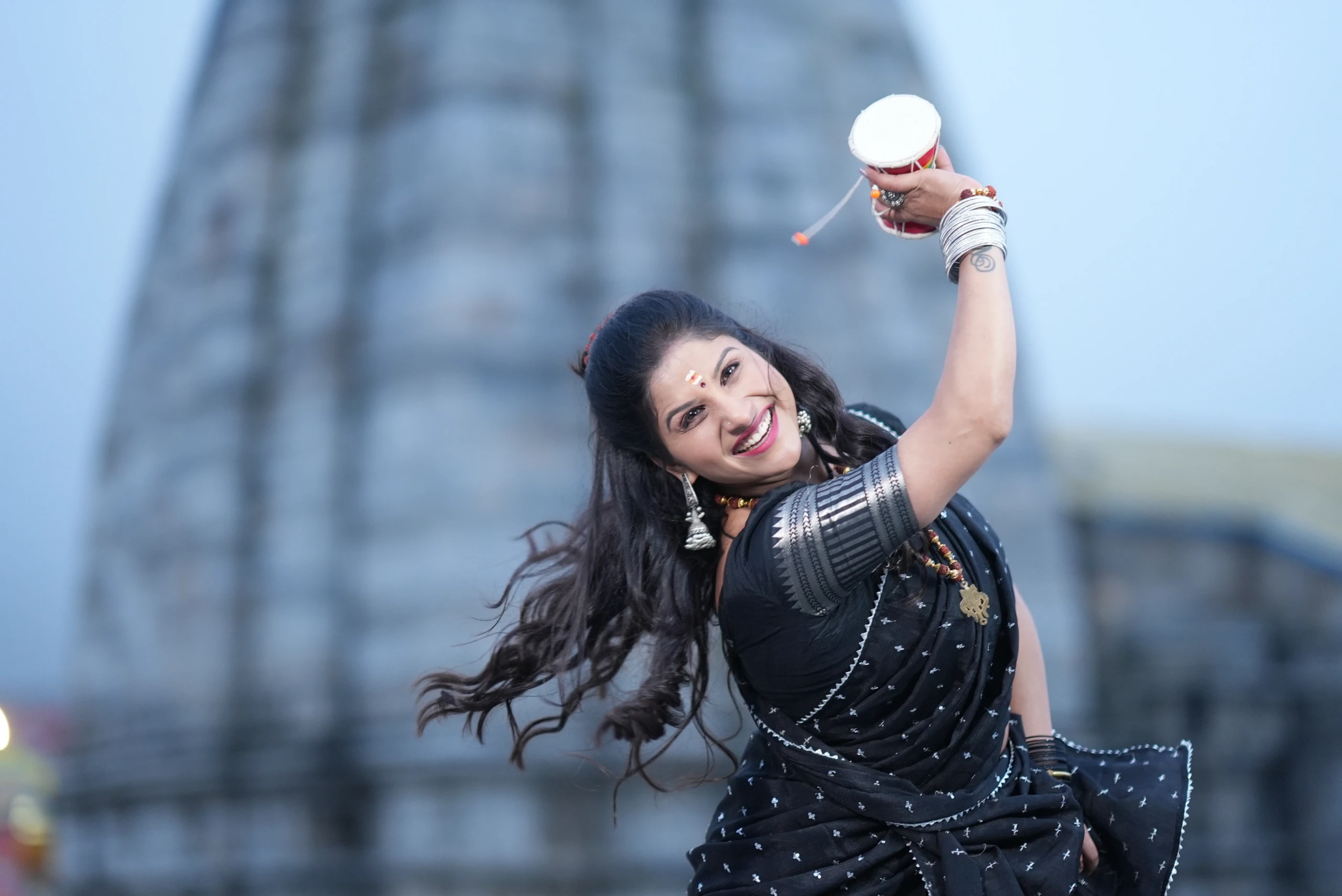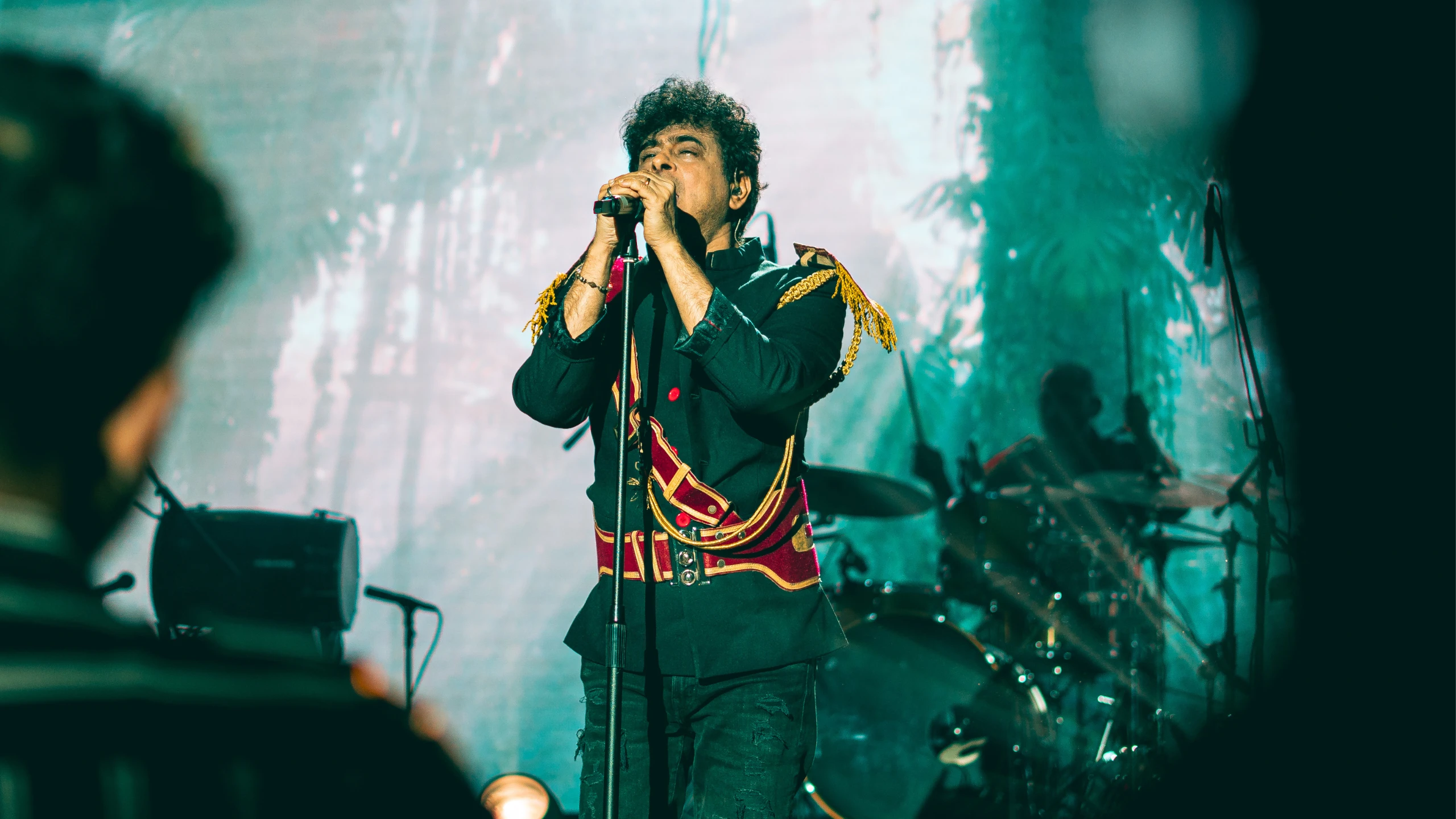
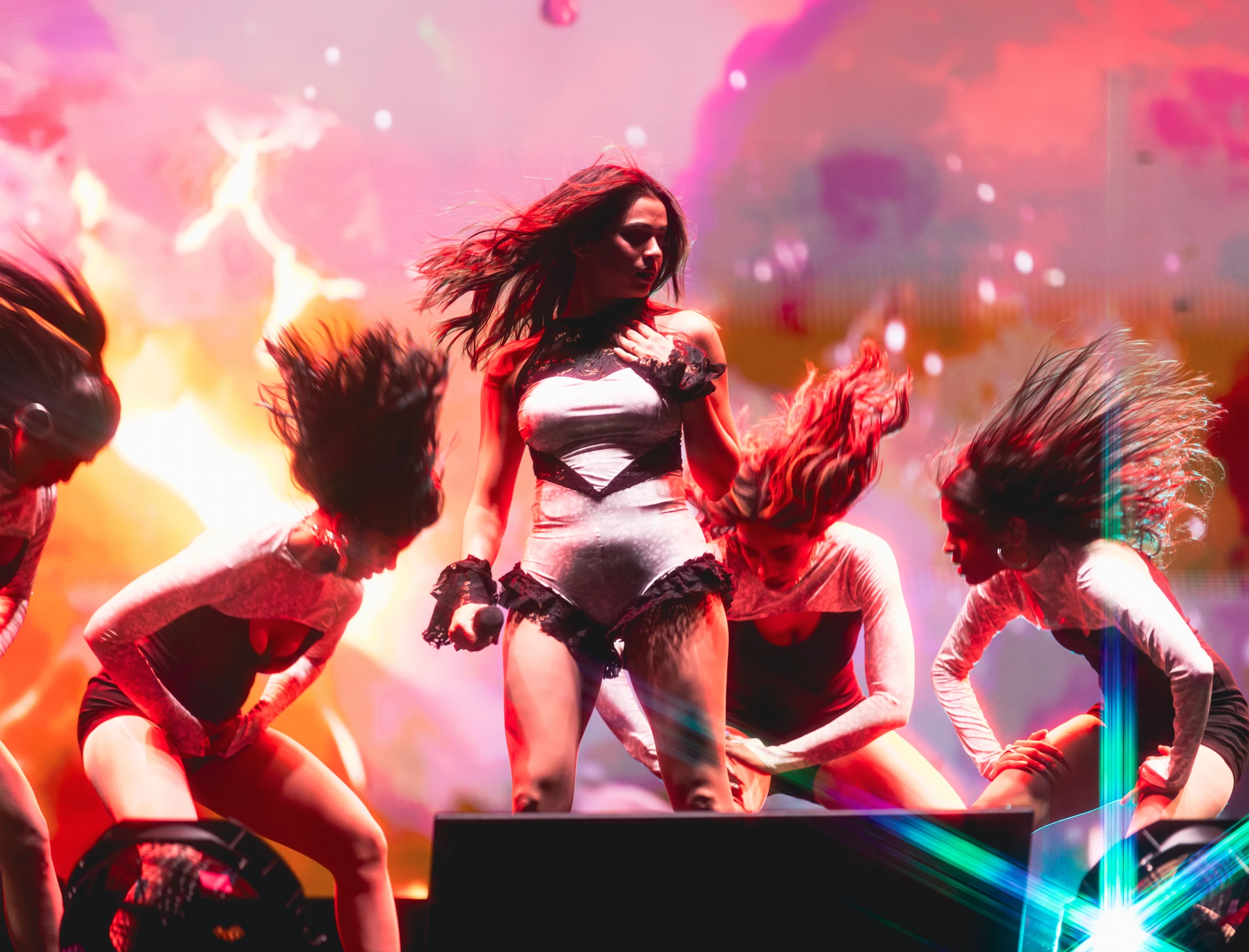
Shalmali Kholgade sang her first song as lead playback singer in 2012 (“Pareshaan” from Ishaqzaade), and started performing live shows from 2013. Today, her shows have a completely different tenor to them, with dancers, production, lighting, the whole works. It’s something she’s learned and curated. “You listen to music when you’re at home, but when you come to watch an artist perform, you watch the artist, and it really makes you feel differently,”said the singer in conversation with Billboard India.
“I absolutely only love being on stage. In fact, I’m in the studio only because it leads to being on stage,” she adds. The “Balam Pichkari” singer breaks down what it takes to build these large-scale concerts, from the tiny details [frills in costumes] to her concert rider [a 25-member crew], and looks back at her journey to create the stage shows she once dreamed about.
What is your earliest memory of understanding performance as something different from just singing on stage?
As far as my influences go, I have always looked up to the Western artists. Beyoncé is a huge influence on me, as are Bruno Mars and Justin Timberlake. These artists are the ones who I have had DVDs of, I have watched their live shows back in the day when we didn’t have YouTube.
But more importantly, I want to mention Neha Bhasin’s role in really shaping the fact that we can also be those artists. When I was in college, I auditioned to be a backing vocalist for Neha Bhasin. After rehearsing the set, she put on a DVD of Rihanna. She kept pausing it to point the backing vocalists out to us and see how involved they are in the performance of the music and how they’re moving. Even if it’s minimal movement, it added so much character to the performance and the energy. That really made you experience the music differently.
And I felt like what Neha was trying to do and still does today was for me the beginning of, ‘hey, in India, we could also dream about stage shows like that and do them the way the West was doing it all along.’
When did this become like a conscious switch for you that you want to be a performer and not a singer? Did you spend time building yourself up for this?
In 2017, I was having a low period in my life where I was really questioning who I want to be and what I want to really do. I had to really cut myself off from everything. I went to New York for a month and a half to study a little, to introspect. On that trip, I decided that I need to find a teacher who will teach me how to sing and dance because that’s what I really want to do.
I found out on that trip that there is no one teacher who teaches you how to sing and dance. When you are at home, you have to bring those two departments together. So I was like, ‘oh, my God. OK, so I have to do this myself.’
It’s going to be 10 years very soon of slowly building stamina, building the knowledge of how to manage both those things to see that entire 90-100 minute show through without falling apart completely.
There’s a lot of endurance training, like elevating your heart rate and stopping and lowering it within 20 seconds, 30 seconds, as soon as you can. Because that’s essentially what’s happening on stage. You’re doing a music piece and you’re doing choreography. Then you have to sing the antara right after that. You need to be able to hold a note, and basically be as still as you can.
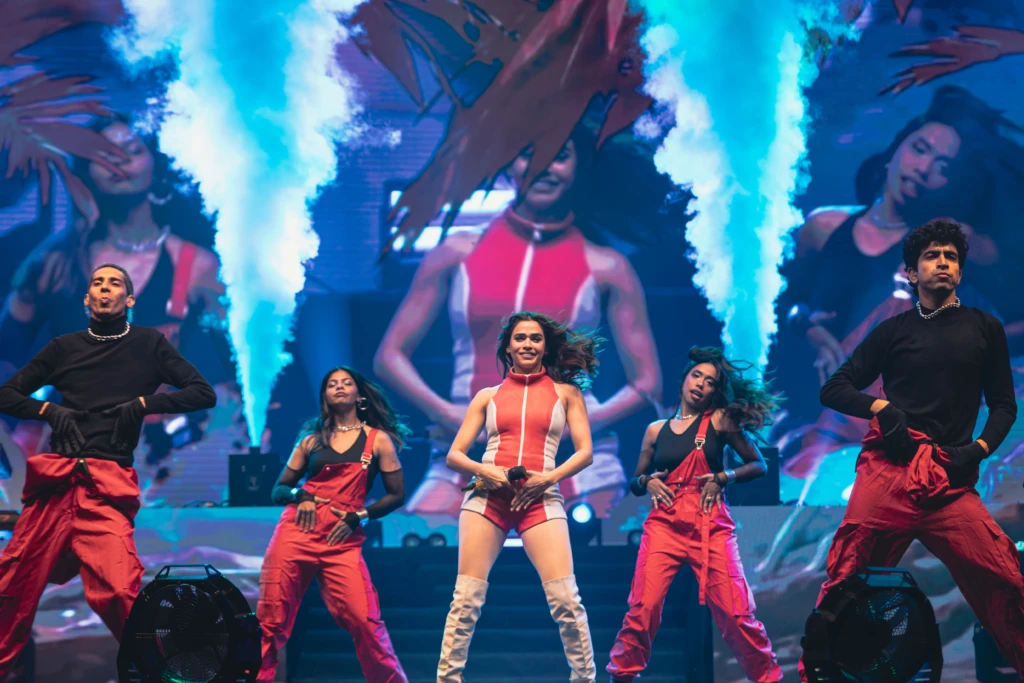
You don’t decide one day I want to do a 90 minute show in which I want to dance the whole time. It’s not like that. I introduced 10-15 minutes of dancing first. By and by you build that. I had these four backing vocalists. Then I said, ‘OK, I’m not dancing as much as I would like to. I’ll have only two backing vocalists who can dance and then I’ll have two dancers who only dance, so I can push myself as a dancer.’ Today I have six dancers.
What must a Shalmali show offer that watching it online cannot?
If you’ve noticed, the kind of music that I sang over the last 15 years now has been pretty varied. In that, even though “Balam Bichkari” and “Lat Lag Gayee” are popular numbers and they make you dance, there’s also been very melodic things that I sang, like “Pareshaan”, “Shayarana”, “Tera Naam Doon”, and all my indie stuff that’s different genres.
I’ve always felt like if someone came to my show, it should all make sense. What song comes when and goes into what should all have some story that runs through it. My show is what it is because it all ties in.
Everything has a place in the show, not because the audience will like this now. It’s because there is a theme that ties everything in together. And I think it’s been a work in progress for a few years now where I was trying to crack what should that theme be. What should that storyline be that glues everything in, makes you feel like you were watching a film, but there were live songs being performed in the middle of a film?
The show that we have today is like watching a film. It starts with a film. There is music in between. And then you’re watching a hundred minute musical piece.
What does your current concert team and rider look like?
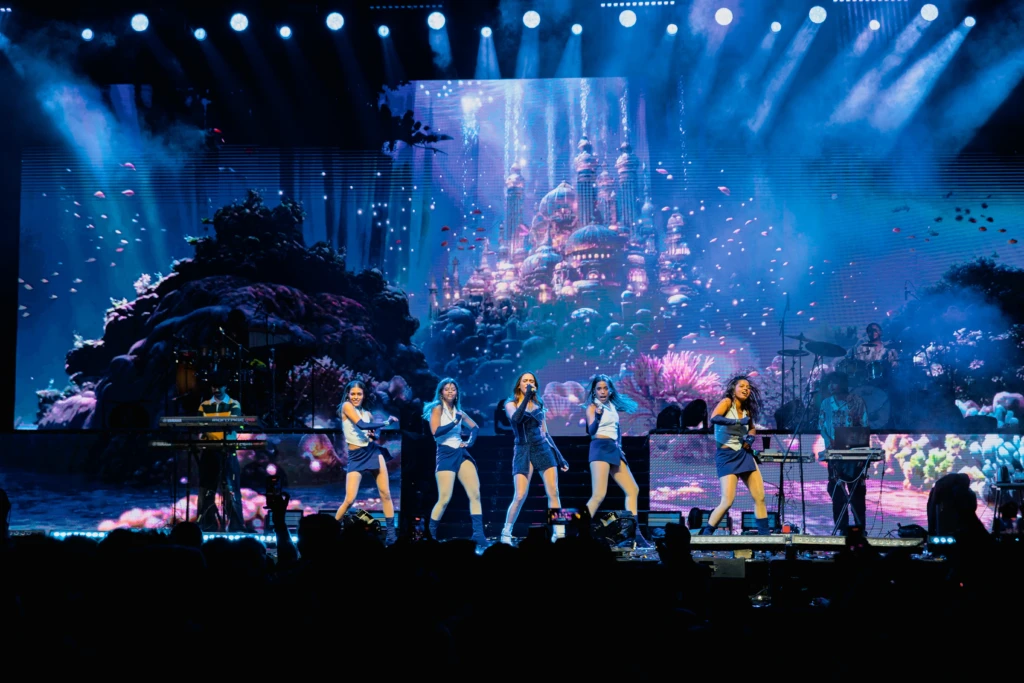
We have five musicians on stage – drums, bass, keys, guitars, percussion. There are six dancers – four women and two men.
Then we have a light engineer, graphic LED operating engineer. There are two sound engineers. There’s a show director. There’s another person who triggers the loops and samples and tracks. There’s a stage hand, another audio engineer who tunes the PA. And also a stage helping hand.
Then there’s hair and makeup, and the photographer. It’s around a 25-member crew, subject to some people being a little plus and minus. But this is what is on the rider.
Our rider now also has a production. There is a production manager on this show. Because there’s a certain stage size and a stage layout that we’ve designed in order to do this show. There are entries, exits. There are certain illusions. And then there’s trickery, what you need during a stage show. So there is that.
How does costume play a role in your performances?
I have a very, very keen interest in fashion. And I always wondered what if I knew how to make my own clothes.
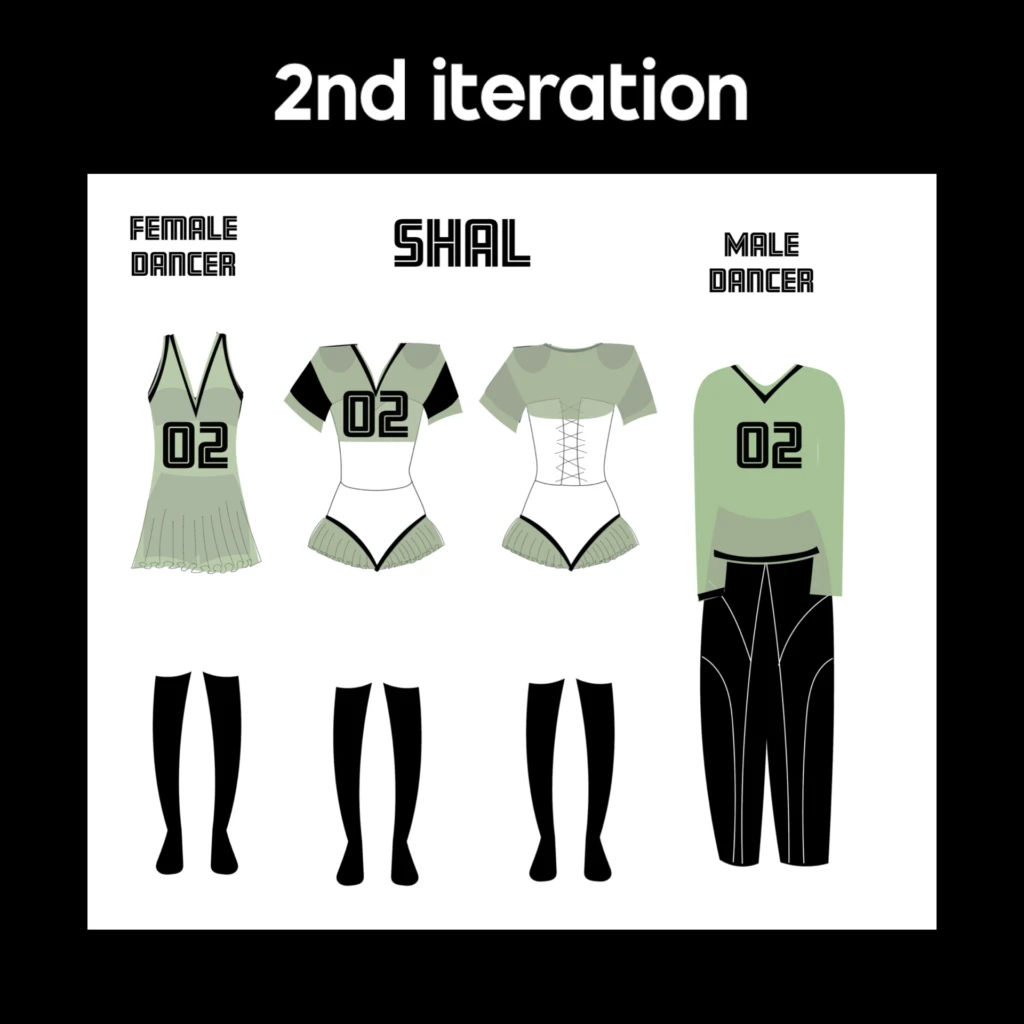
I want to learn about fabrics, and how they are somehow four-way stretch or two-way stretch. What kind of outfit will allow me to move my limbs freely. I’ve always gone on sourcing trips with my stylist. I sketch a lot on my iPad for the kind of things that I want.
I have a very interesting mix of people that I work with. Mostly stylists who then have their own masterjis who have really encouraged me to sketch myself. Before they come in with their ideas, they ask, ‘I’m sure you have something in mind.’
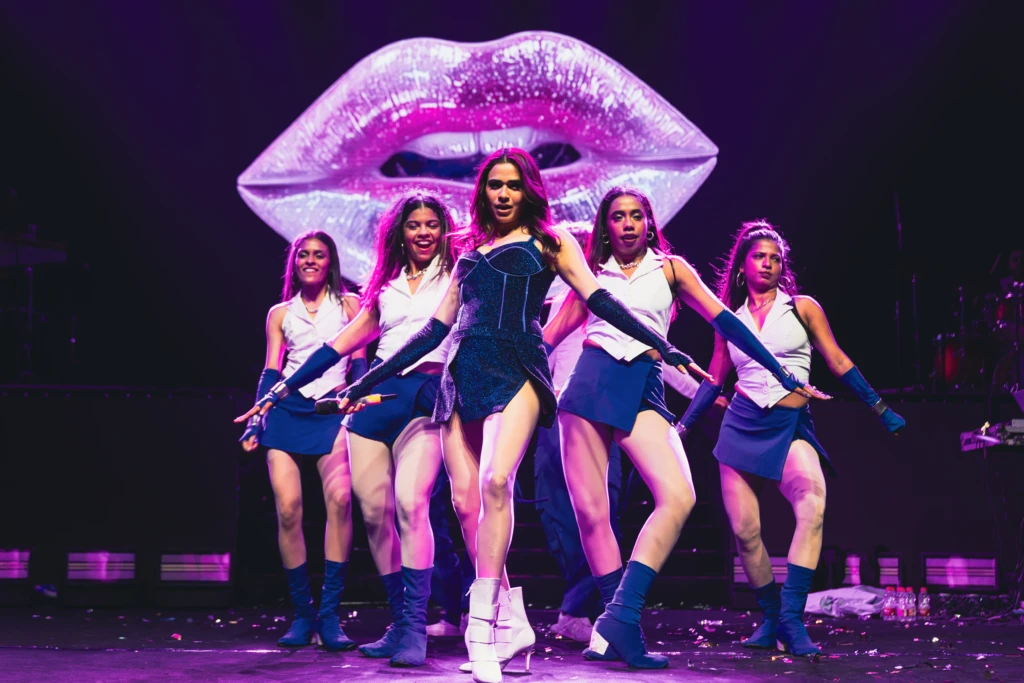
And of course I do. Because I know what I want, whether it’s what I wear or what my dancers wear. If I am tailoring for myself, I’m thinking of seven people. Because the six dancers and I, we all need something to wear.
Not very long back we used to wear one costume throughout the show. And then I started introducing changes in costume, which is a very big hurdle. When you leave the stage, even if it’s for a minute to change, how you keep the audience engrossed in the show is very important. What do you do that makes them feel like ‘oh my god, what is this? When did this happen? How did she wear this?’
All those magical moments are possible to do. But there’s a lot of garment construction, the first fastening or removal of the garment technique. Is it a very big boxy outfit you’re wearing? Then you have something really snug that’s under it. So you pretty much just need to remove something that’s on top, and it completely alters what you’re looking like.
Do you have a favourite costume that you’ve been part of creating?
Honestly I think I’ve found my thang for my stage looks. It’s these frills that I’ve started doing. I’ll do these body suits or shorts, but they’ll have a little edging of a frill. Almost like a ruffled frill. It’s a very versatile design element that can go on anything.
There’s this t-shirt dress that I got made, with padded shoulders. Like a jersey dress. But it has frills on the bottom.It’s very structured, but it’s still feminine in the frill. So that frill is really working for me. It’s a repetitive design element that I’ve used now on almost five outfits.
Walk us through a practical construction of a performance on stage. What is your starting point?
Lovely. I love this.
I’ll make a certain structure of how much of a song I want to do on stage, and the key in which I want to do it. And in general I want it to sound like it belongs to this universe.
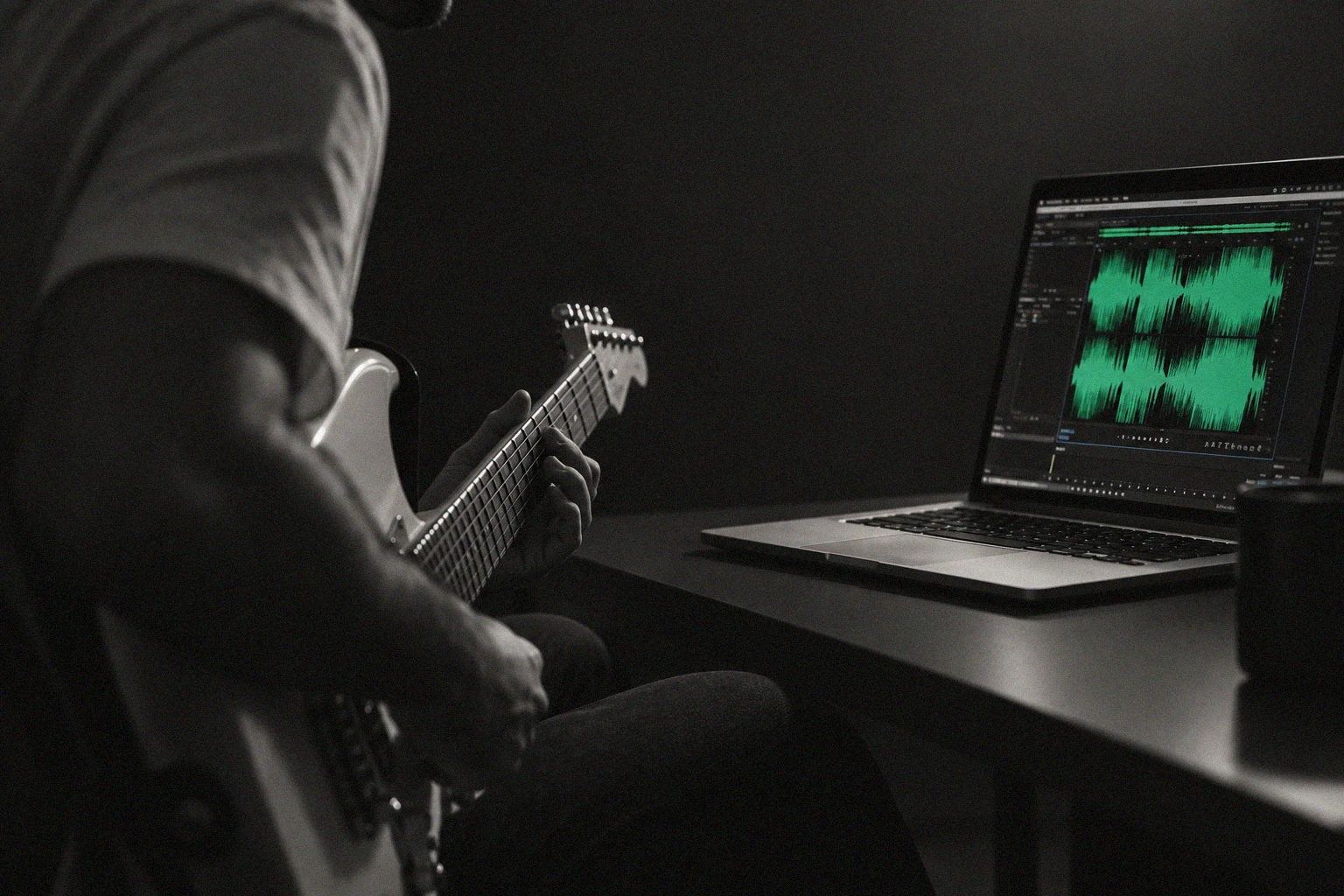
We’ll call my band. We’ll come into a music room to do a rehearsal of that, and we will work on a musical arrangement of the song. We’ll record that musical arrangement as the band is playing it so they’re all playing their instruments.
In my show no one is miming. You cannot make a person stand in someone’s spot, just make them hold an instrument and the track is playing from behind. That’s not possible. Everyone who’s on stage is really playing their instrument.
We then take that recording to the studio to produce around it. The style of music that I want to do, needs a certain degree of production. Then I will sing the whole thing in a studio, to see if I want to sing. If I want to dance on the chorus, I need a little support. So I’ll record backing vocals over the section that I want to dance on.
Because by this time I already know how I feel like I want to move to that song. Then we go into a dance rehearsal space and we set the choreography. Once the choreography is set, we bring in the show director and the light designer.
Then we design how it’s going to look. We discuss it with the graphic engineer, what visual will complement the light design and the movement, such that it’s not taking away from one another. That’s a very big question that needs to be answered.
Here you are like a puppeteer. You want your audience to look only where you want them to look. So you keep everything else very still, and you light only the part that needs viewing.
Then we basically take it on stage and try it. Literally we have to try it, if all this made sense. In our heads it made sense, but now we will see. Sometimes it flies. Sometimes it falls flat.
What are your non-negotiables at a venue?
The one thing that I am very very particular about is no one touches the pyros [pyrotechnics]. Only my team does.
One is, everything is musical. The pyros happen at a certain point because it musically makes sense. But on the other hand, sometimes you are very close to the stage, and a pyro goes off… you can get injured. So that’s a non-negotiable.
There are certain safety protocols for the stage, how it’s made. Just so that you don’t trip or fall. The production manager makes sure that it is completely safe for us to be on.
We actually don’t throw too many tantrums, because if we even get what we want, we are like, oh my god, thank you so much.
What does a dream venue look like for you?
I don’t have a venue, I just want my production to be followed to the T.
If it is there in my rider, I just want that at this point. I really only want to do my show the way I know all of us have designed it.
How far are we from that? Has anyone been able to match that?
To the T, not yet. I don’t think I am very far away from that. It took 10 years. But I am happy to say I am not too far from getting everything that I want now.