
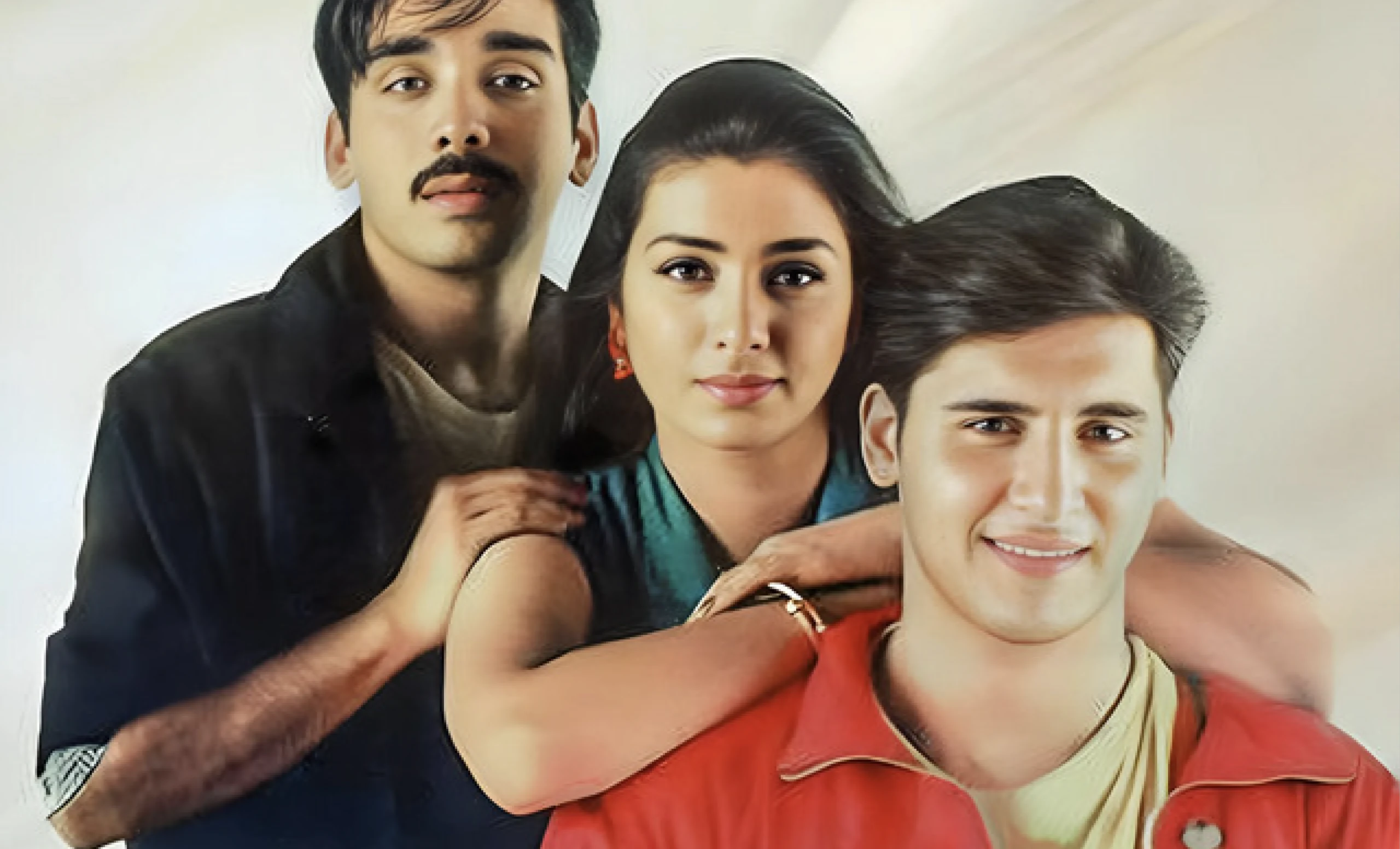
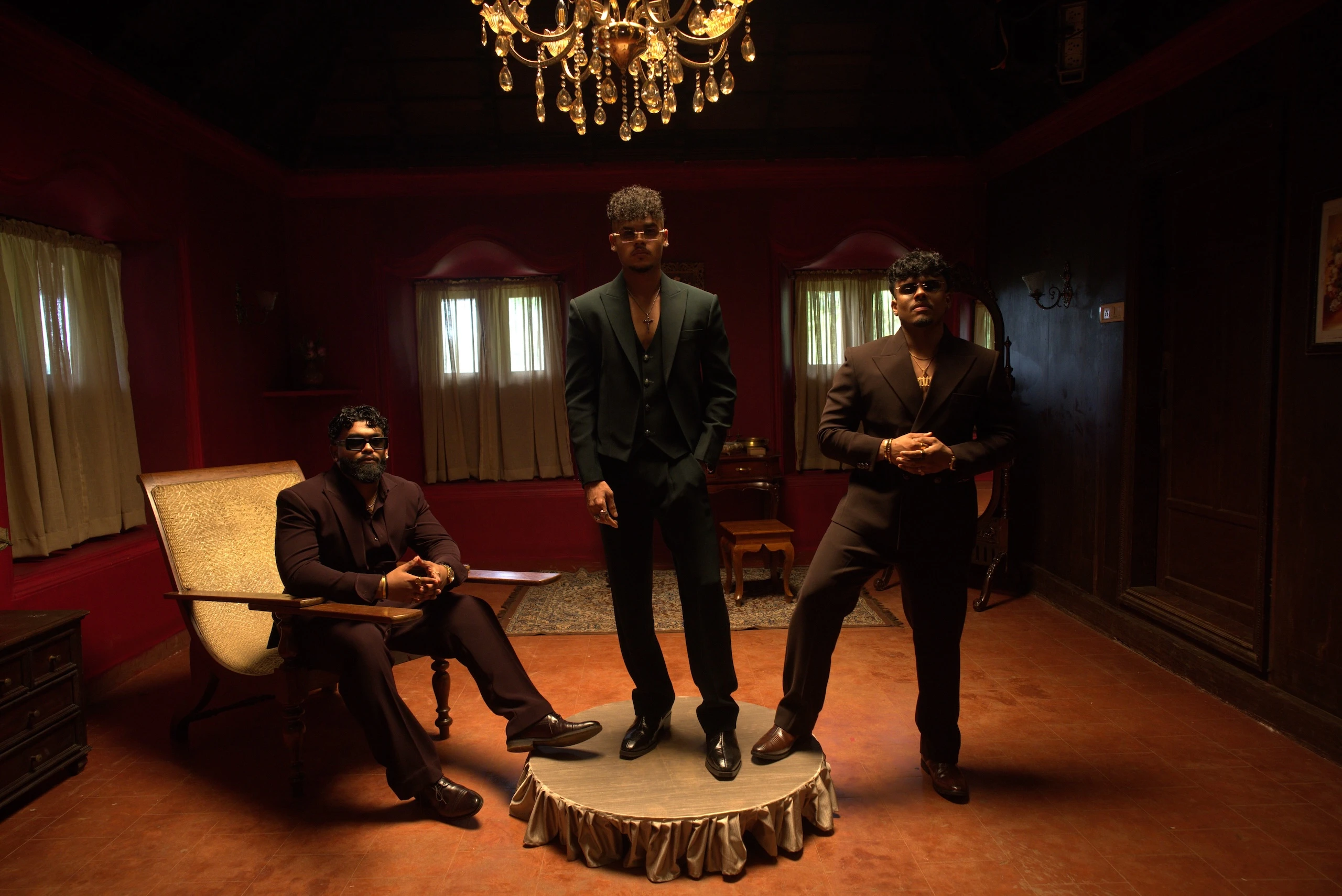


I have always liked Emraan Hashmi. It’s difficult to explain why — maybe because he carried himself with a certain swag; maybe because he was, in many ways, an anti-hero; maybe because he had an understatedness that was refreshing — but I suspect it has a lot to do with something he had little to do with, but happened to be a part of: the songs.
Memorable ones. You know them.
There were a great many. Often belonging to a somewhat disreputable bunch of films with little else to write home about, they constituted a brand of film music that was taking root in Hindi cinema in the mid-2000s: a sort of pop-rock male ballad centred on a singing style that broke away from textbook Bollywood playback and, on first listen, even sounded a touch exotic.
Think of the actor’s first chartbuster: “Kaho Na Kaho” from Murder (2004), an Anu Malik rip-off of an Egyptian hit, and the first thing that comes to mind is Pakistani singer Amir Jamal’s fluid Arabic inflections — famously spoofed in last year’s Ba***ds of Bollywood by actor Raghav Juyal, who plays a Hashmi fanboy. Or “Bheegey Hont” from the same film, made distinct by newcomer Kunal Ganjawalla’s hushed, breath-heavy vocals.
But the memory I most often return to when I think of Hashmi is the first time I heard Atif Aslam. That stormy, open-throated aalaap that bookends “Woh Lamhe Woh Baatein” from Mohit Suri’s Zeher (2005) was like a shock to the system. I hadn’t heard a voice like that before.
Atif’s Bollywood debut in Zeher wasn’t an isolated event. The early 2000s were a rare moment of cultural openness between India and Pakistan. As private FM stations and music television introduced Indian listeners to bands like Junoon, Strings, Jal and Fuzon, Bollywood, as it always does, hopped on to this new ‘trend’.
“Woh Lamhe…” itself began life as a Jal song. By then, Atif had already left the band after a bitter split with founder Goher Mumtaz. He wasn’t just another playback singer entering Bollywood but more of a singer-songwriter; someone who wasn’t merely lending his voice, but also bringing with him a sensibility.
This was a period of great transition in Hindi film music, appropriately so, with the onset of the new millennium. Hindi cinema was changing, the idea of stardom was changing; so were the songs. The familiar tabla-dholak idiom of the ‘90s was giving way to newer sounds, fresher textures and voices that were rougher around the edges than classically polished. Mahesh and Mukesh Bhatt, producers with a canny musical instinct, sensed the shift before most.
In the 90s, they had forged a stupendously successful partnership with Nadeem-Shravan, the composer duo behind those melody-filled, sentimental Kumar Sanu tracks that are something of a staple in cheap salons. (An Instagram reel I saw had a name for the genre: Indian barbershop bangers). The Bhatts had also imported an obscure talent from South India who went by the name M. M. Kreem in Hindi (future Oscar winner M. M. Keeravani). Little wonder, then, that they were among the first to sense the potential of the Pakistani music scene, and in 2003, we got one of the first cross-border collaborations to come in Pooja Bhatt’s Paap, featuring a sublime Rahat Fateh Ali Khan (“Mann Ki Lagan”) and the headbanging “Garaj Baras” by Ali Azmat (lead vocalist of Junoon).
Paap also had songs by Malik, but the two Pakistani numbers completely eclipsed them – an early indicator of where things were heading. It was around this time that Hindi cinema, led by the Bhatts, began experimenting with multi-composer soundtracks — a practice that has now become the norm in a way that resembles assembly line production. Back then, though, it gave albums a genuine sense of variety.
As the Bhatts’ nephew, Hashmi found himself at the centre of this musical reinvention. His earliest films were all Vishesh Films productions, and he became the face of this new sound. Whether it was because he played morally grey characters – a bookie, a hitman, a crook — or because of his innate unconventionality, Hashmi became the natural screen presence for these voices. They were distinctive in texture, style and delivery and encouraged a generation of singers — Arijit Singh among them, I would argue, who made his debut in the Hashmi-starrer Murder 2 (2011) — to embrace an unpolished edge rather than aspire to the smooth, silken perfection that had long defined Bollywood playback.
And it wasn’t just Vishesh Films or Pakistani singers. When Himesh Reshammiya decided audiences were ready to accept him as a singer, it was, unsurprisingly, an Emraan Hashmi film — Aashiq Banaya Aapne (2005) — he chose to hedge his bets on. Mithoon, who had first emerged under the Vishesh Films banner, later stepped up to sing “Wo Ajnabee” for The Train (2007), his Atif-esque vocals feeling perfectly at home on a Hashmi soundtrack. It wasn’t surprising either that KK’s soaring, wordless vocal climaxes — whether in “Tu Hi Meri Shab Hai” (Gangster), “Teri Yaadon Mein” (The Killer) or “Zara Sa” (Jannat) — found the perfect outlet in the actor’s face.
Hashmi carried these disparate voices effortlessly, making them inseparable from his image and embedding himself in their audio-visual memory. It is an era I remain deeply fond of — and I suspect many of my generation do too. We are nostalgic not just for the songs, but even for the technology that accompanied them: MP3 players, Songs.pk, folders full of pirated tracks on newly bought home PCs. Around this time, Bollywood music stopped being merely popular; it also became intensely personal.
There has been a quiet Emraan Hashmi renaissance in recent years, given a boost by his cameo in Ba***ds of Bollywood, in which Juyal’s character gives voice to what an entire generation seems to feel: “Akkha Bollywood ek taraf, Emraan Hashmi ek taraf.”
Bollywood, having exhausted most of its own ideas, seems to agree. A sequel to Awarapan (2007) is here it and seemingly relies heavily on our musical memory of the original — essentially visuals of Hashmi as the brooding, long-haired hitman paired with Mustafa Zahid’s smouldering vocals in “Toh Phir Aao” and “Tera Mera Rishta”. At a time when actor-singer associations have weakened, with lip-sync all but gone from our cinema, it is a welcome return to an old formula. But Zahid, a Pakistani musician, cannot officially be part of the new soundtrack given the current restrictions on Pakistani artistes working in India, and that creates its own problems: both the songs are recreated for the sequel, but we are not really sure if we are listening to Zahid or someone else who sounds like him.
The two original songs released so far don’t leave a lasting impression. The opening notes of “Ve Junoon”, composed by Mithoon, for instance, are suspiciously close to those of the Saiyaara title track; symptomatic of the malaise that afflicts current Hindi film music: an obsession with reproducing the last hit. “Yeh Awarapan” makes a sincere attempt to evoke the spirit of the original, but here’s the thing: neither songs evoke that era so much as they blend into the last decade of Bollywood heartbreak ballads. Which, perhaps, is precisely the point. That Pakistani pop-rock template, if you will, has become the default language of Hindi film music. What was once an alternative aesthetic — guitar-driven arrangements, brooding male vocals, soaring wordless refrains — has hardened into convention.
That’s the irony of the Emraan Hashmi era. The sound that once felt original and fresh has been copied so often that its descendants now feel generic. Before Saiyaara (2025), there was Kabir Singh (2019). Before that, Aashiqui 2 (2012) — arguably the most influential Hindi soundtrack of the past two decades. Trace that lineage backwards and you eventually arrive at Vishesh Films in the mid-2000s. Back then, the Bhatts were operating on the fringes of the industry, making erotic thrillers and murder mysteries far removed from the prestige worlds of Yash Raj Films, Dharma Productions or Sanjay Leela Bhansali. Today, Suri — one of the architects of that sound — is making Saiyaara for Yash Raj. It feels less like appropriation than a quiet admission that the Bhatts were right all along.