
In winter of the year 2001, Malvika Nanda sat in her parents’ room, staring transfixed at the big TV. On screen, Nitin Malik’s long-haired silhouette appeared against the sprawling backdrop of the Spiti Valley. Clad in a red kurta and dark glasses, he looked, to a teenager raised on The Doors, uncannily like Jim Morrison, and his textured voice soared over a classic rock ballad laced with violin and the unmistakable flavour of the tabla.
Nanda, a die-hard rocker and future chronicler of the Indian independent scene, had grown up on a steady diet of such classic rock staples as Deep Purple and Pink Floyd. But those bands lived on cassettes and in the glossy pages of foreign magazines. “These were people from my own city, my own universe, my own country, who look like me, sound like me,” she says. “Seeing an independent Indian rock act just blew my mind.” Hers was a generation that wrote down lyrics and memorised them, she explains, one that “loved the music without having a visual context to it.” With “But It Rained”, Parikrama gave them one.
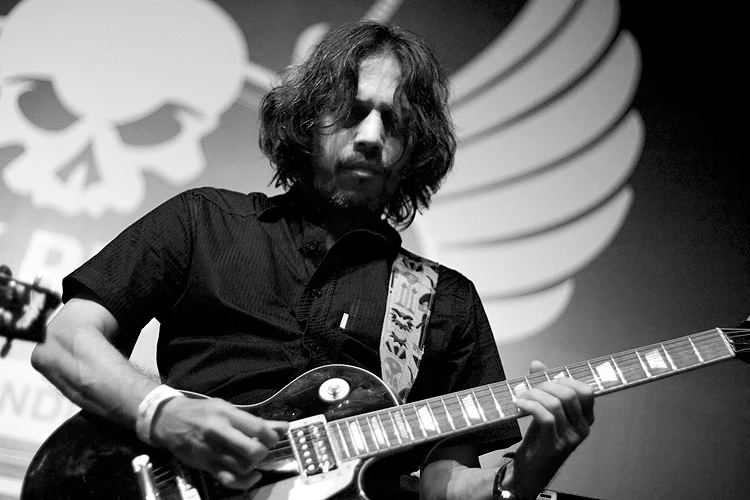
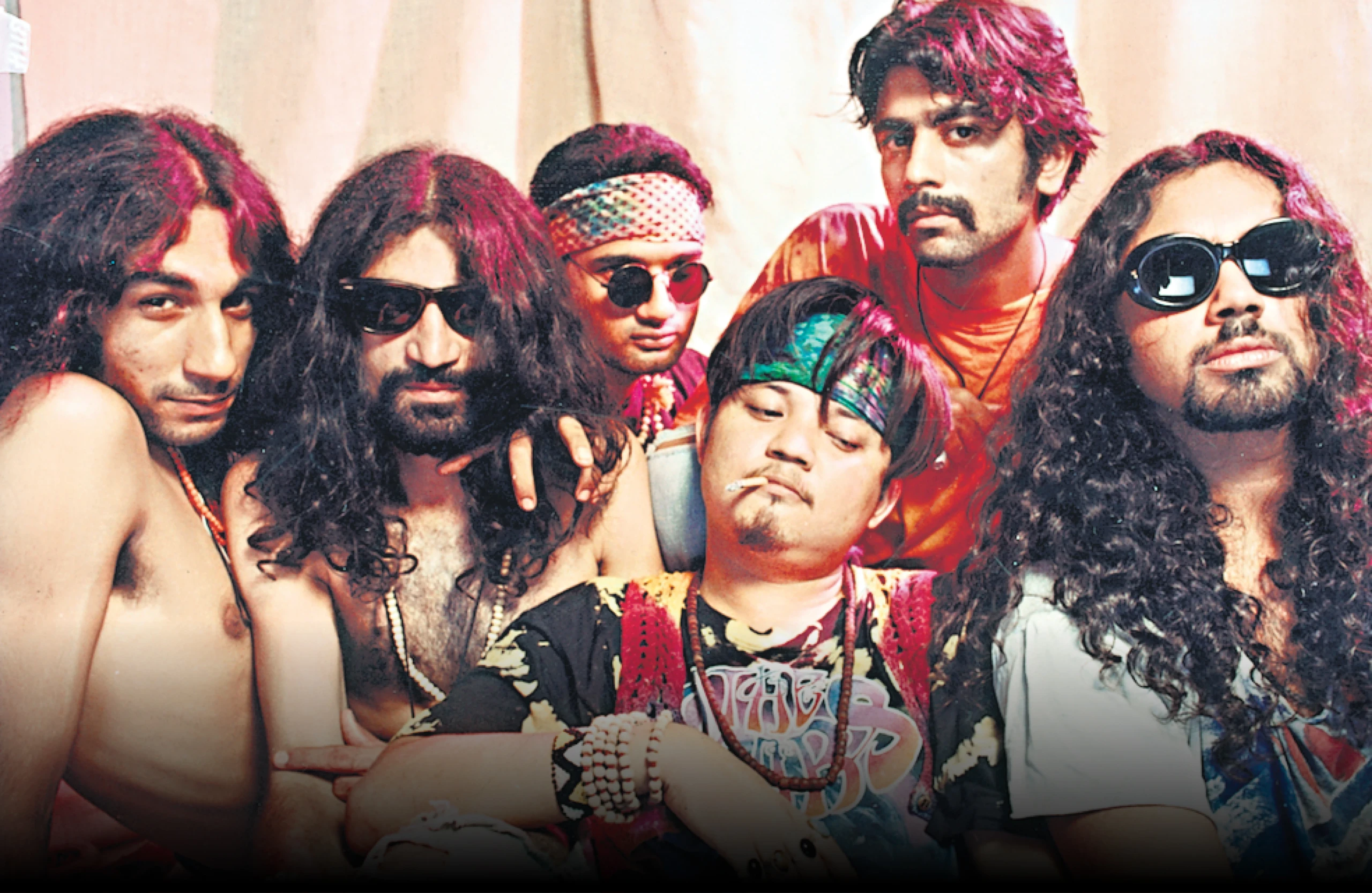
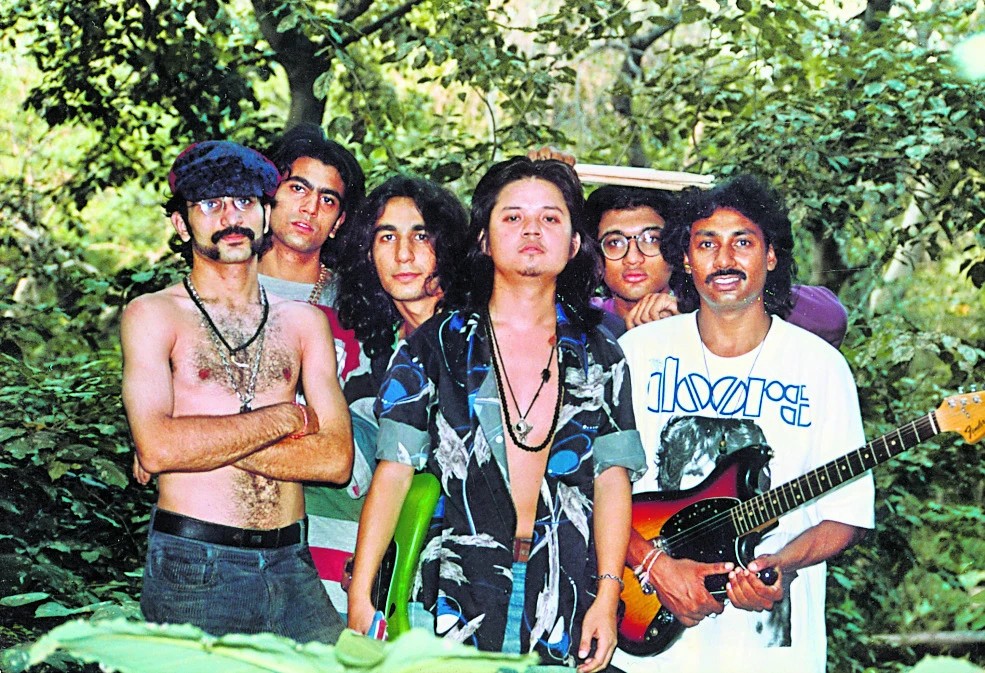
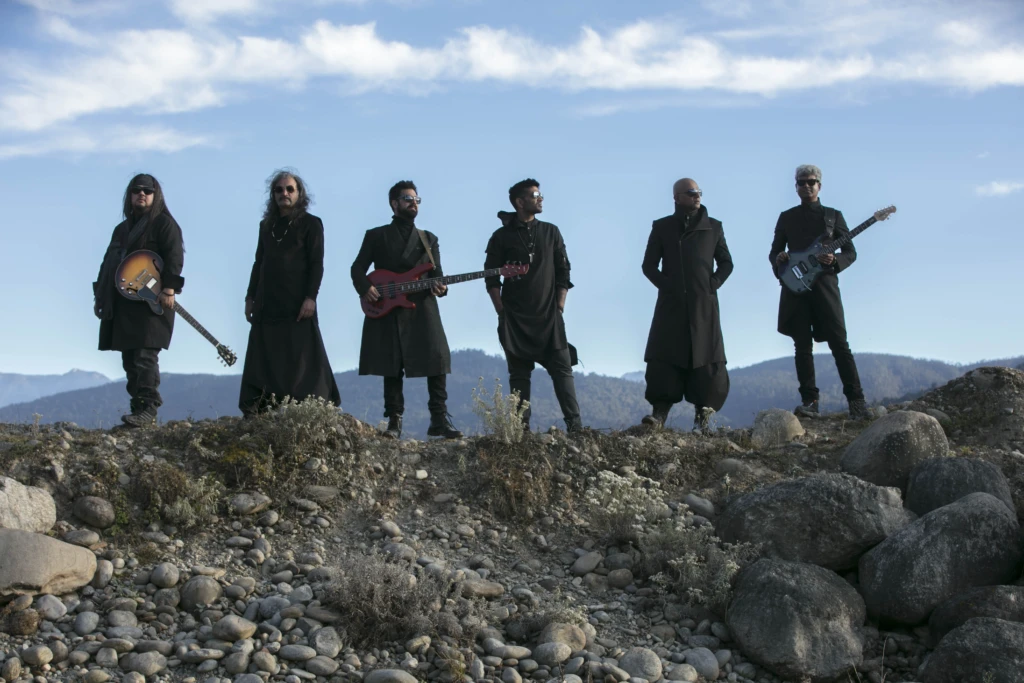
Parikrama was formed in June 1991 by brothers Subir and Nitin Malik, guitarist Sonam Sherpa and their friends from Delhi’s Kirori Mal College. Following Sherpa’s tragic passing in 2020, guitarist Abhishek Mittal stepped in, and the band was back on-stage. Parikrama today comprises Nitin on vocals, Subir on keys and organ, Saurabh Chaudhry and Mittal on guitars, Gaurav Balani on bass and Srijan Mahajan on drums.
Thirty-five years on, they are gloriously difficult to sum up. They have written over 300 songs and released no studio albums. They brought pyrotechnics to Indian stages, powered by bicycle-puncture glue. They played one of the world’s biggest rock festivals at Iron Maiden’s invitation, and once played two hours in Indonesia with a dustbin for a drum. They started one of India’s first artist-run management companies off a free phone-book listing. Their website once announced their ICCR accreditation with characteristic glee: “Indian Rock is now ‘officially’ our culture too.” For years, it greeted visitors with a line few would dare publish: “We believe in piracy.” Below it, in the smallest font: “of our own music.”
Parikrama’s legacy is more ecosystem than discography: a college circuit that became a live scene, a DIY streak that became a business, and a community that carries the culture forward. They built much of it before anyone thought it could be built. At 35, they’re still building.
Flying in the Face of Tradition
To understand Parikrama’s legacy, it’s important to understand the scene they started in. “It was very sparse,” says Uday Benegal of Indus Creed (formerly Rock Machine), one of the pioneers of the era. “There were hardly any bands, hardly any venues. The sound was terrible, the lights were terrible, the stages were rickety, but the energy was great.” In a landscape dominated by Bollywood and Indian classical music, an English-language rock song by an Indian band was a contradiction. “We were constantly told that we were aping the West and flying in the face of our tradition,” says Bruce Lee Mani of Thermal and a Quarter.
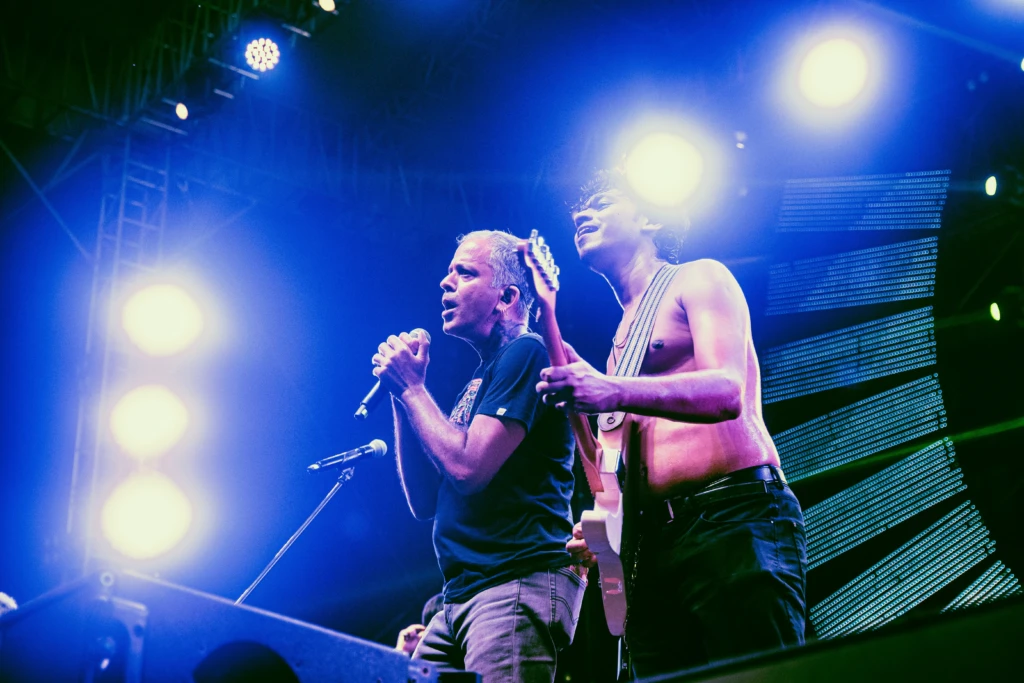
Most bands of the era, Parikrama included, started out playing covers. Original compositions were rare, and audiences were not convinced easily. “We were sneaky b*****ds,” Benegal laughs, as he admits Rock Machine, whom Subir Malik counts among Parikrama’s inspirations, would sneak originals into a set by announcing them as new Aerosmith songs. Parikrama took a slower route. Their first original, Xerox, was played at IIT Kanpur on October 5, 1991, one original in a ten-song set of Doors, Deep Purple, Led Zeppelin and Pink Floyd. Over the decades, the balance flipped to favour the original.
To Indian fans for whom the notion of seeing AC/DC or Pink Floyd live was a distant dream, Parikrama offered a taste of the magic, comparable to the real thing. “One thing you walked away with unmistakably is Nitin’s voice, which is super powerful; he was completely primed for the role,” says Benegal.
Please Pirate Our Music
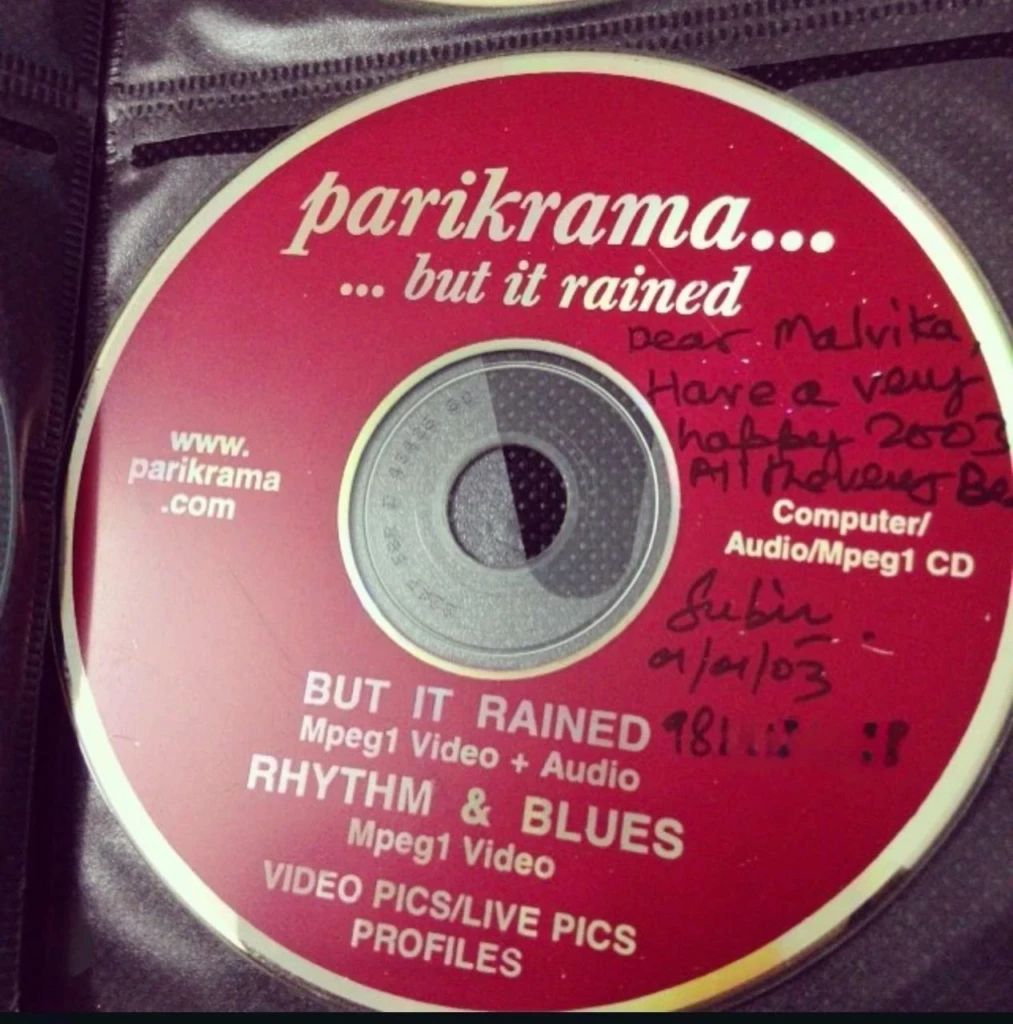
If you were a student in the ’90s, you may well have found a mysterious box of CDs arriving on a college campus, scribbled with the words: “Please bootleg! Pirate our music! Give it out for free!”
To Subir Malik, the logic was simple. “You spend two lakhs making an album on CD, and you sell 5,000 copies,” he says. “I found it absolutely absurd. I said, f*** it, let me just give the songs away for free.” Fifty or sixty days before a college show, a box of the band’s best live recordings would arrive by India Post, the number of discs scaled to the size of the student body. “If I’m giving 100 CDs to kids at IIT Bombay, it reaches 300 more colleges from there,” he says. “When we go to MCC Madras, instead of 300 people, we’ll have 600 in the audience.”
Students who had never listened to rock music picked up a free CD and were won over. Parikrama weren’t building an audience for themselves alone. They were building one for Indian rock. Years later, after the band’s 2007 UK dates, an email arrived from Real World, Peter Gabriel’s company, asking how Parikrama had seen the future of music distribution almost twenty years before everyone else. “We were laughing,” Malik says, “because we’d been doing it for years.”
The band’s reluctance to release music is partly a matter of temperament. “We frankly get bored in the studio,” Malik says. As a result, Parikrama’s catalogue has survived the way folk songs do, in performance, passed from hand to hand. “Open Skies”, “Vapourize” and “Am I Dreaming”, some of the most beloved songs in Indian rock, have never been formally recorded. They exist as live recordings and as countless fan videos shot from the crowd over three decades. For many listeners, those videos are the songs.
A Three-Ring Circus and a Half
Live is where Parikrama thrives. Mani remembers watching them headline a Bangalore college festival in the mid-’90s. “That was a three-ring circus and a half,” he says. “I’d never seen an Indian band do that on stage.”
“It’s the first band in India I saw with fireworks,” says Rahul Ram of Indian Ocean. The pyro, as Malik describes it, was “pure jugaad”. Guitarist Sonam Sherpa would vanish mid-song and reappear on a 20-foot machaan. Fire ran along the front of the stage on aluminium rails fuelled by the rubber solution used to patch bicycle tyres. On a count of four, a crew member would strike a match and run. “Today it’s a common thing,” Malik says, “but when we started, there was no one else.”
Nanda remembers the shows as a vision: Subir’s signature tie-dye tees, three guitarists bunched together, Nitin climbing the stage rails to sing from high up above the audience. At a time when the entertainment landscape was dominated by Bollywood and the piety of classical Indian tradition, she recalls scenes of women throwing their bras onto the stage – for an Indian rock and roll band, no less. Then there were the quiet moments, like Sherpa’s rendition of Saare Jahaan Se Achcha. “Goosebumps,” she says.
When things went wrong, they played anyway. On a tour of Indonesia, they arrived at one venue to find two microphones on stage. The organisers had thought they’d booked a Bharatanatyam troupe. A dustbin lined with polythene became a percussion instrument, and Malik rode pillion to an electronics shop to get cables made on the spot. Where most bands would have just cancelled and left, Parikrama played for two hours.
The Business of Building a Scene
What sets Parikrama apart from other great live bands is how much they built around themselves, and how many people they brought along. Malik had an instinct for what everyone around a show needed to keep going. “Whether there were tickets or not, the money went to the organisers,” he says. “So, we thought of the organisers too. If they made a profit, or even broke even, they would call us again the next year.”
That instinct became a business. “I think the first person to manage independent musicians in India was Subir Malik. Nobody gives him enough credit for that,” says Rahul Ram. “Subir does business without being the nasty businessman.” It started with a free listing in Delhi’s first Yellow Pages business directories, which Malik remembers being pink rather than yellow. Finding no section for rock bands, he had listed Parikrama under ‘Live Bands and Orchestras’ with his home landline. Then, the calls came: weddings, corporate events, shows a rock band couldn’t possibly play. “I realised there’s a market that no one’s catering to in the country,” he says.
Since its founding in 2001, Parikrama Inc. has worked with acts including Hari & Sukhmani, Faridkot, and Mohit Chauhan, on Parikrama’s own principles: it handles their live shows and takes nothing from their streaming income. “That’s the difference between a company run by musicians for musicians,” Malik says.
Parikrama & Friends
Parikrama spent years championing Indian rock, and in 2007 someone returned the favour. When they opened for Iron Maiden in Bangalore that March, Maiden’s manager Rod Smallwood was watching. “I just didn’t realise there were metal/rock bands of this quality in India,” he was quoted as saying. He got them onto Download Festival’s main stage on the day of Iron Maiden’s performance. On June 10, 2007, at Donington, UK, Parikrama became one of the first Indian rock acts to play a major festival outside India, kicking off a UK tour that saw them support Maiden again at Brixton Academy.
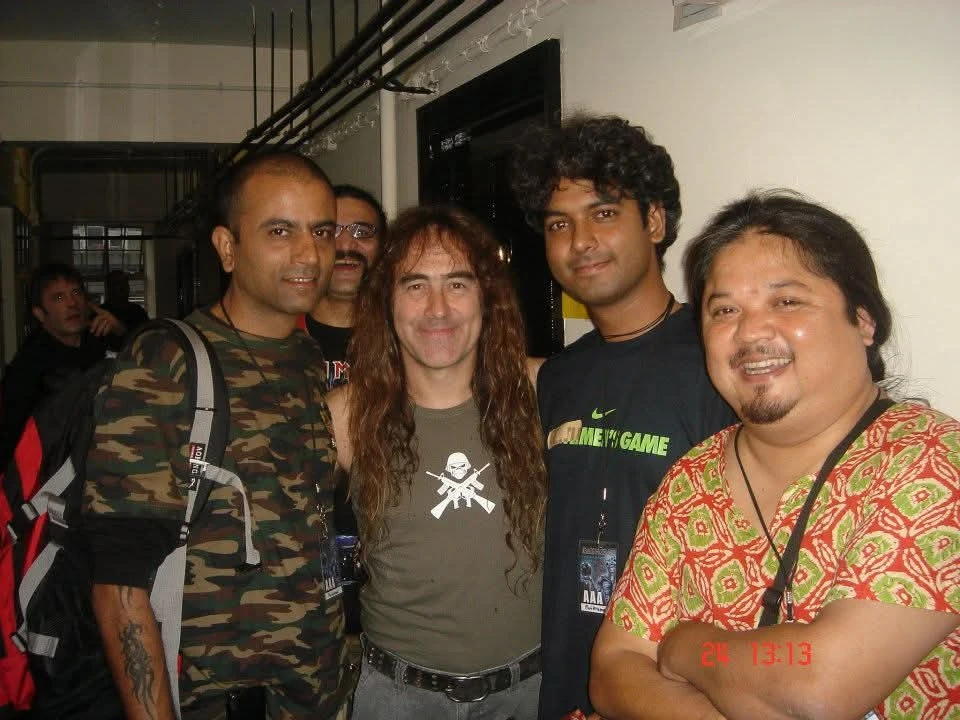
Malik never forgot it. When Maiden’s documentary Flight 666 opened to a near-empty Delhi cinema in 2009, he bought out an entire PVR auditorium and invited every rocker in the city. “The whole hall was singing and headbanging,” he says. In the years since, Parikrama have taken their show from Kathmandu to Macau, Singapore, Russia, and as far as the Kennedy Center in Washington, DC.
Back home, though, the ground was shifting. Around 2012, colleges began swapping their rock nights for electronic music. “You only survive in this industry if you change,” Malik says. “But we were never going to start playing techno.” Instead, Parikrama followed their audience. The students who had grown up on those free CDs were now in their thirties, many in senior corporate jobs, so the band took their show to corporate stages and invented a format to go with it.
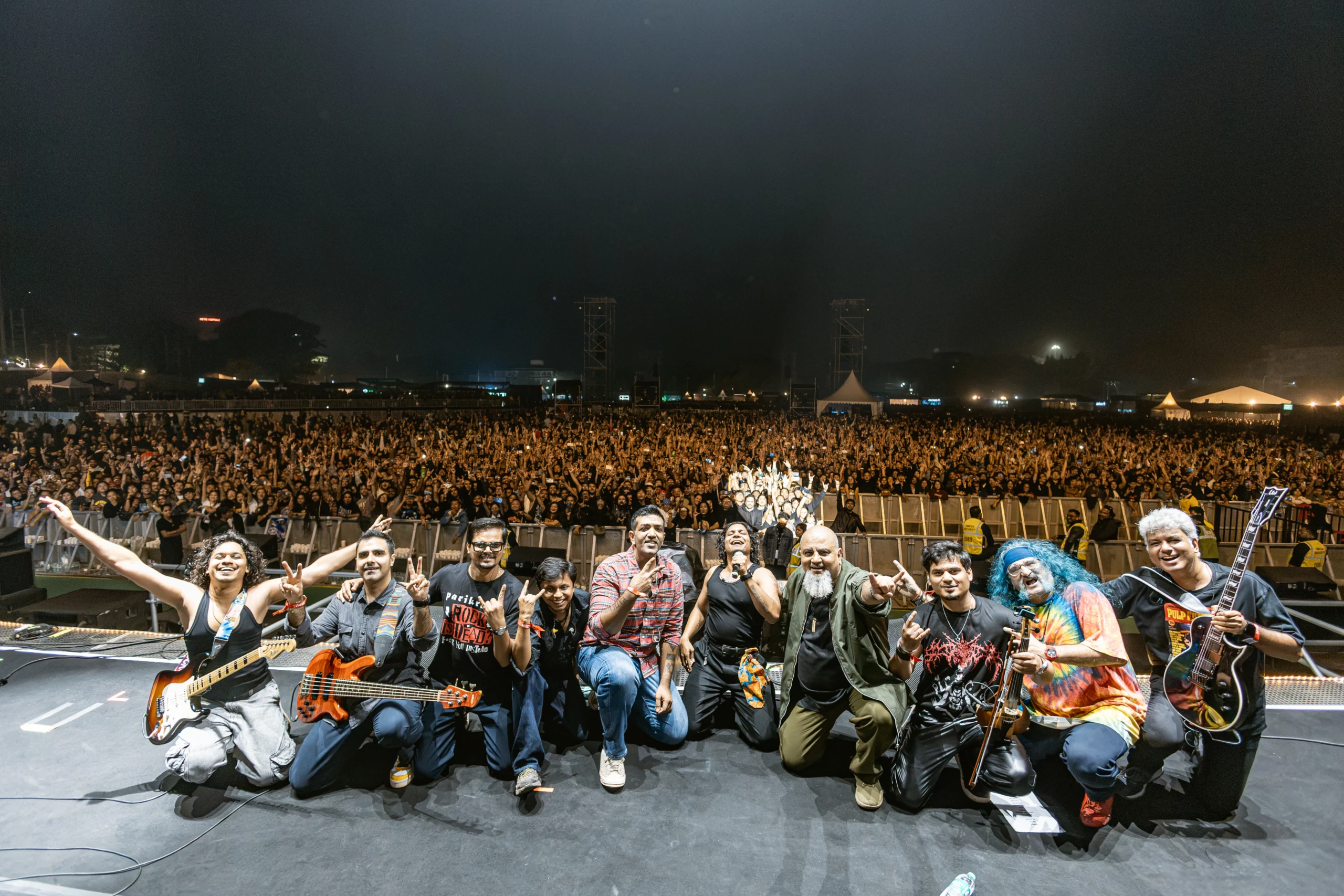
Parikrama & Friends brought a rotating cast onto one stage, from veterans of the early scene to newer faces, among them Rahul Ram, Bruce Lee Mani, Suraj Jagan, Girish Pradhan, Farhan Akhtar and 14-year-old Megan Rakesh. For the guests, the appeal was simple. “Subir is running the whole ship,” Mani says. “We’re just showing up and having a great time.” Or, as Rahul Ram once put it to him backstage: “You get up on stage, and you have this glorious sense of irresponsibility.”
Full Circle
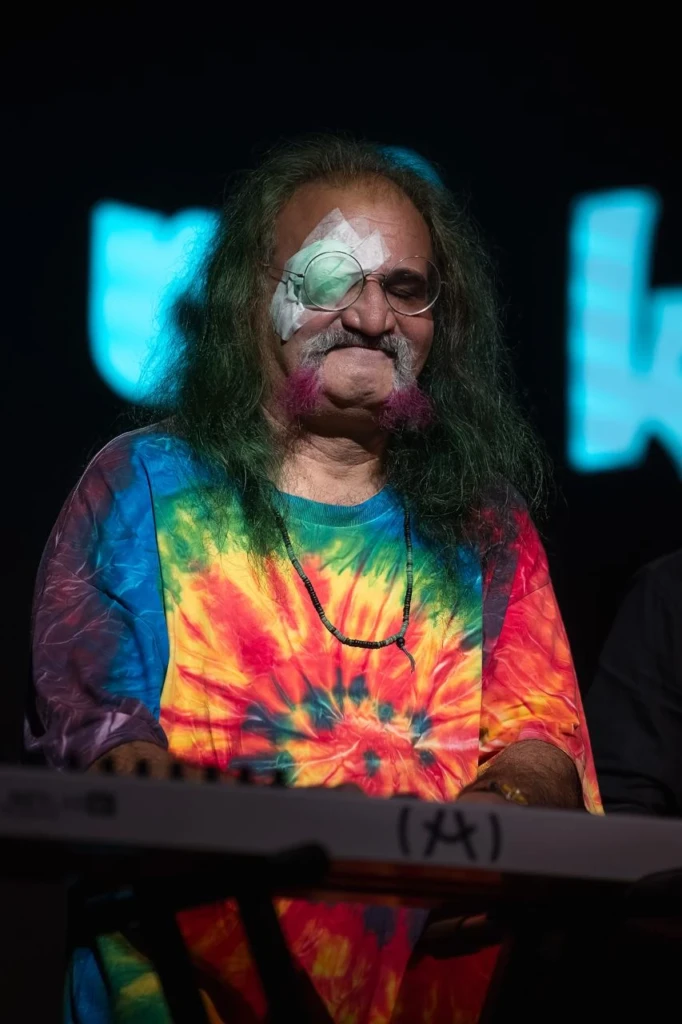
Thirty-five years in, the band hasn’t slowed down. This June, days after surgery for a detached retina, Malik walked unannounced onto the stage of their 35th-anniversary show with an eyepatch, played two songs, and slipped away, having trained a young keyboardist to cover the rest. “In 35 years, I’ve never missed a Parikrama show,” he says. The pace has slowed while Nitin Malik recovers from health setbacks, with a second vocalist sharing the load on the road in the meantime. In November, they opened for Guns N’ Roses in Guwahati.
Three decades after a group of North Delhi college boys slipped one original into a set of covers, the circle keeps turning. The kids who once found a Parikrama CD in an India Post box now bring their own kids to the shows. Malik wouldn’t have it any other way. “We were young kids with a love of rock ‘n’ roll who started Parikrama 35 years ago,” he says, “and we are still those young kids.”