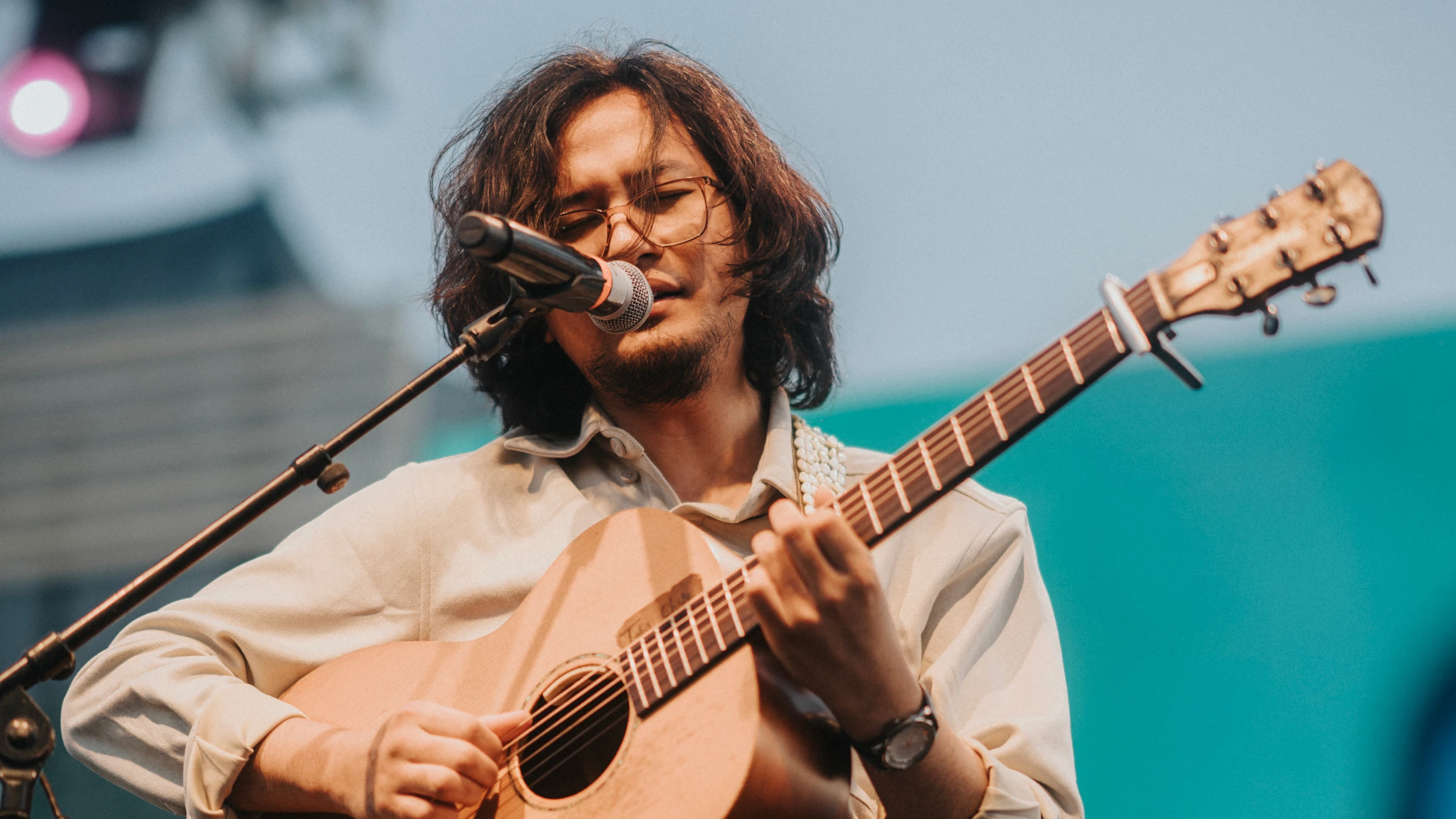
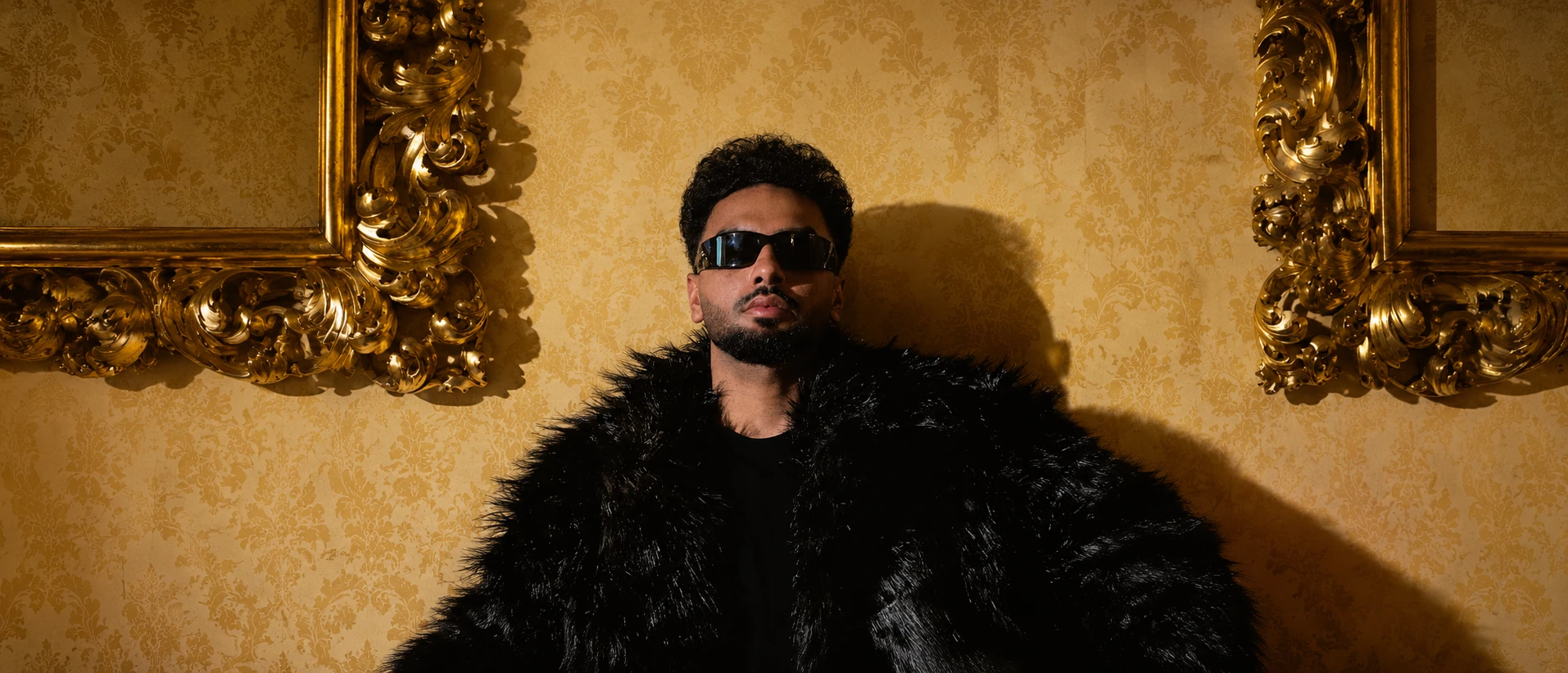
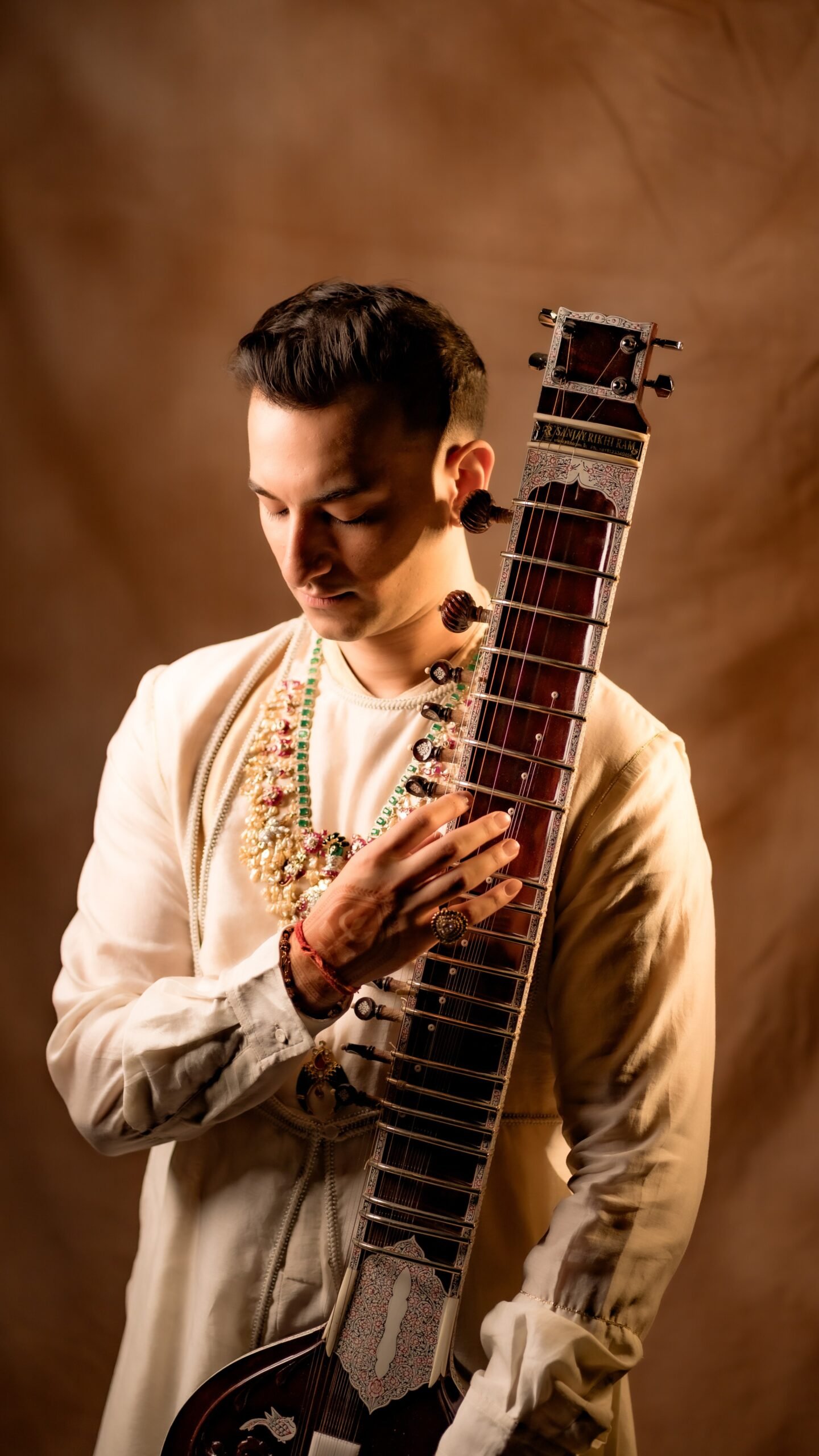
At just 27, Rishab Sharma is steadily emerging as one of India’s most distinctive contemporary performers – not only for his cross-cultural sound, but for the deeply personal world he builds around it. Born into Delhi’s legendary Rikhi Ram family of instrument makers and now based between India and New York, Sharma was trained in classical music from a young age. Over the years, he has built a unique musical language that threads together Indian classical traditions with rock, electronic, and cinematic influences, all while positioning the sitar within a modern cultural conversation.
Beyond performance, his ‘Sitar for Mental Health’ initiative has further shaped his identity as an artist invested in emotional connection and healing through music, lending his work an introspective quality that extends far beyond the stage. That same intention carries into his style. Sharma’s stagewear feels opulent yet effortless – with flowing silhouettes, intricate embroidery, and heirloom-worthy jewellery. His clothes never read as costumes assembled for effect; they sit naturally on him. For the audience, a Rishab Sharma performance is memorable in an almost mystical fashion – in its ability to pull listeners away from the noise and velocity of everyday life.
A Regal Reimagining
Mumbai-based stylist Simran Nakra is the creative force behind Sharma’s now instantly recognisable performance wardrobe. What began as a chance connection through Instagram has evolved into an ongoing creative partnership, one built less on assembling individual “looks” and more on crafting a cohesive visual language around the artist. “From the very beginning, the intention was to build an image that felt regal, rooted, and deeply Indian, but never dated,” Nakra explains.
What makes the collaboration especially intuitive, she says, is Sharma’s own emotional relationship with clothing. “He dresses from instinct rather than trends. He’s incredibly detail-oriented and always picks up on the smallest nuances – whether it’s archival references, temple jewellery, or even the texture of a handwoven fabric. He’s naturally drawn to pieces that feel soulful and timeless.”

A similar creative synergy emerged with Re-Ceremonial, the label celebrated for its restrained yet archival approach to Indian dressing. Known for reinterpreting museum-inspired silhouettes, founder Ateev Anand worked closely with Sharma and his styling team to develop custom performance pieces. “We created two bespoke kalidar (panelled) kurtas for Rishab’s key performances – one in ivory and another in a pale turquoise inspired by his devotion to Lord Shiva,” Anand shares. “The silhouettes drew heavily from the Mughal era, with over 15 metres of fabric in the flare to create a sense of abundance and movement.”
A sculpted cummerbund was also part of the detailed layering; “We customised the sleeves with fastenings up to the elbow, as suggested by his stylist, to allow ease of movement while playing the sitar,” adds Anand.
Some of Sharma’s selected silhouettes had almost disappeared from modern menswear for a long time. “Historically in India, men dressed with incredible grandeur – Maharajas wore layered necklaces, brooches, anarkali-style silhouettes, and ornamentation very unapologetically.” That revival is central to Sharma’s visual identity today. “Rishab has really brought back the angrakha,” she adds.
A Different Kind of Power Dressing
Sharma’s sartorial language exists in a compelling space between conventionally masculine codes and something far softer. For a recent performance in New Delhi, Sharma gravitated towards a look that felt less ethnic and more mythological in spirit. Collaborating with Misho — a jewellery label that has recently expanded into clothing — he wore a custom handcrafted armour piece finished in gold gilding and intricately etched with Chanakya artwork. “Rishab is the first man we’ve created a couture look for, ” shares founder Suhani Parekh. “We never wanted it to read as a performance costume, but rather as an art object. The bandhgala and dhoti anchored the look within a familiar cultural vocabulary, while creating a beautiful contrast to the structural fluidity of the armour,” she adds.

A distinctive element of Sharma’s onstage persona is the consistent adornment via mehendi tattoos, a detail that further blurs the lines between spirituality and artistic identity. For his recent tour, Sharma collaborated with longtime friend and artist Santanu Hazarika on a series of custom designs rooted in Shaivite iconography. “The first phase centred around core symbols associated with Mahadev,” Hazarika explains. “We combined the trident, the third eye, the serpent around Shiva’s neck, the damru, and the crescent moon into a single flowing forearm composition.”
For the final show in Delhi, the designs evolved to complement Sharma’s sculptural Misho armour look. The full-arm mehendi incorporated imagery of Nataraja, Mount Kailash, bel patra leaves, and mythological references tied to devotion and music. “Executed in a style borrowing from tribal and Māori tattoo traditions rather than classical mehendi, the final result felt strikingly contemporary with a spiritual homage,” Hazarika adds.
Crafting a Visual Lexicon
What makes Sharma’s wardrobe especially intriguing is the sheer range of references stitched into each look. One collaboration with designers Shantanu & Nikhil was inspired by Michael Jackson’s iconic military-style stagewear. “We loved the drama, structure, and commanding presence associated with those looks,” Nakra explains. The final ensemble paired a sharply structured shoulder-pad sherwani with fluid dhoti pants, while scattered brooches echoed ornamental military insignia through an Indian lens.
For his Bengaluru performance, heritage label Madhurya Creations approached the brief taking a leaf from Karnataka’s royal history. The look centred around an emerald-green Kanchivaram silk brocade jacket embroidered with Tanjore detailing, layered over an ivory angrakha to create movement and visual depth on stage.
Even the fabrics carried symbolic meaning. The red Mysore crepe silk drape was embroidered with the Nandi motif – the spiritual heartbeat of Karnataka and a symbol of devotion, strength, and stability.
That interplay between cultural memory and modern spectacle also informed Sharma’s collaborations with designers Abu Jani Sandeep Khosla for his Singapore and Dubai concerts. Singapore featured a restrained Maharaja aesthetic realised through gold tissue, zardozi embroidery, and layered draping. Dubai, meanwhile, embraced Mughal grandeur through mirror work, crystals, zari embroidery, and a pleated silk angrakha in royal blue.
“Our menswear celebrates modern masculinity through Indian craftsmanship,” the duo explains. “That’s where the synergy with Rishab exists – he is fiercely proud of his Indian heritage while constantly reinventing it.”