Dhanda Nyoliwala is arguably THE defining name in Haryanvi hip-hop, credited with taking a regional sound to an audience far beyond the state. With over 1.9 billion streams and 13 million monthly listeners on Spotify, the rapper now finds himself in the company of India’s most popular hip-hop artists thanks to tracks like “Up to U,” “Zigane” and “Bawli.” His latest single “Do Numbari” from Mirzapur The Movie, marks his Bollywood debut.
Despite this public attention, Nyoliwala remains as outspoken in his songs as ever, talking about everything from Jaat identity and everyday violence to the political turmoil that continues to shape the discourse around Haryana.
In a conversation with Billboard India, Nyoliwala looks back on the road to this point – from writing his first song amid a politically charged climate and dealing with a major injury, to moving to Australia, where he worked a string of jobs to support his music career.
You were training to become a sportsperson. When did you realise you could write?
I have always been connected to music. My father used to put on old ghazals in the house, so I grew up loving those. I started writing my own songs around 2016. I was writing verses and polishing them whenever I could. In fact, I wrote my first song, which remains unreleased, during the Jaat Arakshan (Reservation) protests. I remember getting into a fight over it (participating in the protests) with my girlfriend, who is now my wife. I wrote the song on my way home after the fight. It remains unreleased because I feel my fanbase is much bigger than just a certain community now. Regardless, I will continue to stand for my people whenever I’m called upon.
Is there anything you learnt from sports that helps you with your music?
I used to be a national-level discus and javelin throw player. When you compete at that level, you’re up against some extremely gifted people. You need to have confidence and bravery to take that pressure and truly compete. When I’m in the studio, I’m not competing against anybody. I’m just making my own music in my own booth, which gives me all the more reason to be confident in myself. I mean, if I was able to deal with the pressure of professional sports, I can definitely have enough confidence to believe in my music.
Hip-hop is a form of protest. Does your writing come from a place of anger?
In my eyes, hip-hop is all about authenticity and realism; it comes from the streets. I have seen all kinds of people, governments, mishaps growing up in Haryana. I feel experiencing all of this really informed my opinion. I would even go so far as to say if you grew up with a silver spoon, you can’t write hip-hop. You can’t sit on a velvet couch writing the story of a person living a hut. That’s what I think.
Your song “Up to U” is still travelling. Can you predict what will go viral?
Most songs I write, I know the lines that would eventually become big. A recent example would be my track “Zigane”. It has a bar, Meri gairat pe aitbaar, maine re baaki har shay lose milegi. Beti chahe dushman ki ho, mere ghar mehfooz milegi. I knew that would work. The thing is, everything that is to be said has been said. Songs work when you say things in a new way. It’s all the same stuff we grew up listening to, just that I have my way of saying these things and fans seem to like it.
On the contrary, I sometimes misjudge this too. Even “Up to U” really blew up, and I mean all across the country, much after it had become big in North India. I think that song got its biggest bump after the first 50 million views! All said and done, I just worked hard on myself and my music and I’m glad the people accepted me. When I sit alone sometimes and really take all of this in, I really feel proud.
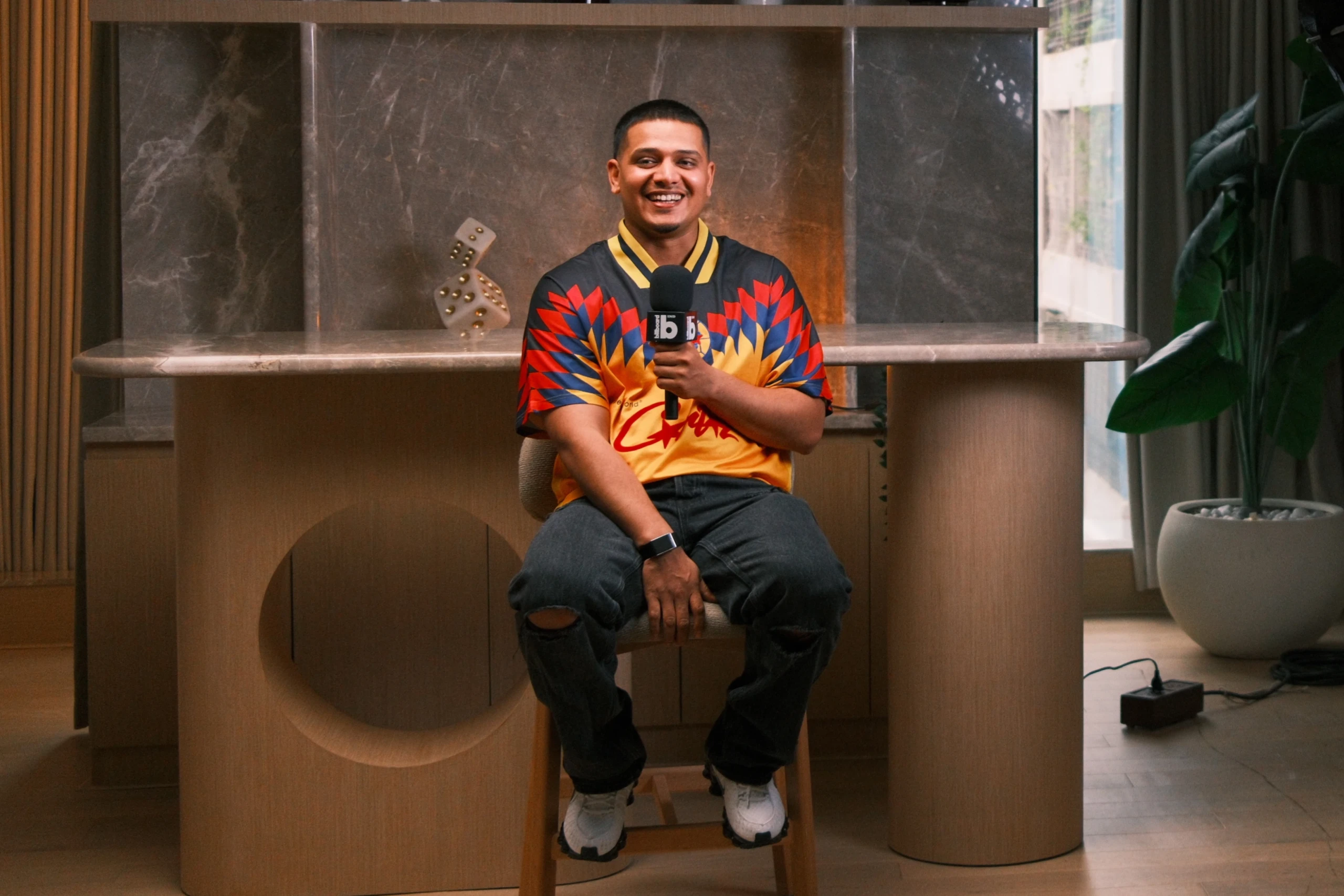
Watch our full conversation with Dhanda Nyoliwala as a part of the “Small Talk” series, now live on Billboard India’s YouTube channel.
This interview has been translated from the original in Hindi.