For much of the 21st century, Punjabi songs have been a cornerstone of Indian popular culture. Meanwhile, Haryanvi singers became unfairly typecast as the poorer cousins of the dominant Punjabi-pop industrial complex. For them, the 2000s and 2010s were an era of shoestring budgets and countryside music videos. The 2020s, however, has seen Haryanvi music expanding its audience significantly. On Spotify India today, you can find public playlists like Hot Hits Haryanvi (380,000 saves), Trending Now Haryanvi (nearly 150,000 saves) and Yo Hai Haryanvi (170,000 saves). Dhanda Nyoliwala, who has become synonymous with Haryanvi rap, has over 12 million monthly listeners on Spotify whereas Masoom Sharma, who blends a more traditional Haryanvi sound with modern-day pop production values, has over 9 million. Other major voices include Gulzaar Chhaniwala, Amit Saini Rohtakiya, Diler Kharkiya et al.
All of the aforementioned artists are men. Over the last decade, however, Haryanvi female artists have quietly contributed to the industry’s explosive growth. Sapna Choudhary, Ruchika Jangid, Renuka Panwar, Anjali Raghav, amongst others, have all carved out a distinct space for themselves in what remains a male-dominated industry. Both Choudhary and Panwar have 2 million monthly listeners on Spotify and their most popular songs have all been streamed over 50 million times. Panwar’s ‘Morni’, released in July, has already racked up over 3.5 million views on YouTube.
Choudhary is something of a pioneer for female Haryanvi artists, her popularity laying the groundwork for younger performers like Panwar and Jangid. She began performing for audiences in 2012 and her first viral hit ‘Solid Body’ was released in 2015. Her appearances on the primetime reality TV show Bigg Boss and musical cameos in Bollywood films like Veere Di Wedding (2018) made her the first Haryanvi female artist to enter the national mainstream. Older Sapna Choudhary hits like ‘Teri Aakhyaan Ka Yo Kajal’, ‘Gajban Paani Ne Chaali’ and ‘Teri Lat Lag Jaagi’ all have hundreds of millions of views on YouTube. If you look at the music videos for these songs (traditional Haryanvi tunes set to arena-friendly beats), they are mostly taped live performances. They involve Choudhary singing and dancing alone in front of massive crowds — they do not have the backup dancers, big-budget trappings and professional sheen of say, a modern-day Dhanda Nyoliwala song.
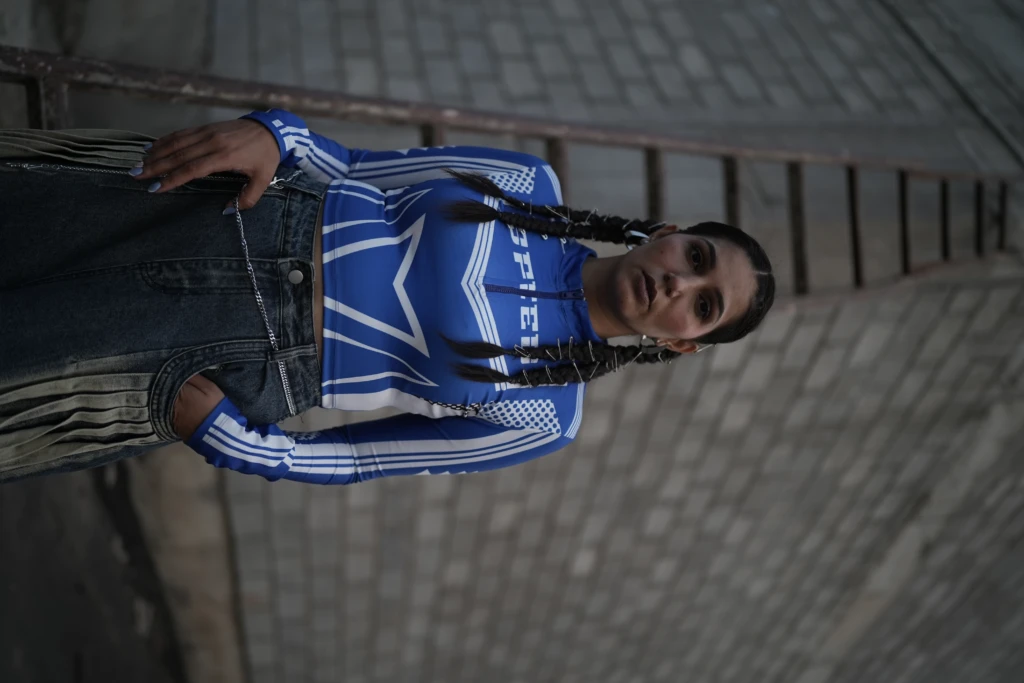
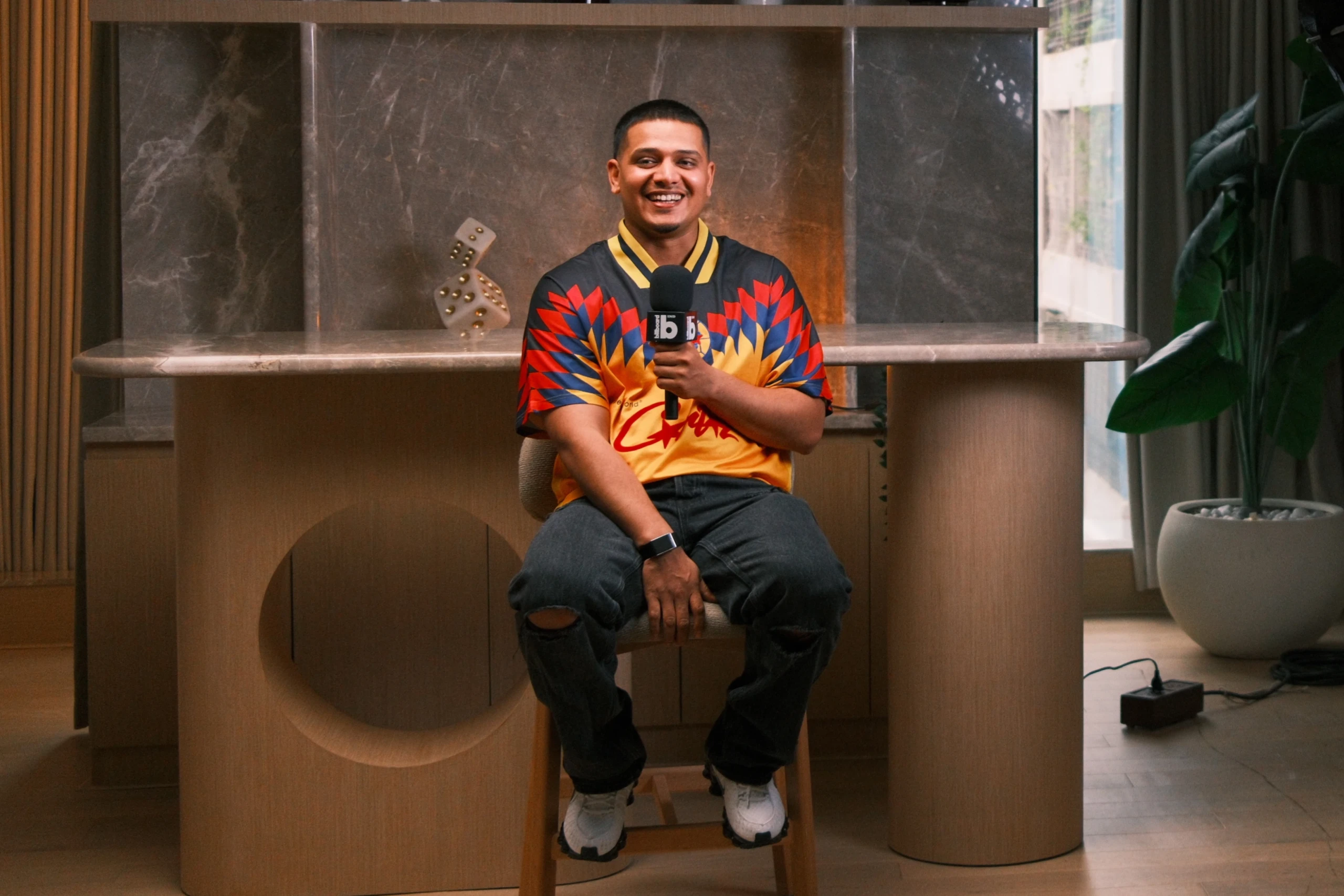
“Things in the Haryanvi music industry weren’t like this during the beginning of my career, in the mid-2010s” said Choudhary during an interview with Billboard India. “We had very few resources and not much money. When we recorded our songs we didn’t always have top-quality sound equipment. When we shot videos there was no hair stylist or makeup people, proper lighting et cetera. So when I see the professionalism and the scale of Haryanvi music today I feel very proud as a Haryanvi woman, that our language and our culture are getting the stage that they deserve.”
Choudhary also expressed optimism about the new generation of young women in Haryanvi music, insisting that Gen-Z artists are “quite capable of handling every aspect of producing popular music today, from the melodies to the music videos”. She downplayed her veteran status (“I wouldn’t presume to advise anybody, really”) while also striking a bit of a cautionary note. “The only thing I would tell them to remember,” Choudhary said, “is that in this industry you will be deemed only as good as your latest work.”
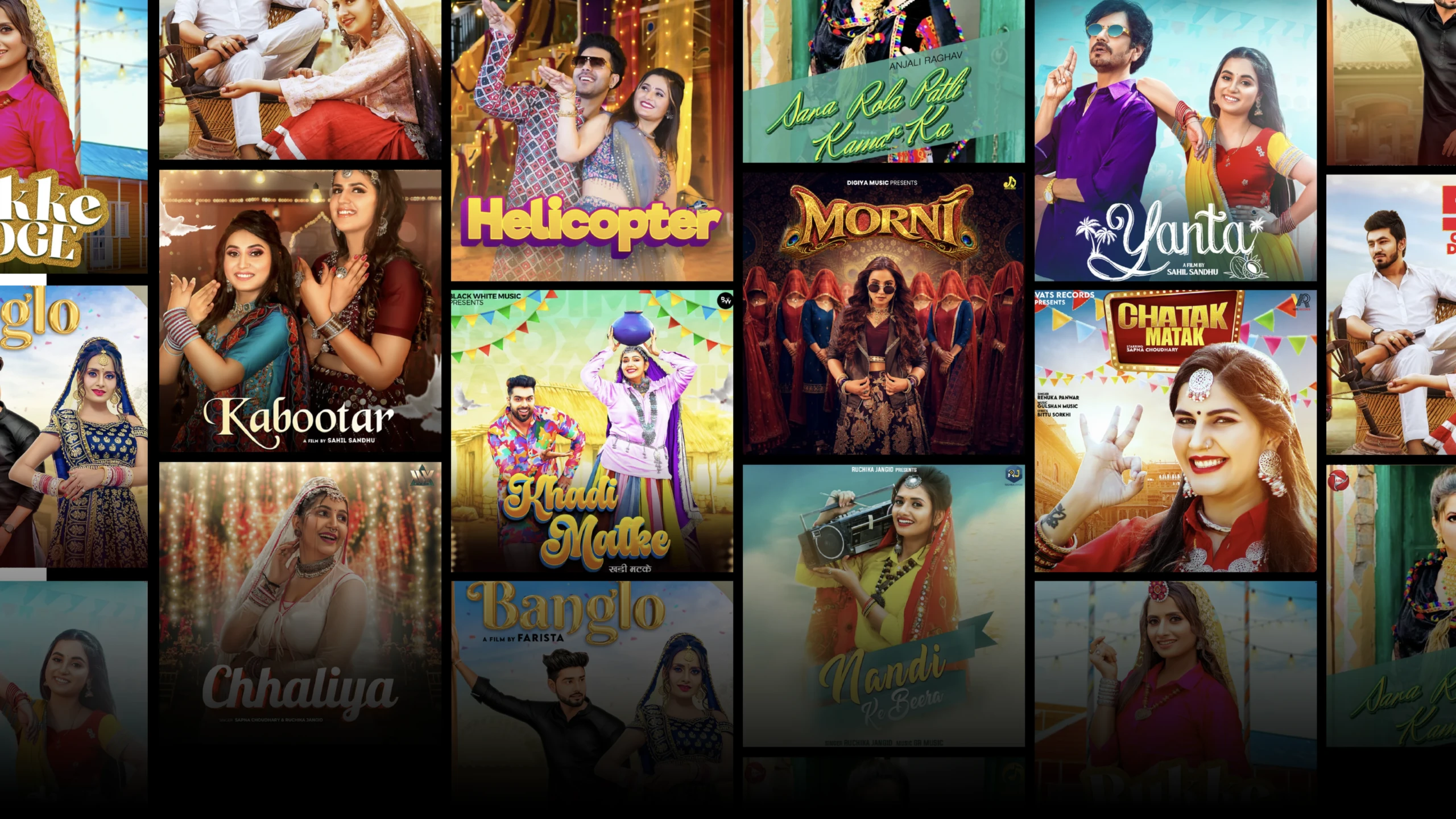
Many of Choudhary’s songs and music videos today display the co-existence of two distinct Haryanvi traditions. ‘Ragini’, a mode of folk music and narrative poetry popular in Haryana, is a decidedly public form. However, ‘Khoriya’ refers to the private Haryanvi music and dance performed for women by women behind closed doors — it is a wedding ritual where men are not allowed and the performing women often take up male ‘roles’ via disguise. In the recent music video for Panwar’s ‘Morni’, for example, you can see women performing in male disguises.
“The women who sing and dance during Khoriya are beautiful and free, and there is a sense of joy in everybody, whether it’s a young girl or a grandmother. And for women this is all the more personal because we all have our different stories, different memories attached to Khoriya,” Choudhary said.
Today, Choudhary is signed with Believe India and their Haryanvi label Mahra Tora. They have a slate of new releases planned where Choudhary is going to collaborate with Haryanvi artists like Masoom Sharma, Amanraj Gill and Sandeep Surila; folk music repackaged with high-end production values and a more ‘global’ sound to woo urban audiences.
Choudhary’s success and acceptance at the national level have paved the way for the likes of 24-year-old Renuka Panwar, whose breakout song ‘52 Gaj Ka Daman’ (2020) garnered over a billion hits on YouTube, becoming the first song by a Haryanvi artist to reach the landmark. Another song released a year later, ‘Chatak Matak’, also racked up ove\r a billion views and featured Choudhary dancing in the music video. Panwar is now an exclusively signed artist for Global Music Junction (in 2024, Warner Music India acquired a strategic minority stake in GMJ).
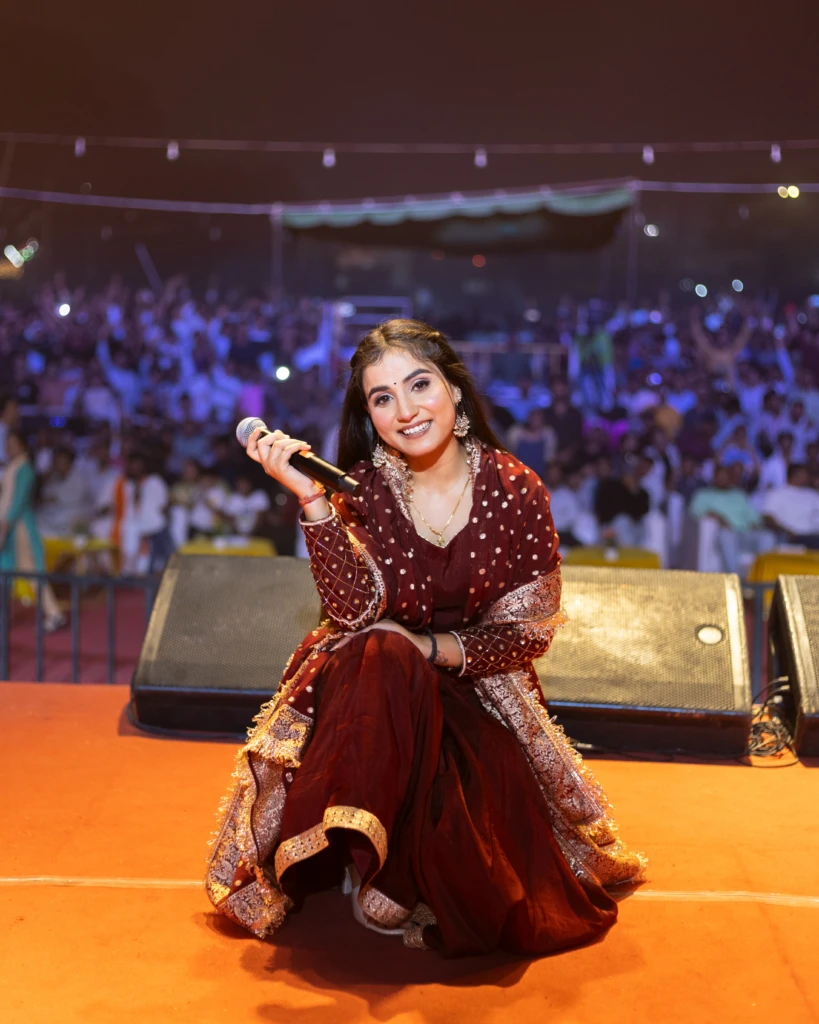
Of all the aforementioned Haryanvi artists mentioned in this article, Panwar certainly has the most marketable and versatile playback voice. Her music videos are distinctly contemporary, the craft and the production values indicating the ascendancy of her own career and that of Haryanvi music at large. And in true Gen-Z fashion, her ‘origin story’ involves TikTok and the coronavirus. In 2020, young Panwar had made her first forays into making music, and then the lockdown happened. “I was at a family friend’s house for a kua-poojan ceremony. During the celebrations, I danced to ‘52 Gaj Ka Daman’ which had recently been written for me by Mukesh Jaji and Aman Jaji, and my brother shot a video of the performance on his phone. At the time neither of us knew how big it was going to become.” Panwar’s brother had just started using SnackVideo, a short-form video app developed as a direct competitor to TikTok. He uploaded the video (“his account had 85 followers, I still remember”, Panwar said) and within a week the account had blown up with over 100,000 followers.
Panwar recently collaborated with Sonu Nigam and the music video for their song ‘Chunni’ was released on August 8 on YouTube. “I feel very lucky that Haryana and Haryanvi artists have given me so much love and support,” Panwar said. ‘Chunni’ was also selected as a staff pick for the August 1- August 7 edition of Billboard India’s No Skip.
Like with any culturally and commercially ascendant industry, though, there are teething troubles. In January this year, for example, a Special Task Force (STF) of the Haryana Police flagged 67 Haryanvi tracks across platforms like YouTube, Spotify and JioSaavn, for lyrics allegedly promoting violence and crime. Notably, these were largely songs by male artists, with Masoom Sharma alone accounting for 19 out of the 67 tracks, which were later either geo-blocked or outright removed by YouTube. At the time, Choudhary had publicly come to Sharma’s defence saying that these songs were only for entertainment value, and that banning songs would not make a crime-free society.
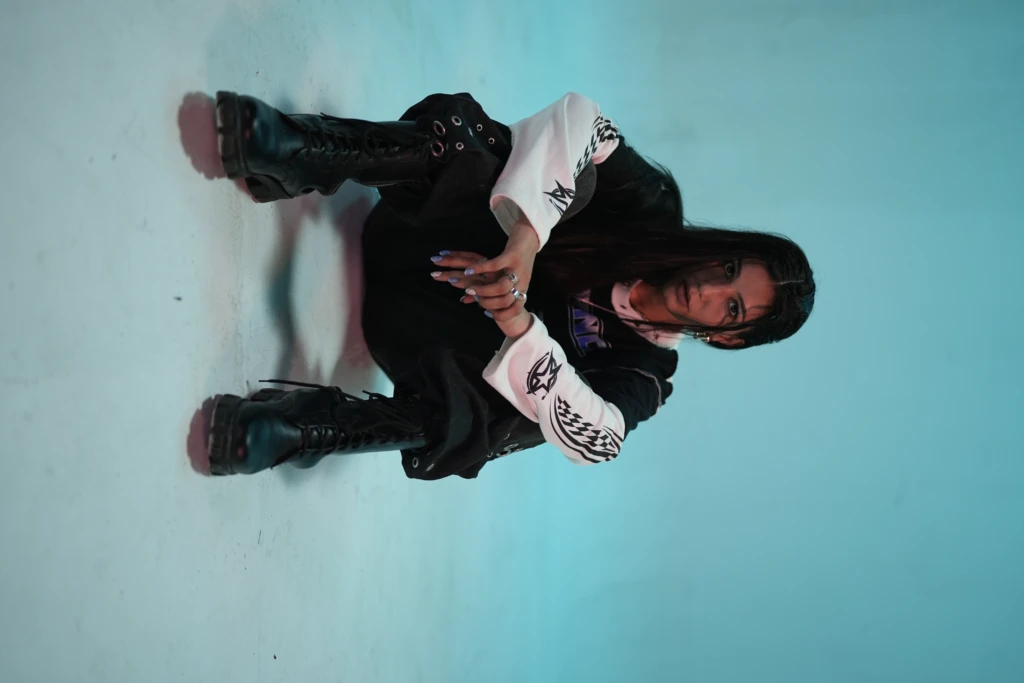
“I have always maintained this from day one of my career,” Choudhary said. “Whether it’s a man or a woman, young or old, whoever you are, if you are a Haryanvi artist, then you are representing our state and we are all part of a family. We all have a zimmedaari (responsibility) to take our state to the national and the international stage, and while doing so there can be no question of ego or selfishness there.”
(The interviews for this story were conducted in Hindi, and translated by the author)