



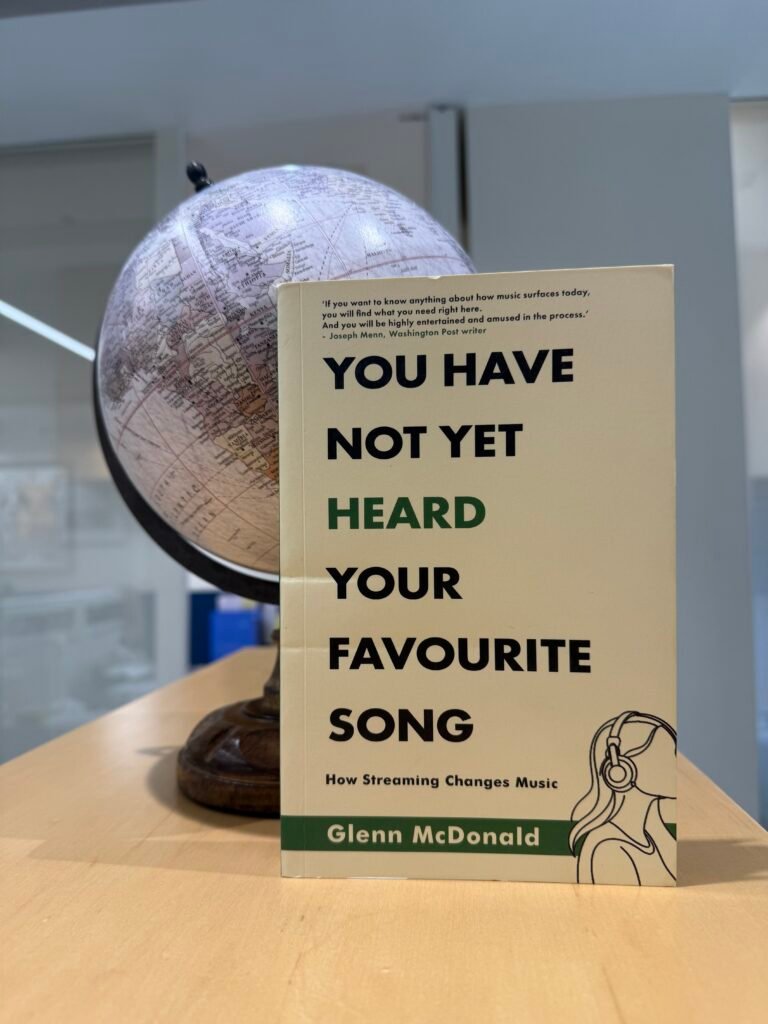
Glenn McDonald, a former Spotify data scientist, has spent years examining the listening behaviour of millions of customers to build algorithms that support music discovery. He’s distilled all his learnings in his book You Have Not Yet Heard Your Favourite Song. He offers a rare data-led perspective on whether listeners can outsmart algorithms, tweaks artists can make to get discovered by the right audience, and his fears about music streaming.
Known as a ‘data alchemist’, McDonald’s role at one of the world’s biggest music-streaming platforms was a critical and powerful one. He acknowledges that in his book, going as far as saying that algorithms should be auditable. He also adds that people who are now doing this job, should inherently care about music and artists. “If all you care about is machine learning, go do it somewhere else. Help Amazon sell humidifiers or something,” he says.
McDonald talks to Billboard India about what artists should know about the algorithm.
Is it possible for an artist to game the algorithm?
It’s unlikely to be successful but the worst part is that you have no way of telling whether it’s successful. Because there are so many unseen variables that you don’t have any way to evaluate [what’s working], that you just can’t tell. I usually tell people that the worst thing that can happen is that you think you’ve figured out a way to second guess the algorithm or game it. You’ve put a lot of effort into that. Then you have some success and you mistakenly attribute that success to all the work you did and then you spend the next two years doing that same work again and again and again and it’s not successful. It’s because it was never the reason. They’re unrelated or maybe they’re related and the algorithm changed. So any time you spend trying to game the system is time you’re not spending writing more songs or playing more shows or understanding your listeners better.
Does your band name impact how you show up in search?
I think it’s always been true that it’s worth taking some time to find a unique name. If you can pick a name that is unique and if you can get an internet domain connected to it, that’s helpful.
Plenty of bands have been successful with very generic names but you’re just making it harder for yourself. So if you have an excellent name and you want to go by your own name but it’s a common name in India and 10,000 people already have it, make up a new one. I would say spend 10 minutes doing it.
Is getting into a popular playlist of a streamer the best tool for discovery?
It can be. If there are playlists that really serve a community and that’s your community or the community that you want to be part of, then that may be great. Getting on a playlist that’s not serving your community can be a waste of your time.
This is sort of the problem with new release-based playlists. If they are very broad and the only theme is a rough genre like pop, or a giant region like India, then you can get on that playlist. But if most of the rest of the music in it is not like yours, and thus most of the listeners are not really your listeners, they will skip past or listen to just 45 seconds of it so it counts as a play. But if they’re unlikely to like your next song, it’s not really helpful.
Because you got on this editorial playlist and some people were exposed to your song, more of those people will get it on their release radar next time. But if they’re the wrong fans, it’s not getting you anything.
You’re concerned about bot views and fan armies inflating numbers. Where do things stand now?
It’s a big concern for the industry. My experience at Spotify was that it was very easy to detect fraud when you have all the listening data to look at. The BTS fan army is a somewhat different case than the bot streams for some new artists. They may be leaving their phone on with the volume down and looping a BTS playlist, but they were going to listen to it with the volume up for two hours. If they put it on loop for eight hours, it’s distorting the signal, but it’s not producing a different signal. That’s all that person is listening to.
It’s dispensing a little more money to BTS than it deserves based on the real streams. But as an independent artist, you are not losing anything. You’re losing a fraction of a cent.
Can labels misuse this when they have a new release?
They can. Again, it doesn’t really affect anybody else. It will almost certainly be bad for them. Patterns are very easy to detect, and Spotify will punish you for them.
It may not punish you as actively as when I was there, but you will still get punished. I did ban several members of BTS from recommendations for a while because too large a percentage of their solo streams were coming from obvious bots.
But if you’re an independent artist and you pay for bots and you get banned, it will matter to you. Is it a risk worth taking? No. You should never do it. I don’t just mean morally, I mean it’s not even the smart thing to do.
The only people making money from botted streams are the people selling tools for botted streams. It’s like the people selling shovels to gold miners.
Do you have any tips that are specific to artists in India?
I’m always asked for tips everywhere I go. I always say there’s a hack you should know if you’re an Indian artist — if you do the same songs in multiple languages, you should create artist profiles for each of those Indian languages.