
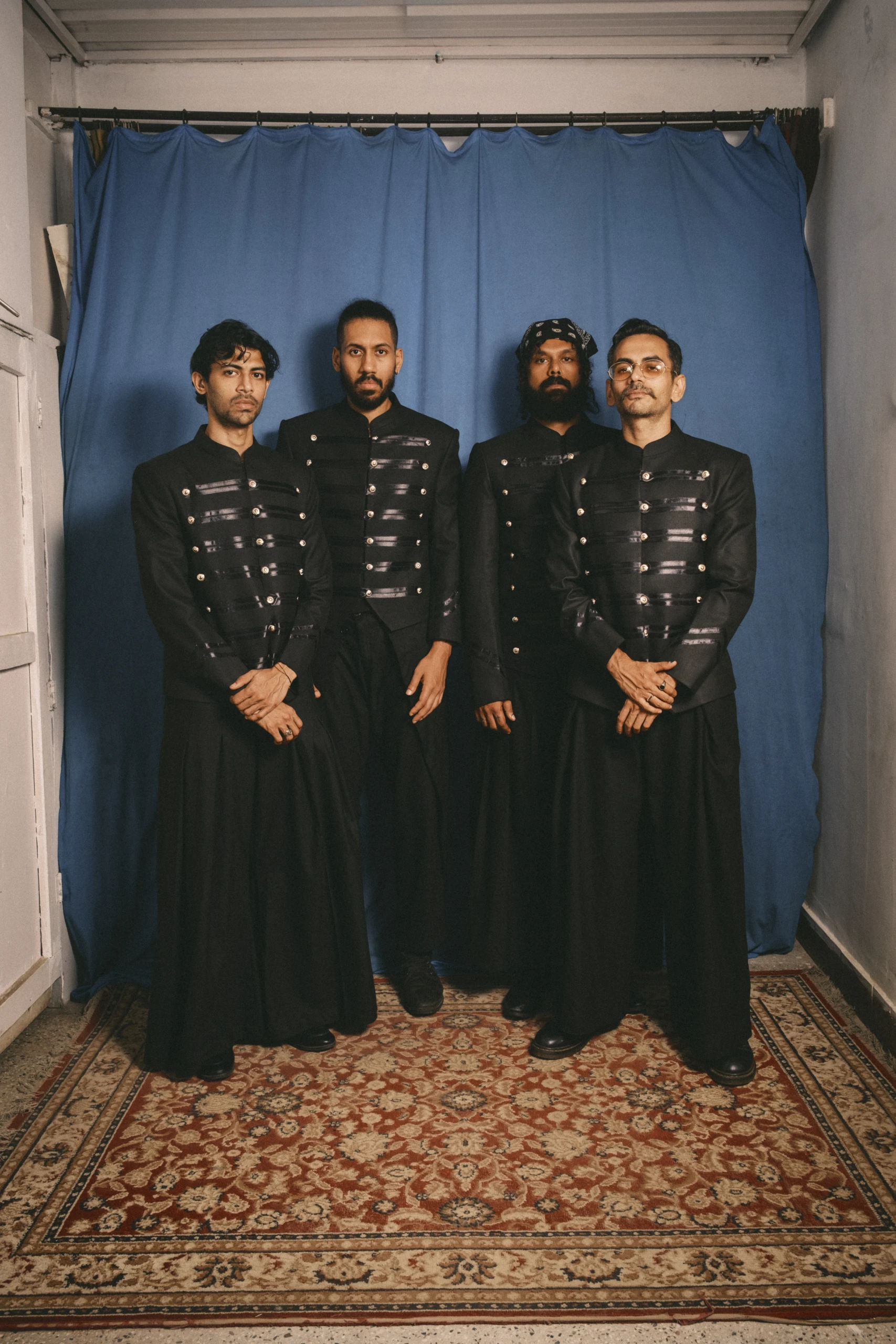
The F16s are a cult-favourite alt-rock band based in Chennai, and are building the experimental English language music scene in India. All Dogs Go To Heaven is their latest full-length offering after a decade-long album hiatus punctuated by EPs Is It Time to Eat the Rich yet? (2021) and WKND FRNDS (2019). The album art (with the four of them skinny dipping) and the music video for the lead single “Mt. Whateverest” (them running in diapers) is making waves for its playful, cinematic audacity.
“When we were pups, we didn’t know how to hunt well,” says Joshua Fernandes, frontman and lead vocalist for the band, bringing in the album’s theme of becoming as free as dogs. “We are now fully grown wild dogs that hunt in packs and have mastered catching their prey – an album. A lot of this is instinctual, honed over time.”
The F16s went on stage the day they decided they were a band, way back in 2013. Now, they’re going on tour in ten cities across the US, while making their dream of seeing their music on a physical medium come true with their first-ever vinyl record on sale.
In a conversation with Billboard India, The F16s’ bandmates Harshan Radhakrishnan, Joshua Fernandez, Sashank Manohar and Abhinav Krishnaswamy give out their guide to surviving as an English indie-rock band in India.
1. Fight out every disagreement you have
“Sometimes, it’s straight up physical combat in the studio,” says Joshua Fernandes, frontman and lead vocalist. “This isn’t hyperbole,” adds guitarist Abhinav Krishnaswamy with a straight face. “No eyes and no face, and try not to break any equipment.” Fernandes continues, “Even if bands do fight it out, maybe that unlocks something precious in your own little ecosystem that you never knew you had. Maybe throw some fists, or throw some kisses. Who knows?” Bassist Sashank Manohar adds with a laugh, “Josh and I did that. We were rolling on the floor fighting in Goa.”
2. English is a niche in India, look beyond
“You’re fighting a losing game,” Krishnaswamy puts it bluntly. “If you want your music to travel far [in India], going regional is the way.” With the examples of electronic musicians Curtain Blue and Donn Bhat, he explains: “Their music was already experimental enough, all they had to do was pivot [towards Hindi].” The F16s’ biggest listener base is American, not Indian. They risked being “painted in a corner” with their choice of genre and language, but they expanded their ambition outside the country’s borders. “Our perspective has always been global,” says Manohar. “As an artist, it’s great to find a voice in all of this mess, but it took at least ten to fifteen years to find that voice and that relatability.”
3. Have a side hustle
“We’d say ‘we need to take this risk, let’s jump’ without even seeing how high it was,” says keyboardist Harshan Radhakrishnan, looking back on the impulsiveness of starting the band. “We’re just very stubborn dudes. All of us do things on the side. I run a small gym of my own, I train other people, I mix for other bands, and since I got into the tech side of music, I produce for other artists too,” he explains. “We just have to find ways to keep the dream afloat for as long as we can.”
4. Cherish the bad performances
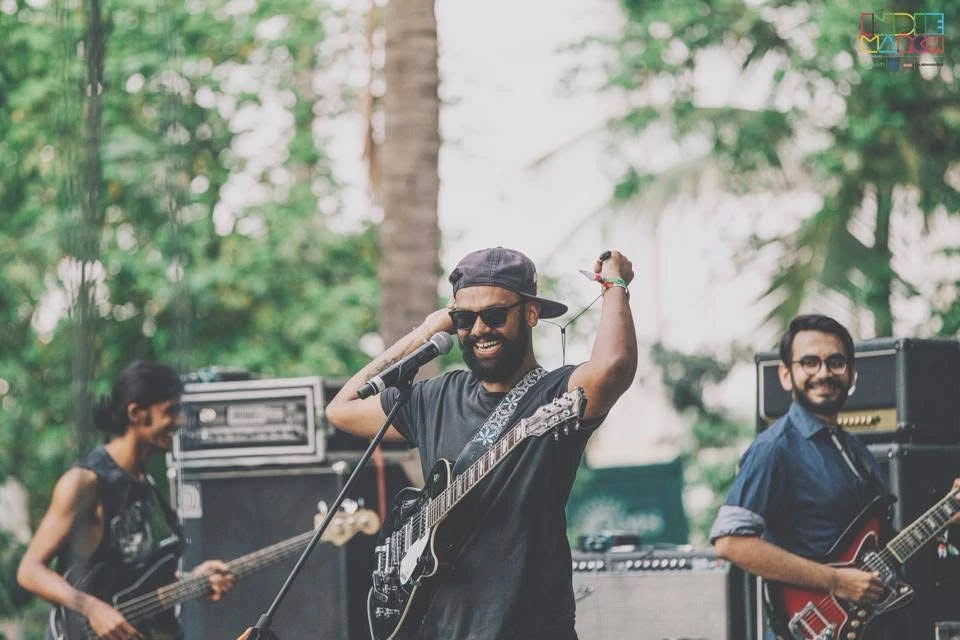
“We were playing the afternoon set to a crowd of 4-5 people for our first Magnetic Fields (2013), a festival meant for [late-night] ravers,” Krishnaswamy says with a laugh. “One guy was sitting right in the middle… reading a book.” Fernandes adds, “You will have a lot of great shows – so many that you won’t even remember them. But you’ll always remember the bad ones, so cherish those too.”
5. Avoid ChatGPT captions on social media
“Make spelling mistakes, put emojis, do stupid sh*t,” Fernandes recommends. “The goal is to attract fans who want to see you for you, and the band’s personality for what it is.” He adds, “Everyone sounds the same with those ChatGPT-structured short essays,” while emphasising the need to sound like yourself. “If you aren’t, you’ll burn yourself out maintaining a lie.”
6. Make your fans your inner circle
“We made a WhatsApp group with our fans in 2016 and named it ‘The F16s IT Cell’. It became an organic community of people sharing their art and supporting each other,” Manohar recounts. “They literally had our phone numbers.” He explains via examples, “Hanging out with fans after shows, being at their merch desk, having conversations with them, making a newsletter, having a mailing list, and making them feel like part of an inner circle went a long way.”
7. Brace yourself for late payments
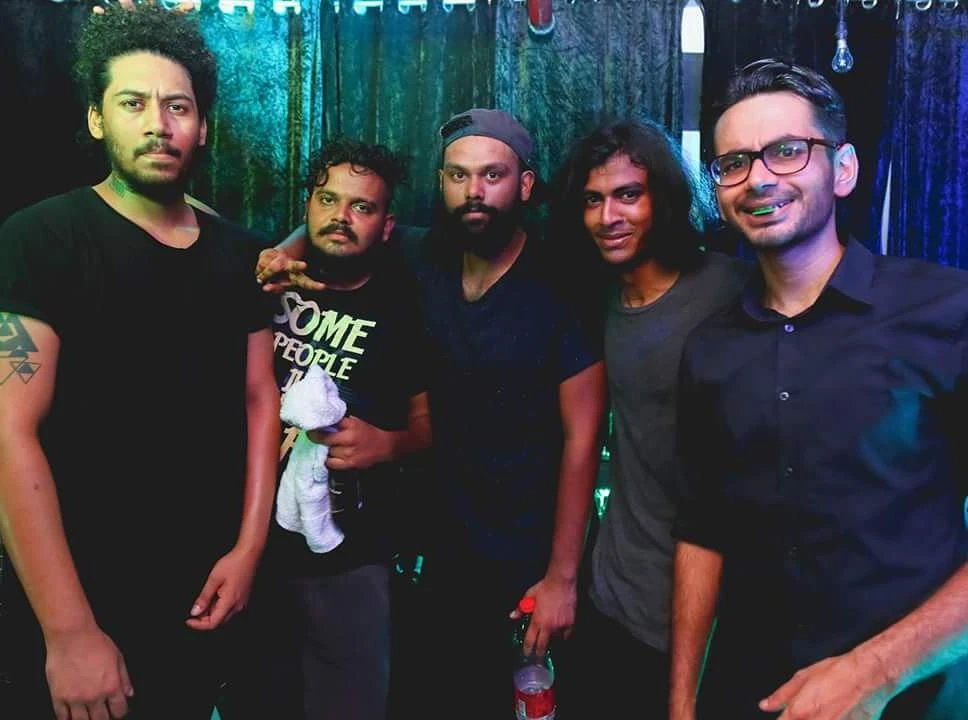
“You can’t just be an artist and chill. I don’t think that concept exists anywhere in the world until you’ve made it to a certain point. The first six to seven years are going to be a lot of chasing payments,” says Radhakrishnan, recalling an unpaid payment of over 10 years ago from a venue in Chennai. “Bands have to go through this, and if you don’t have the stomach for it, it’s going to be very hard to reach a point where everything is on a platter for you.”
8. Find the right director for music videos
“Working with [longtime friend and collaborator] Lendrick Kumar made shooting music videos fun,” says Manohar. “It’s really important to work with people who care about making something fun, cool, and artsy, whether or not it becomes successful,” he adds. The music video for “Mt. Whateverest” [All Dogs Go To Heaven, 2026] sits at 82K views on YouTube, features the four running in diapers, and has cinematic parallels with their canine companions. Manohar believes that making a good video doesn’t have to be expensive. “You need one camera, a good person behind it, your own personality, and five thousand rupees in your account.”